Water may not yet have reached the steam system. Philips directs owners of the covered models to allow the specified warm-up and hold the steam trigger for up to a minute on first use to establish flow. Check water level and tank seating first, and aim away from people and fabric while priming. Follow your model's timing rather than repeatedly switching it off before it can start.
Child Lock can remain active through a restart. Look for the lock or baby symbol and find the marked button combination in the model's manual. Hold the specified controls to deactivate it rather than repeatedly cycling the power. Power may still work even when other buttons do not. If the correct Child Lock procedure does not restore controls, continue troubleshooting; a restarted display alone does not identify a hardware fault.
Some models have a Temporary off setting that briefly unlocks the door while the Child Lock symbol flashes. Samsung says it re-engages after about one minute. If you intend to turn the feature off completely, follow the second hold or other model-specific deactivation step until the indicator turns off. Keep children away while loading, and do not force a door that remains locked for water or cycle safety.
Delay End targets the later finishing time; Delay Start postpones the beginning. Read the feature name on your model before choosing the delay, because the two options have different purposes. Select the cycle and allowed settings, then follow its start procedure to arm the delay. Check the display and manual rather than assuming every clock icon means the machine will start in that many hours.
Cycles can restrict their available temperature, spin or other settings to suit the intended fabric treatment. Samsung distinguishes these settings from optional features, and notes that not every combination is available. Check the cycle chart in your manual and the clothing labels. Select an appropriate alternative cycle if needed instead of treating a disabled option as a faulty button or trying to override the restriction.
No. Samsung says the lock can take a few moments to release, and remaining water can keep the door locked. Wait for the door-lock indicator to turn off and confirm the water has drained; also check Child Lock. If it remains stuck, follow the model's safe draining and support procedure. Do not pry the latch or reach into the lock, especially while the tub contains hot water.
No. Samsung states that dC means a door error on some models and an unbalanced-load error on others. Look up the complete model number and code in its manual before choosing a remedy. For a door indication, inspect for trapped laundry and a properly closed latch; damaged hardware needs service. Do not keep rearranging clothes or force the door based on a code definition from another machine.
Samsung says its automatic-dispenser refill message clears during the next cycle after the appropriate compartment is filled. The detergent message clears in the wash stage and the softener message in the rinse stage. Do not keep pouring beyond the fill limit just to make the screen change. Confirm the correct compartment and follow your model's guidance if the message remains after that stage or dispensing seems abnormal.
Rewash the affected clothing before drying it, using a water temperature its care label permits. Tide recommends warm water for its undissolved pac residue. For the next load, place the pac into the empty drum before adding clothes and leave room for water to circulate. A tightly packed load can prevent adequate water contact even when the detergent is designed for cold washing.
Put Tide PODS directly into the empty drum, then add the clothes. The liquid-detergent drawer is not the correct place for these pacs. Follow the dose on your particular package, since pac sizes differ, and avoid crowding the drum. Close the detergent package after use and return it to secure storage. Do not add extra liquid detergent alongside the pac.
An Sd or Sud indication can mean the washer is already running a routine to reduce excessive foam. Let that routine continue rather than repeatedly restarting the wash. Before the next load, check your HE detergent's concentration and measure for the actual load and soil level. Too much detergent can lengthen cycles and leave poor rinsing, even when the bottle says HE.
Some electronically controlled GE top-loaders, including GTW750, GTW685 and GTW680 families, automatically drain water after the lid has remained open for more than 15 minutes. This is intended operation, not necessarily a failed pump or a canceled wash. Use the soaking procedure in your model's manual and close the lid when instructed. Do not defeat the lid switch to retain water.
On the GE top-load models covered by its startup guide, two short cold-water fills followed by a roughly ten-second pause are part of normal startup. Opening the lid during that sequence pauses the washer; close it and press Start again as instructed. Let the sequence finish before assuming the water supply has failed. Persistent failure to proceed needs model-specific troubleshooting.
No. Water Station provides water, or water mixed with detergent on equipped models, for pretreating and soaking. It is not a completed wash cycle. After the pretreatment, turn the dial to the appropriate actual wash cycle. The machine drains the pretreatment water before that cycle begins. Choose the temperature and soak duration to suit the clothing labels and your washer's manual.
Check the exact cycle instructions before relying on its sanitizing claim. Whirlpool's applicable cycle guide requires the highest available wash temperature and a measured powdered Oxi product in the drum for models using that system. Follow both the laundry product directions and the garment's heat limits. A lower-temperature wash or omitted additive does not necessarily reproduce the conditions behind the stated performance.
For the Whirlpool rack system described in its guide, use a Timed Dry setting rather than an automatic sensing cycle. Select heat only if the item permits it; foam, rubber or plastic require the approved Air Only method or line drying. Leave the lint screen installed and space items so they cannot droop into the rotating drum. The rack stays still while the drum moves around it.
Match the rack to the actual dryer model and mounting points. Whirlpool's 8212450A, for example, is intended for specific 27-inch ultra-capacity machines with a side-swing door and a lint screen inside the front opening. An accessory that merely fits through the door may not sit securely clear of the rotating drum. Check the compatibility list before buying or operating it.
Wrinkle Prevent can keep tumbling the load without heat after the main cycle ends, so finished clothes do not sit still. It may tumble for several minutes and then intermittently. You can remove the clothes; opening the door stops this feature. If the drum continues abnormally despite opening the door or using Power, arrange service rather than treating that behavior as normal wrinkle prevention.
Its automatic shutoff may have activated while the iron was stationary. Pick it up or move it slightly to reactivate heating, then wait for the temperature indicator to show it is ready before ironing. This differs from normal thermostat cycling during use. Check the exact model's manual for its indicators, and unplug the iron when finished rather than relying on auto-off as a storage routine.
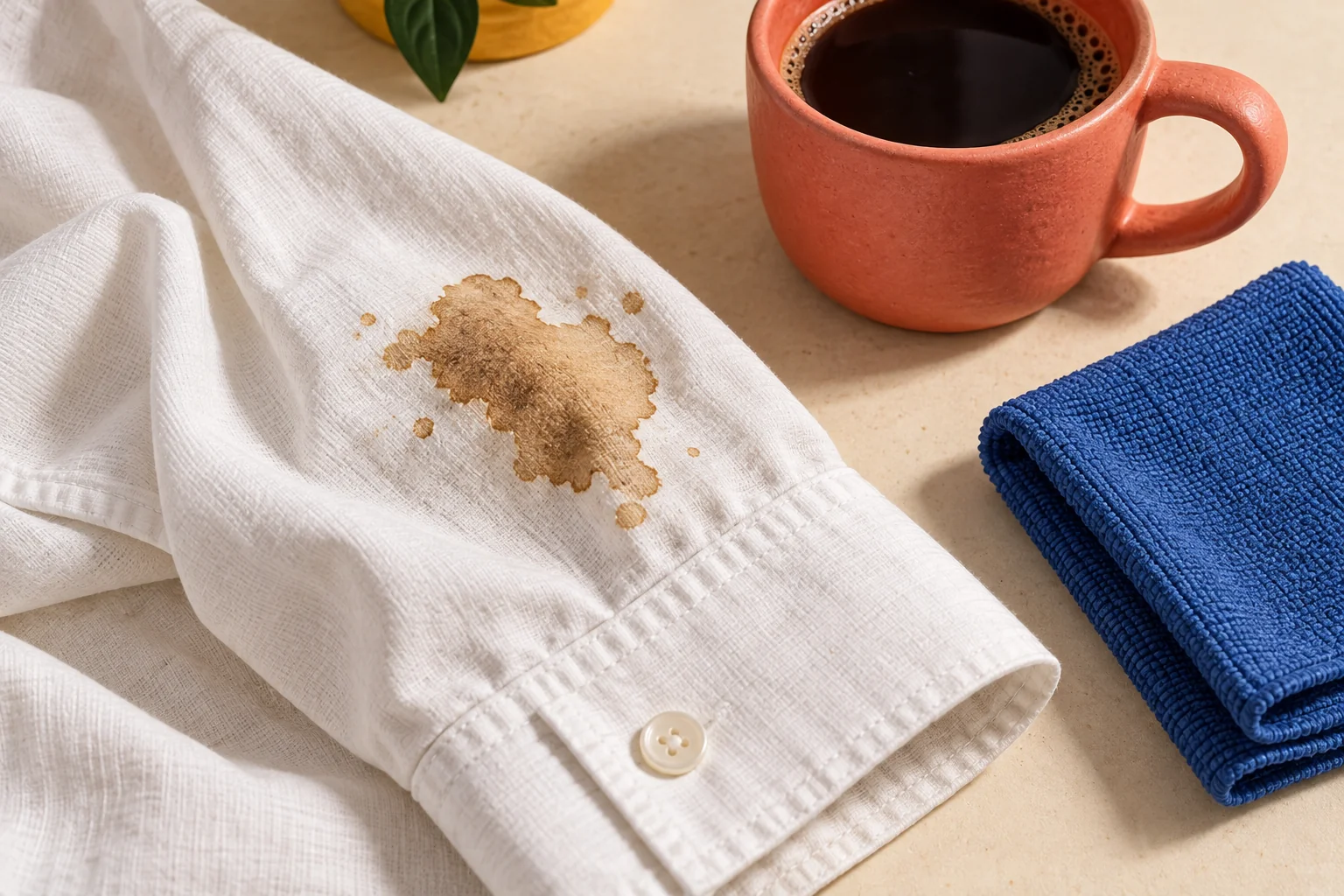
Keep the affected items out of the dryer while treating the transferred dye. Identify and separate the bleeding garment, then use a laundry pretreatment appropriate for the affected fabric and rewash at the hottest temperature its care label allows. Follow the current product's dose and soak instructions. Inspect again before drying and repeat only as the label permits; color recovery is not guaranteed.
Switch off, unplug and let the mop cool before removing its pads. BISSELL allows machine washing in warm water with liquid detergent, without bleach or fabric softener. Tumble dry on low and let them become completely dry before refitting. Hand washing with warm water and soap is also allowed. Check that these instructions match the SmartSteam pads you own; other mop materials can require a different drying method.
Look at its construction and manual. Sunbeam gives different instructions for a pad with a removable fabric cover and one with a detachable controller. For the removable-cover type, unplug it and wash only the cover; wipe the pad as directed without wetting its cord or connector. A washable-pad model needs its controller disconnected first. Never assume all pads are washable, and reconnect only after every permitted washed part is completely dry.
Remove only the outer cover; the bead-filled inner bag stays intact. Yogibo instructs washing that cover cold with similar colors on a gentle cycle, without bleach or fabric softener, then drying on low heat. Align the cover's corners with the inner bag when refitting it instead of pulling hard on one seam. Keep the inner closure secured throughout ordinary cover care, and check any product-specific label before washing.
Remove the outer cover and let the inner bag air dry completely before covering it again. Yogibo suggests a fan and periodically moving the bag to help air reach the contents evenly. This guidance is for drying a wet bag, not proof that a contaminated spill has been cleaned. If the liquid was dirty or an odor remains, ask the manufacturer for the appropriate cleaning or replacement advice.
Source checks for these answers: September 23, 2026. Product instructions and local requirements can vary.