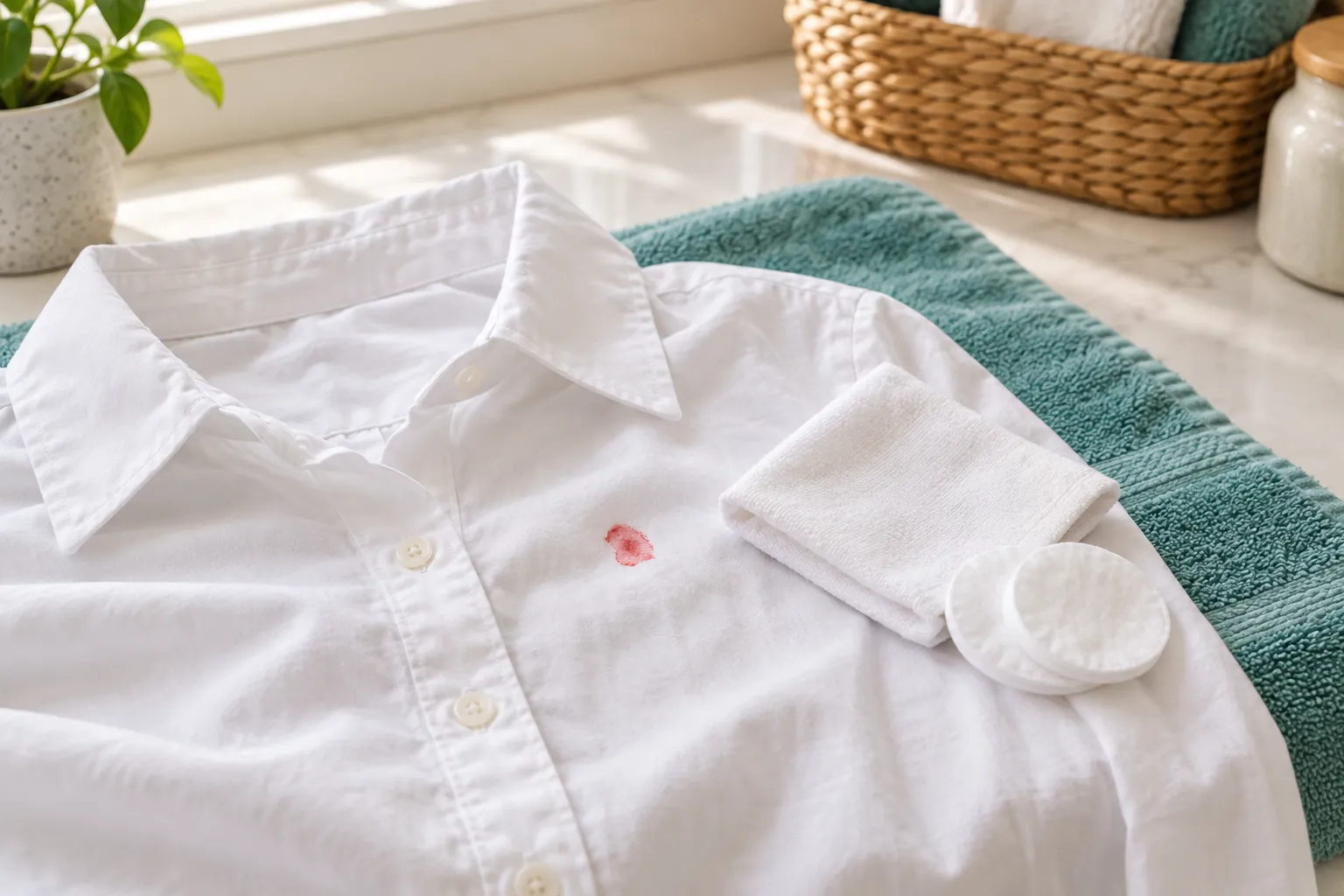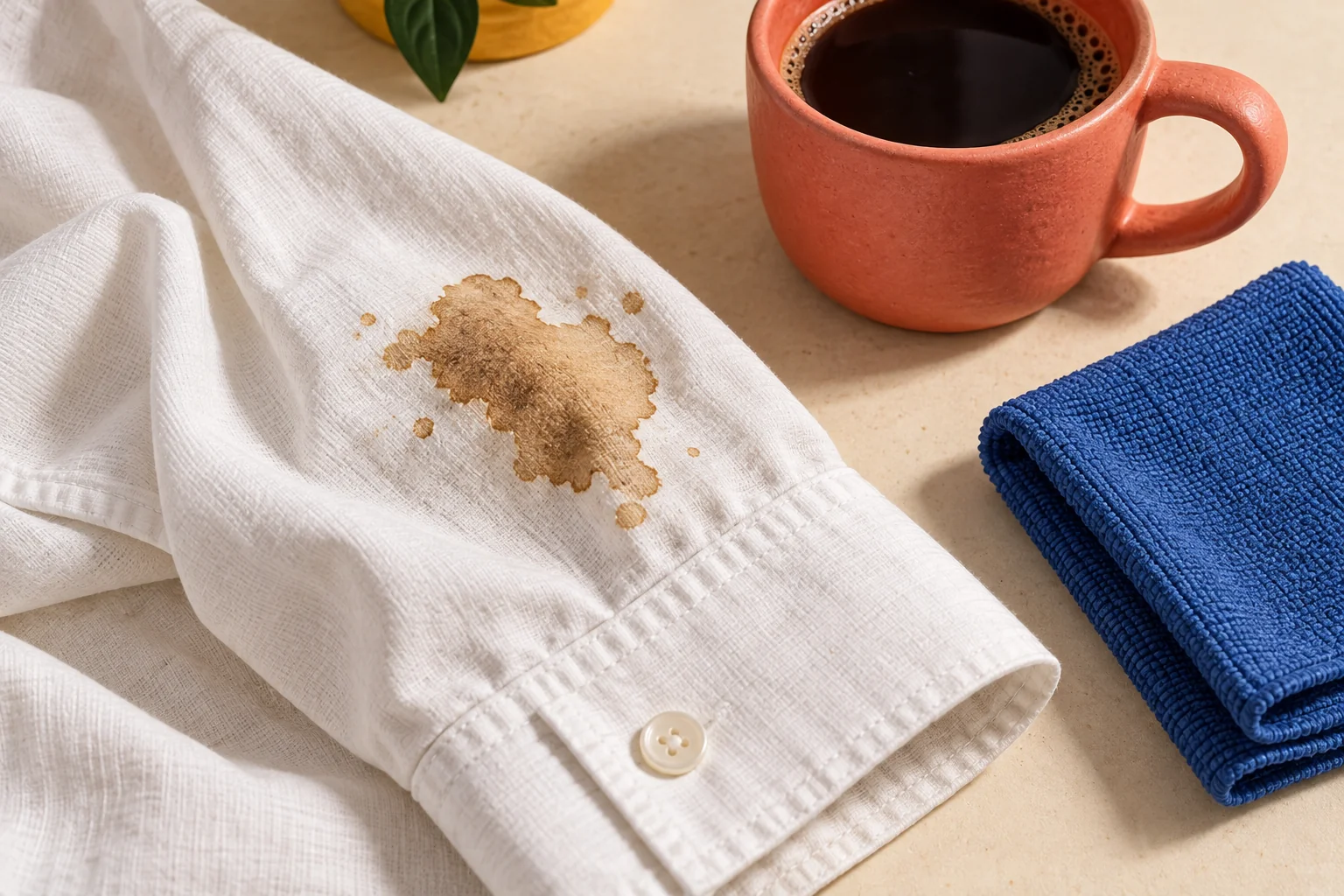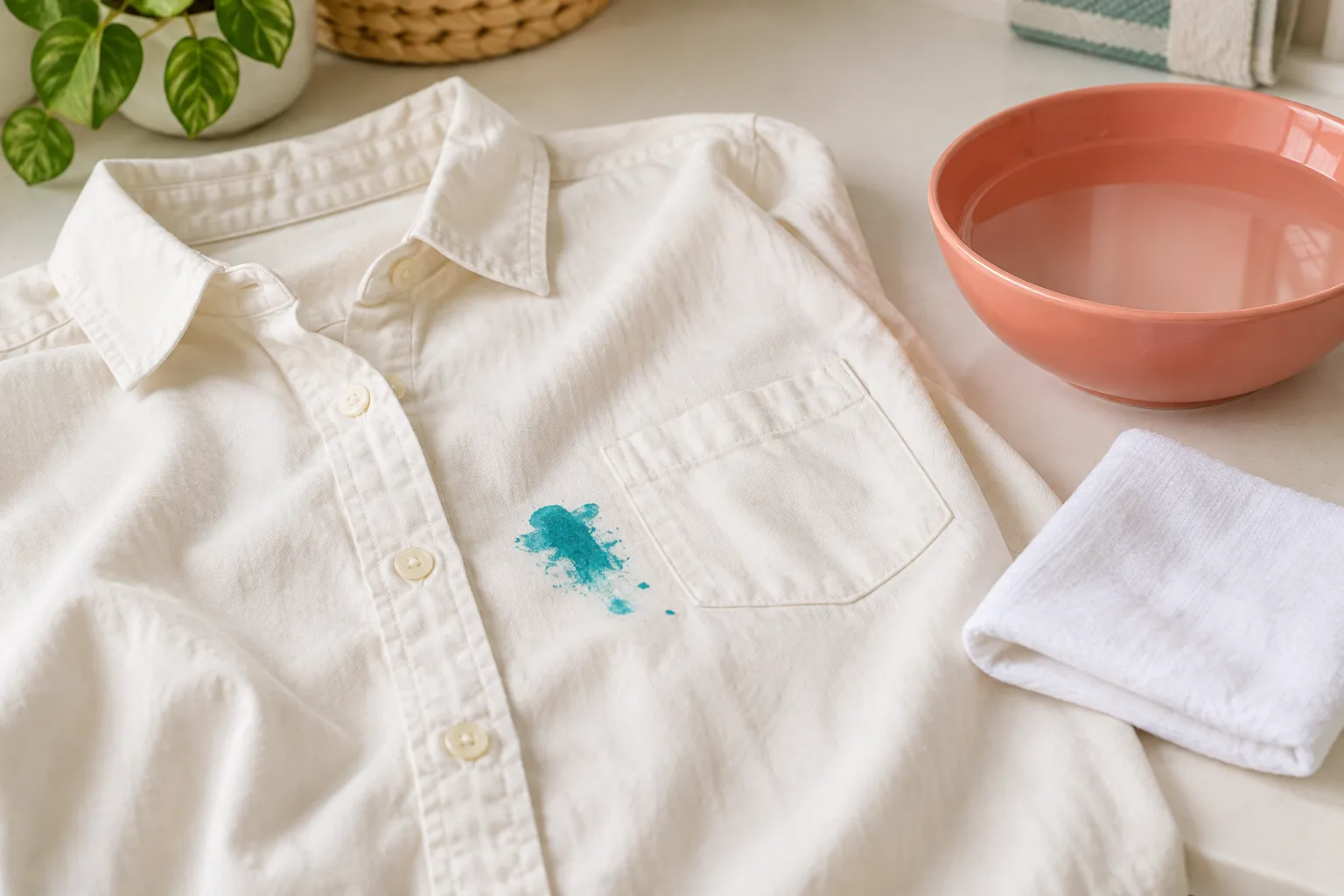
Wet acrylic paint and dried acrylic film behave differently. Prompt treatment gives washable fabric a better chance; an old set stain may never disappear completely. Start with the care label before trying any solvent.
Lift excess wet paint, rinse from the back of the stain, pretreat with a fabric-safe detergent and wash as the care label allows. Check before drying. For dried paint, test a compatible stain-removal method instead of scrubbing blindly.
Go straight to the stepsYour project helper
Follow the steps and check them off as you go →Before you begin
Protect the work surface and test an inside seam first. Take delicate, dry-clean-only or unknown fabric to a cleaner. Do not mix cleaners or put solvent-wet garments into a washer or dryer.
What you’ll need
- Blunt spoon or scraper
- Absorbent white cloths
- Fabric-compatible liquid detergent
- Soft laundry brush
- Cool running water
Let’s do this
Step by step
- 01
Lift the excess
Use a spoon edge to lift fresh paint without spreading it. Blot with a white cloth; rubbing a large wet patch can push color into more fibers. Keep a clean area of the cloth against the stain.
- 02
Rinse from behind
For washable compatible fabric, turn the stained area over and flush from the back with cool water. This encourages paint to leave the way it entered rather than traveling farther through the cloth.
- 03
Pretreat a small area
Apply a suitable detergent according to its pretreatment label. Work gently with your fingers or a soft brush. Do not let a concentrated treatment dry on the garment unless its label specifically permits it.
- 04
Reassess dried paint
Lift only loose dried fragments. A fabric-safe specialist treatment may help, but first test for color change and fiber damage. Follow its removal and laundering directions exactly; stop if the fabric changes texture.
- 05
Wash and inspect
Wash at a care-label-approved temperature after the pretreatment is properly removed or prepared for washing. Air dry for the first check. A hot dryer can make remaining paint harder to remove.
Checks stay on this page while you work and reset when you leave.
Decide when a stain is worth another attempt
Inspect in daylight after the first wash. If the color has lightened without damaging the cloth, another gentle treatment may be worthwhile. If fibers are thinning or dye transfers from the garment, stop.
Prevent the next paint stain
Keep a dedicated painting shirt and wipe up spills before they dry. A washable table covering and a small cleanup cloth often save more work than a stronger stain remover later.
A quick final check
- Lift the excess
- Rinse from behind
- Pretreat a small area
- Reassess dried paint
- Wash and inspect
Common questions & sticking points
Will dried acrylic always wash out?
No. The cured film can bond strongly to fabric, and complete removal is not guaranteed.
Should I use acetone immediately?
No. It can damage some fibers, dyes and finishes. Start with fabric identification and a compatible treatment.
Sources & further reading Optional
References used to check this guide. Follow your product’s own safety instructions where its design differs.
Last source check: September 24, 2026