The machine that cleans your clothes needs its own maintenance routine. Start with the manual for the exact model, especially before removing a drawer, filter, or agitator part. A straightforward cleaning cycle and careful wipe-down are more useful than combining several household chemicals and hoping they work together.
Empty the washer, use a machine-approved cleaner and cleaning cycle, then clean accessible dispensers and seals according to the manual.
Go straight to the stepsBefore you begin
Use one approved cleaning method. Do not combine bleach, vinegar, ammonia, or other cleaning products. Keep children and pets away during maintenance.
What you’ll need
- The washer’s use-and-care guide
- An approved washing-machine cleaner
- Soft cloths
- Water and any label-required protection
Tools & supplies for this project
Affiliate disclosure: We may earn a commission when you buy through these Lowe’s links. How our links work.
Use what you already own. If you need supplies, compare these options with the requirements above and choose only the items your project needs.
Check Lowe’s for current price, availability and specifications.
Let’s do this
Step by step
- 01
Read the model’s maintenance directions
Find the exact model’s cleaning cycle, cleaner placement, and removable-part instructions. Put a towel under the work area. Do not force a dispenser, seal, or agitator cap that the manual does not identify as user-removable.
- 02
Empty and run the cleaning cycle
Check the drum for clothing and small objects. Measure the cleaner’s labeled dose and put it in the specified place: a tablet intended for the drum does not belong in a detergent drawer. Run the model’s cleaning cycle with no laundry inside.
- 03
Clean the dispenser as instructed
After the cycle ends and the machine is safe to handle, wipe the dispenser. If the manual permits drawer removal, use its release, rinse the allowed parts, dry them, and refit them. Do not assume the drawer is dishwasher-safe.
- 04
Inspect the door area
On a front-loader, gently inspect accessible seal folds and remove visible lint or forgotten items. Wipe the door and seal by the maker’s method. Do not pull the seal off or push debris into an opening. A damaged seal or continuing leak needs a repair.
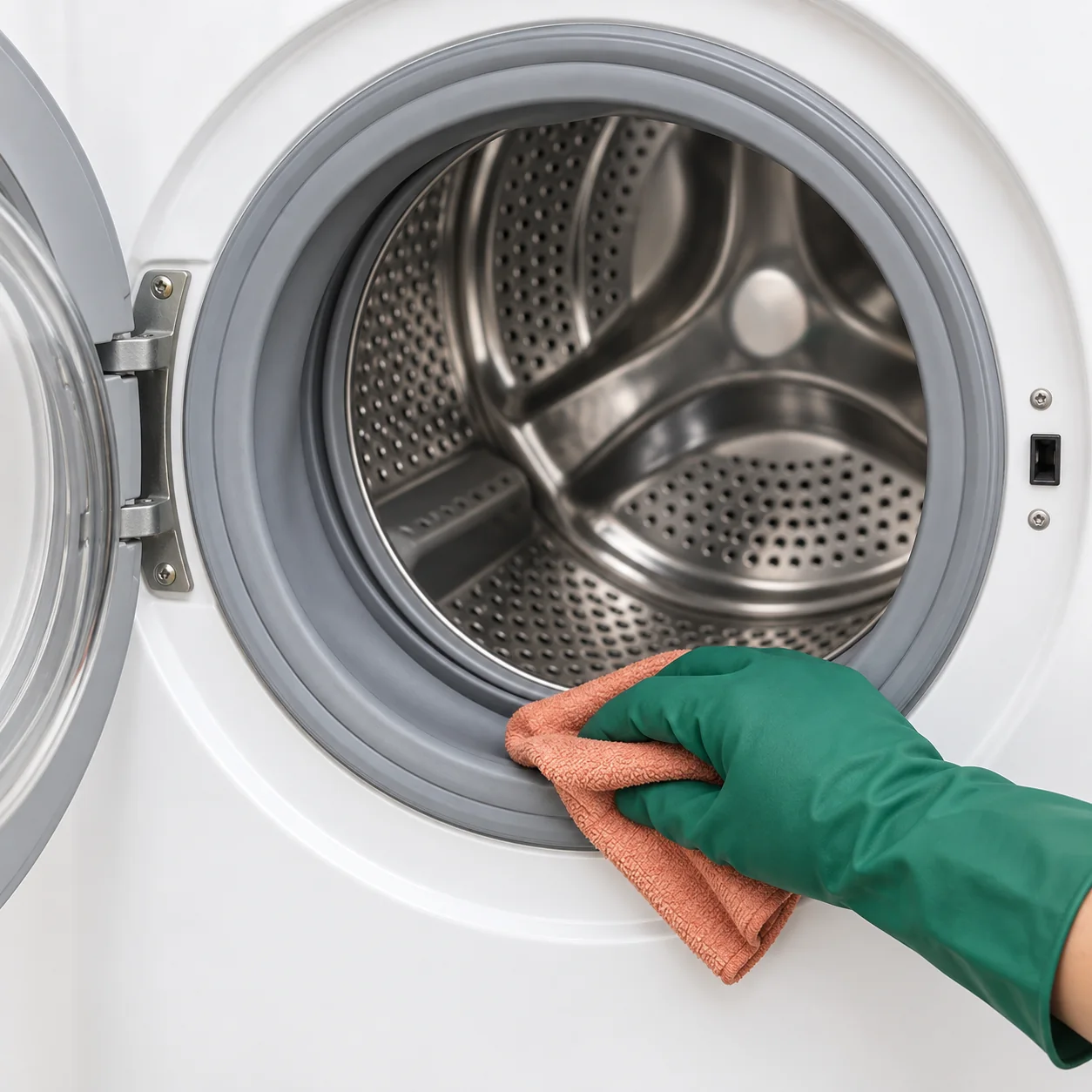
Wipe the accessible fold gently; the rubber seal stays attached to the machine.Open full-size image - 05
Let the machine dry safely
Follow the manual’s drying advice. If leaving the door ajar, make sure children and pets cannot climb inside. Note when the next cleaning is due.
Optional supplies on Amazon
Affiliate disclosure: As an Amazon Associate I earn from qualifying purchases. How our links work.
Use what you already have. These links open Amazon search results so you can compare suitable supplies; they are not individual product reviews.
Do not confuse cleaning with a repair
A persistent leak, failure to drain, unusual noise, or electrical smell is not something to solve with a stronger cleaner. Stop using the machine when the symptom calls for it and follow the maker’s troubleshooting or service process.
Keep a short note of what you see: residue in the drawer, odor after a particular load, or water remaining in the drum. Those observations help distinguish a maintenance issue from a fault and make a service conversation more specific.
Make maintenance fit your laundry routine
Whirlpool commonly recommends cleaning about monthly or every 30 cycles, but your model’s instructions control. Put the reminder next to another routine task. Store the cleaner with its directions intact so you do not have to guess the dose the next time.
A quick final check
- The cleaning cycle ran without laundry.
- Accessible parts were cleaned without forcing anything.
- The machine can dry safely.
Common questions & sticking points
Can every detergent drawer go in a dishwasher?
No. Check the manual; Whirlpool notes that dispensers may not be dishwasher-safe.
Should I use extra cleaner for a stronger result?
No. Use the amount on the approved cleaner’s label and the specified cycle. If residue remains, check whether a rinse is recommended; repeatedly adding cleaner can leave more residue rather than solve the cause.
Sources & further reading Optional
References used to check this guide. Follow your product’s own safety instructions where its design differs.
Last source check: September 22, 2026