Where basal shoots are sparse, shorten old stems to just above the lowest healthy leaves instead of cutting everything away blindly. Where strong new shoots are growing from the base, old stems can be removed close to the bottom. Wait until damaging frosts have passed. Let the plant's actual new growth guide the cuts rather than choosing one height for every stem.
For Helleborus × hybridus, removing old leaves in late winter or early spring makes the nodding flowers easier to see and helps manage leaf-spot disease. Work carefully around emerging flower stems. This timing is specific to these oriental hybrids; other hellebores can have different pruning needs. Identify the plant before cutting away every leaf from an unfamiliar hellebore in the same bed.
Helleborus × hybridus often self-seeds, and a dense crop of seedlings can eventually crowd the parent. Move useful seedlings while they are small, or remove seed pods before they open if you do not want more plants. Treat the seedlings as new individuals rather than assuming they will reproduce the parent's flower exactly. Keeping a clear space also makes it easier to see the established clump.
Choose pruning to match the variety and support system. An indeterminate tomato trained to one leader has its side shoots removed, but determinate tomatoes managed as a bush or woven row keep more growth. Removing shoots also removes potential crop-bearing growth. Identify whether the plant is determinate or indeterminate and decide how it will be supported before following a blanket instruction to pinch everything out.
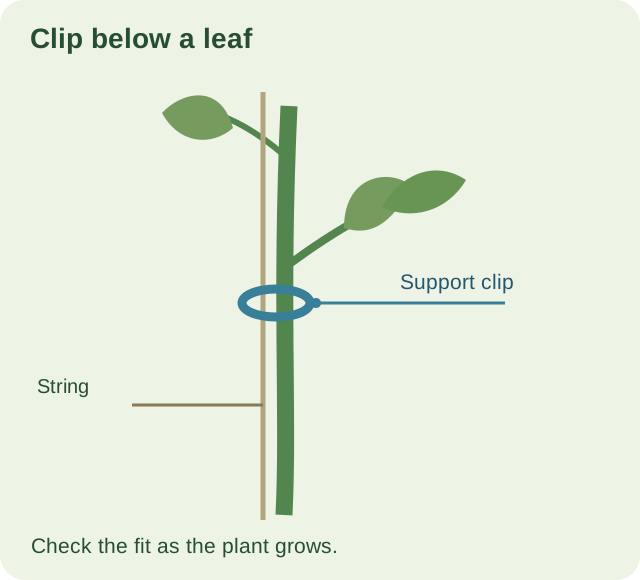
Attach clips beneath a leaf rather than immediately beneath a fruit cluster, where pressure could damage the cluster. Add support as the vine grows and check that ties or clips are not constricting the stem. A loaded tomato plant becomes heavy, so the overhead support must be secure too.
Check the variety first. Ordinary outdoor cucumbers need male flowers for pollination, so leave them. Many greenhouse all-female varieties are grown without pollination; remove occasional male flowers if the variety's instructions call for it. Male flowers lack the small fruit behind the bloom. Advice intended for a greenhouse variety can reduce an outdoor plant's crop if applied indiscriminately.
Yes. Summer greenhouse temperatures can become damaging, so provide suitable shading and manage ventilation rather than assuming more heat always means faster growth. The RHS gives roughly 18–25°C as an ideal range for greenhouse cucumbers. Monitor conditions inside the structure, not just the outdoor forecast. Maintaining appropriate moisture matters too, especially when plants are in containers that can dry quickly.
Unopened dahlia buds are usually rounded, while spent flower heads become pointed. Examine several before cutting so you learn the difference on your plant. Remove the spent head by cutting its stem back to a lower leaf joint. Regular deadheading helps maintain flowering, but accidentally removing rounded new buds cuts away the next display rather than improving it.
For a larger central bloom, remove the smaller flower buds immediately behind the central bud. This disbudding concentrates the display into fewer flowers and is useful for exhibition or selected cut stems. It is not necessary if you prefer many blooms across the whole plant. Decide which effect you want before removing buds, since bigger individual flowers and maximum flower count are different aims.
In winter, remove up to a third of the oldest stems near the base, prioritizing thick, dark wood that is becoming less productive. Keep strong younger shoots to replace them. Blackcurrants crop best on relatively young growth, so removing selected old stems encourages a continuing supply of productive wood. This routine is for established bushes; a newly planted or weak young plant needs a different pruning decision.
For an ordinary bush planted while dormant, cutting stems back to one or two buds above ground encourages strong new shoots from below the surface. It sacrifices the first season's fruit to establish the bush's framework. Follow the nursery's instructions for the plant you bought, since this treatment is not for a standard-trained plant with a tall trunk and crown. Confirm the growth form before making the cuts.
Redcurrants and whitecurrants keep a framework that carries productive short spurs on older wood, so do not routinely remove it as though every branch were a disposable blackcurrant cane. Maintain an open center and shorten appropriate side shoots during dormant pruning, retaining useful replacement growth. Identify the type of currant first. The two pruning systems aim to preserve different patterns of fruiting wood, even though the plants have similar names.
Yes, a cordon uses one or more upright stems with short fruiting side shoots, taking less ground space than a full bush. Start with a suitable young or pre-trained plant and provide a secure support. Expect both summer and dormant pruning to maintain the shape. Choose the training form when buying rather than squeezing an established sprawling bush into a gap and cutting off branches indiscriminately.
Distinguish the larger hard fruit from the tiny pea-sized embryos at shoot tips. In the UK's usual outdoor growing conditions, the larger late-formed figs generally fail to ripen and can be removed in autumn. The tiny embryos can overwinter and produce next year's crop, so retain and protect them. This advice concerns a cool, short season; fig cropping patterns differ in warmer climates and under protected cultivation.
Yes, if you repeatedly shorten shoots carrying the overwintered tiny figs. Those pea-sized embryos can supply the main outdoor crop in a cool UK garden. Check the tips before cutting and follow a fig-specific training plan instead of trimming every branch to an even outline. Frost damage can also remove that crop, so assess both pruning history and winter exposure before assuming the tree needs more fertilizer.
A useful starting point is one healthy fruit per spur, with roughly six inches between retained apples along the branch. Remove small or damaged fruit first and thin early while apples are still small. Some spurs may need to carry no fruit to achieve that spacing. Work gently so you preserve the short woody spurs, which can flower again in future years, rather than pulling off the whole structure.
An excessively heavy crop can limit the tree's formation of flower buds for the following season, contributing to alternate bearing. Early fruit thinning helps balance the crop and improves the size of the remaining apples. Begin while fruit is small instead of waiting until loaded branches bend under nearly mature fruit. Variety and growing conditions also matter, so thinning improves the balance without guaranteeing identical harvests every year.
No. Apple trees commonly shed some young fruit when they have set more than they can support, often called June drop. Inspect the tree and fallen fruit instead of assuming every drop requires treatment. Early thinning can reduce competition and improve the remaining crop. Fruit falling near harvest is a different situation, and signs such as decay, feeding damage or widespread decline deserve a separate diagnosis.
Yes. Bag healthy young apples after thinning to one fruit per cluster and before local apple-maggot activity begins. Use purpose-made protectors or the Extension method with sandwich bags, providing small drainage openings at the lower corners. Focus on safely reachable fruit. Bagging is practical for a few home trees, but it must be done before eggs are laid; enclosing already infested fruit will not undo the damage.
Larvae can leave fallen fruit and spend the winter as pupae in the soil, helping continue the infestation. Collect drops during the season and after harvest, and use a suitable disposal route rather than composting them beneath the trees. This cleanup reduces a local source of pests, but flies may still arrive from nearby hosts. Combine sanitation with timely protection rather than expecting cleanup alone to guarantee an undamaged crop.
That depends on the plant. Many kiwis have separate male and female plants: a male flowers but bears no fruit, while a female needs compatible pollen nearby. A genuinely self-fertile cultivar can be an option where only one vine fits. Check the cultivar and pollination requirements when buying. Also allow for several years before cropping and substantial support space; flowers alone do not prove the plant can fruit by itself.
In a cool climate, harvest developed fruit before the first hard frost and let it ripen indoors. Keep it in a single layer at room temperature and check gently for softening; the process can take several weeks. This is different from expecting very young, undeveloped fruit to become a full crop indoors. Once ripe, refrigerate it. Confirm the harvest guidance for your kiwi species and cultivar as their seasons vary.
Thinning the developing crop supplies tart fruit for cooking and leaves more room for the remaining berries to enlarge and sweeten. The later picking is taken when those berries are fully ripe, especially for dessert use. Match the timing to the variety and your intended use rather than expecting every gooseberry to be ready together. Handle ripe berries carefully and retain their little stalks to avoid tearing the skin.
Yes, some cultivars are nearly thornless, although most traditional gooseberries have prickly stems. Check that trait alongside flavor, disease resistance and the plant's eventual size when comparing nursery descriptions. A dessert variety suits eating fully ripe fruit, while a culinary type may be chosen mainly for cooking. Easier access also depends on the trained shape, so plan a manageable bush or cordon rather than choosing by fruit color alone.