Two similar bags can lead to a surprisingly long shopping decision. Start with the job in front of you: sowing tiny seeds, moving seedlings into pots, or growing a container plant. This comparison gives you a short list of label checks and practical questions to take to the store.
Fine seed-starting mix is useful for small seeds. A suitable soilless potting mix can also start many vegetables. Choose by intended use, texture and fertilizer information, not the bag name alone.
Compare your optionsBefore you begin
Read package handling instructions. Open and handle dusty materials carefully, avoid breathing dust, and use any protection required on the label.
What you’ll need
- The seed packet or plant information
- Labels from the mixes you are comparing
- The tray or pot you plan to use
Make an informed choice
Choose what fits your plans
- 01
Match the mix to the stage
For very small seeds, a fine-textured sowing medium makes close contact easier. For general vegetable sowing, a good soilless potting mix may work without a separate seed-starting product. Avoid substituting soil dug from the garden: container roots need an appropriate balance of air and water, and garden soil can be too dense.
- 02
Look beyond the front of the bag
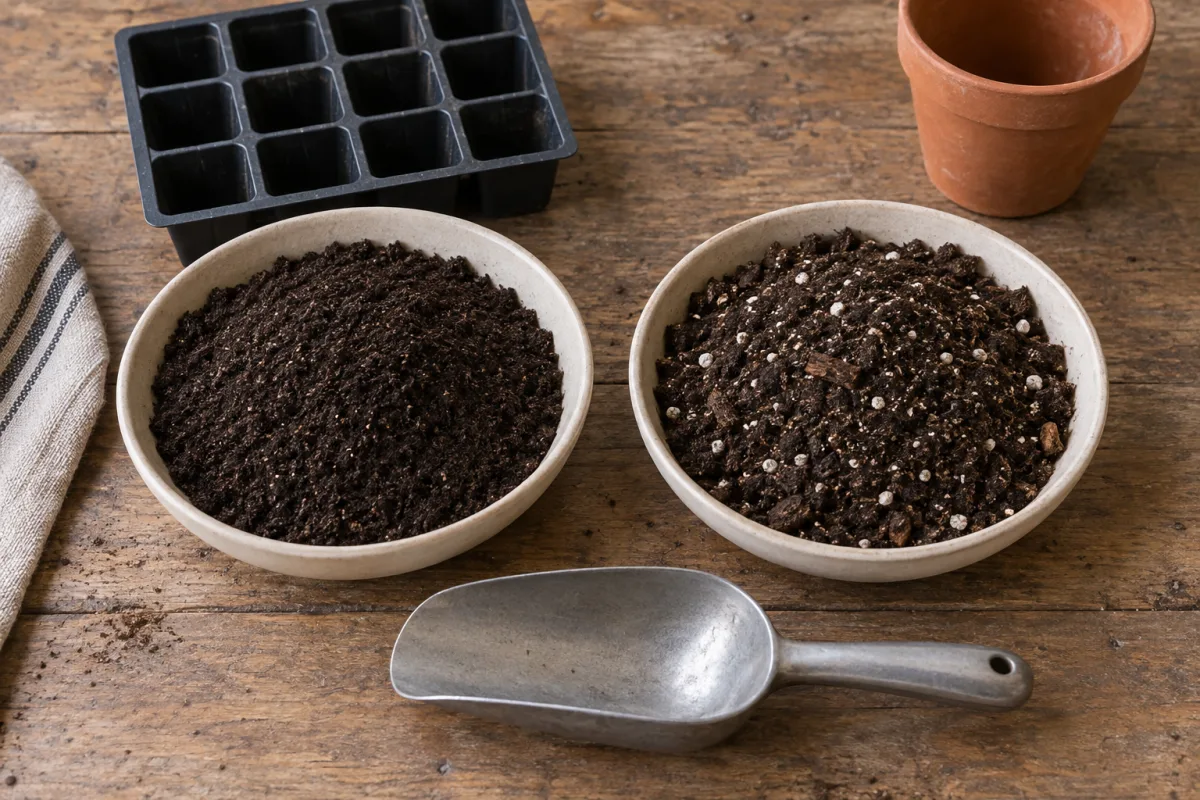
Read the ingredients and any texture, drainage or water-retention information. Peat, coir, bark, perlite and other components perform different jobs. A coarse bark mix intended for an orchid is a different material from one intended for a small seed cell. The same ingredient name does not guarantee the same particle size or performance.
- 03
Check whether fertilizer is included
Either label may describe a mix with fertilizer or one without it. Record the feeding instructions before adding anything extra. Once seedlings develop true leaves, their nutrition needs attention, but the right timing depends on the nutrients already supplied. Do not double up automatically because a second product also promises stronger growth.
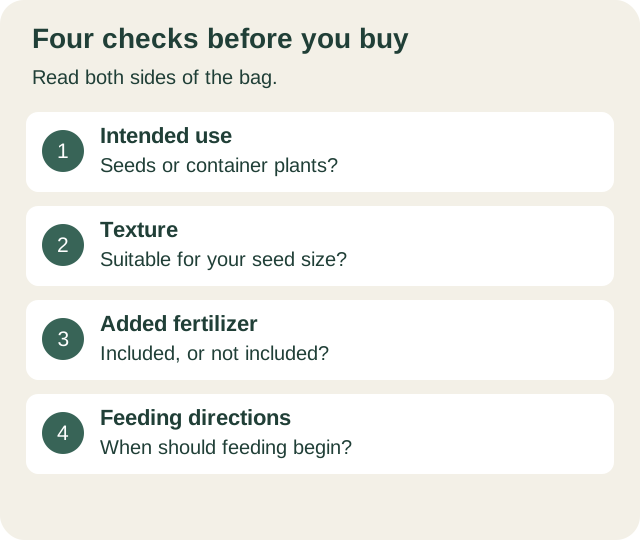
Compare the label, not only the product name.Open full-size image - 04
Choose the container at the same time
Use a clean container with drainage. Cell packs keep seedlings separate; a shared flat requires separating plants later. Reused food containers can work when prepared appropriately, so a new tray is optional. Make sure the container fits the space you have, including the tray needed to catch drips.
Optional supplies on Amazon
Affiliate disclosure: As an Amazon Associate I earn from qualifying purchases. How our links work.
Use what you already have. These links open Amazon search results so you can compare suitable supplies; they are not individual product reviews.
A good mix still needs careful filling
Fill containers evenly without packing the medium hard. Heavy compression reduces the spaces roots need for air. Keep similar containers filled consistently so one cell is not holding substantially less water than its neighbor. Follow the product’s preparation directions rather than judging an entire bag from a dry handful.
Do not buy a larger setup just to avoid one later task
Starting directly in larger pots can avoid some transplanting, but those pots need more growing space and a larger area under suitable light. Compare the space you actually have with the number of plants you want. A smaller first batch may be easier to manage than a shelf crowded with final-size containers.
A simple shopping note
Write the crop, container and planned quantity at the top of your list. Photograph the front and back of a shortlisted bag so you can compare it with another product later. Keep the label with your sowing notes; when results differ, knowing exactly what you used is more useful than remembering only the brand.
The useful distinctions
| Check | Seed-starting mix | Potting mix |
|---|---|---|
| Typical focus | Sowing seeds | Growing in containers |
| Texture | Often finer | Varies by product |
| Fertilizer | Read the label | Read the label |
| Can start vegetables? | Usually intended for it | Suitable soilless products can |
A quick final check
- Intended use matches the job.
- Texture suits the seeds and container.
- Added nutrients and feeding directions checked.
- Container drains and fits the space.
Common questions & sticking points
Must every vegetable seed have a special seed-starting mix?
No. Maryland Extension notes that a suitable soilless potting medium works for general vegetable seed starting. Fine seed-starting media are particularly useful for very small seeds.
Does potting mix always contain fertilizer?
No. Check the package rather than assuming either potting mix or seed-starting mix includes nutrients. Keep its feeding directions so you know when supplementation is appropriate.
Can I reuse a seed tray instead of buying another one?
Yes, if it is sound and properly cleaned and disinfected before reuse. Check that drainage openings are clear and that the tray still supports the containers securely.
Sources & further reading Optional
References used to check this guide. Follow your product’s own safety instructions where its design differs.
- University of Maryland Extension: seed-starting media
- Iowa State Extension: media ingredients and handling
- Iowa State Extension: seed-starting containers
- Michigan State Extension: mix labels and seedling nutrition