Basil is a good plant to grow close to the kitchen because you can harvest small amounts as you cook. The practical challenge is giving it enough warmth and light while avoiding a soggy pot. This guide starts with a young basil plant rather than seeds, so you can focus on everyday care.
Put a young basil plant in a draining pot with suitable potting mix, give it a warm bright position, keep the mix evenly moist, and harvest shoot tips as it grows.
Go straight to the stepsBefore you begin
Basil is tender and does not tolerate frost. Use your local conditions rather than a fixed planting month; RHS advises waiting for consistently warm nights before outdoor planting.
What you’ll need
- A healthy young basil plant
- A pot with drainage
- Suitable potting mix
- Water and clean scissors
Tools & supplies for this project
Affiliate disclosure: We may earn a commission when you buy through these Lowe’s links. How our links work.
Use what you already own. If you need supplies, compare these options with the requirements above and choose only the items your project needs.
Check Lowe’s for current price, availability and specifications.
Let’s do this
Step by step
- 01
Choose a healthy starting plant
Look for firm stems and healthy leaves. Avoid buying a plant with obvious pests, severe wilting, or a waterlogged root ball.
- 02
Prepare the container
Use a pot with drainage holes and a suitable growing mix. Plant at the same level as before, rather than burying the stem much deeper.
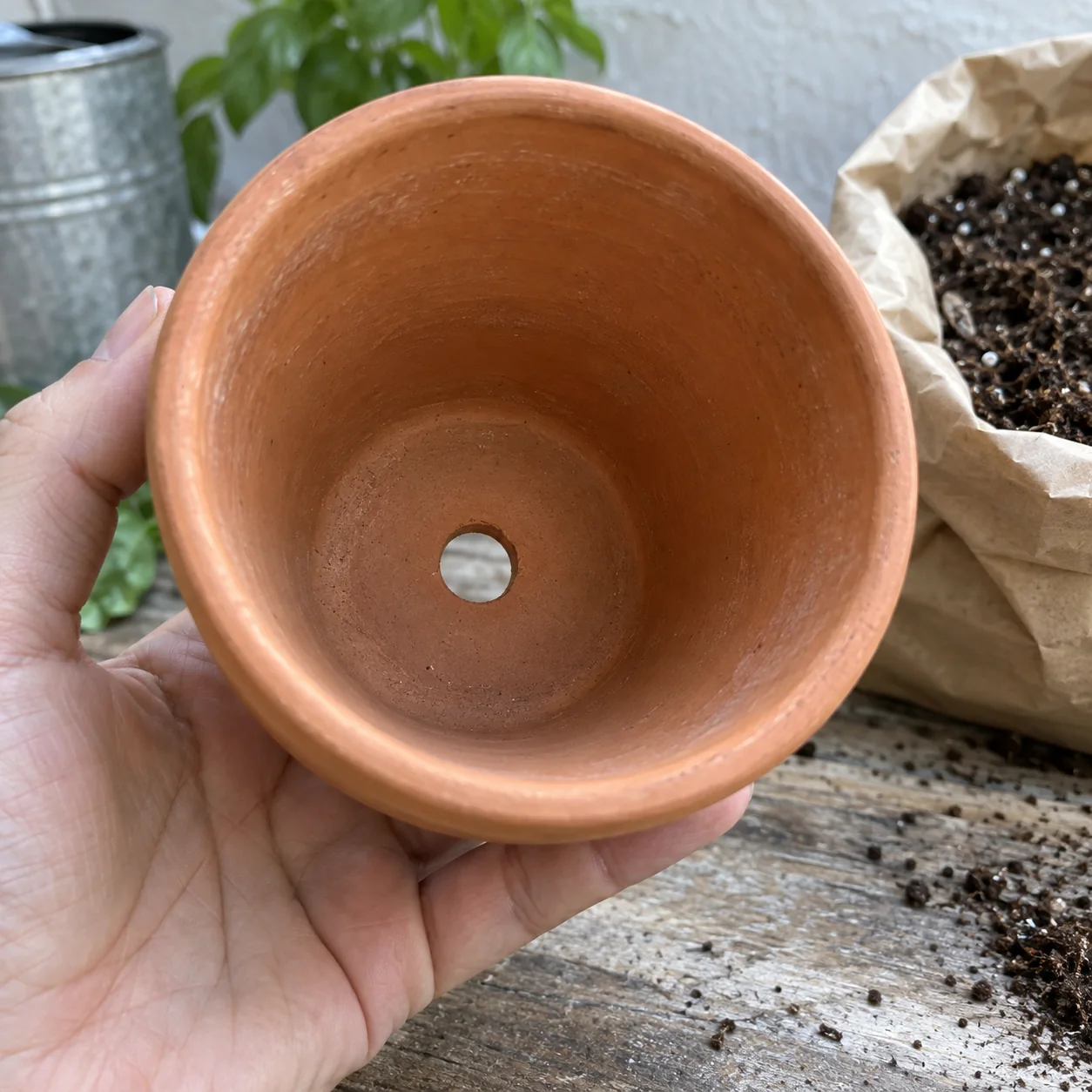
Check that the pot can drain before filling it. Leave the hole open and use a suitable growing mix.Open full-size image - 03
Find warmth and light
Choose a bright, warm location. If moving a plant outdoors, introduce it gradually and protect it from cold conditions.
- 04
Check moisture regularly
Keep the mix evenly moist without leaving the roots sitting in water. Container plants can dry quickly; check the pot rather than watering on an unchanging schedule.
- 05
Harvest the growing tips
Once the plant is growing well, take small shoot tips above a pair of leaves to encourage branching. Remove flower stems as they appear if your aim is continued leafy growth.
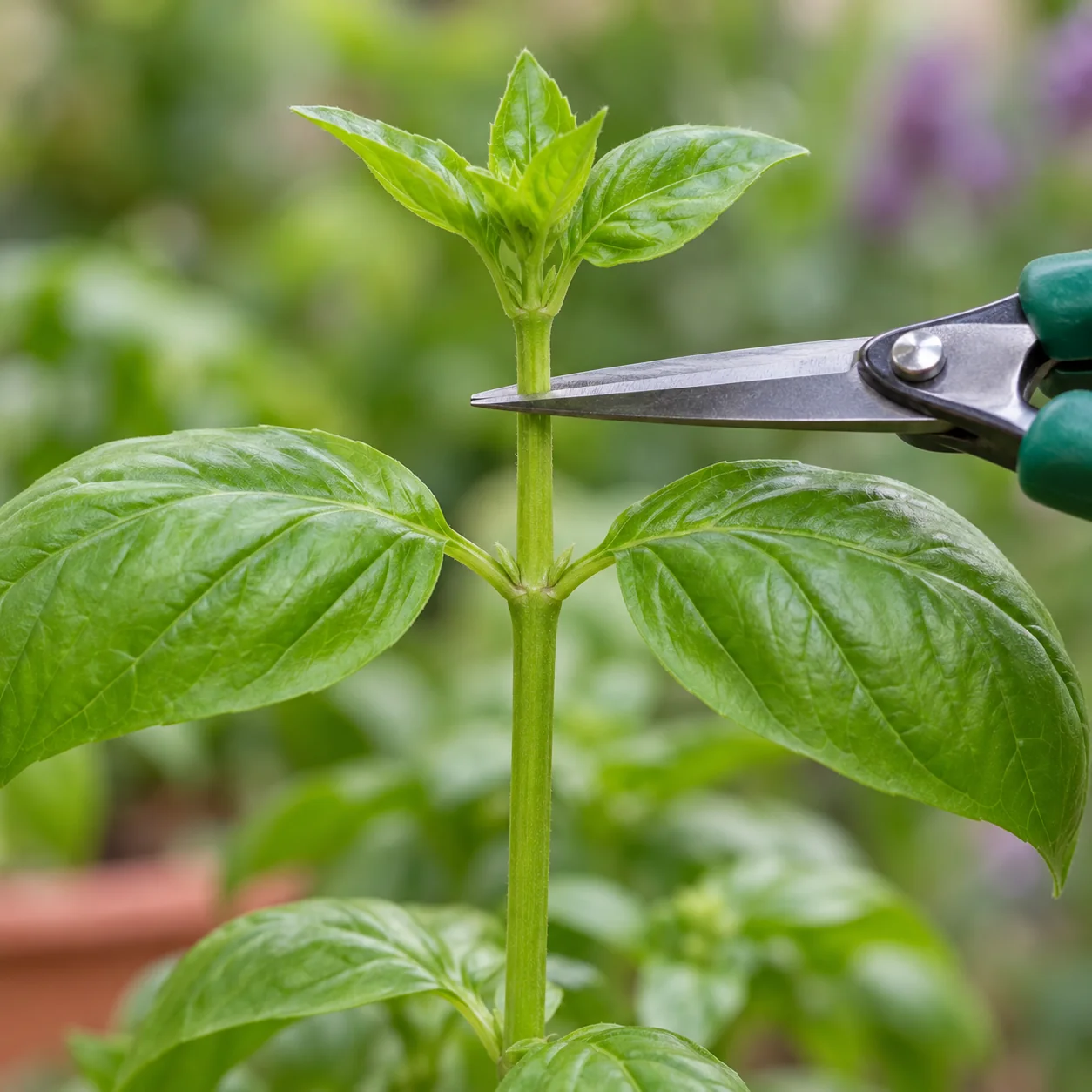
Take the tip just above a leaf pair, leaving that pair on the plant. Harvest a little at a time from healthy growth.Open full-size image
Optional supplies on Amazon
Affiliate disclosure: As an Amazon Associate I earn from qualifying purchases. How our links work.
Use what you already have. These links open Amazon search results so you can compare suitable supplies; they are not individual product reviews.
Plan harvests around the plant’s size
A small plant cannot supply a large bowl of pesto every day. Begin with a few leaves or tips for a sandwich, salad, or garnish, and leave enough healthy growth for the plant to continue. For larger cooking plans, grow several plants rather than repeatedly stripping one.
Put the pot where you can check it easily. A basil plant hidden behind other objects may miss both light and attention. A visible growing spot makes it easier to notice dry mix or the first flower stem before the plant becomes stressed.
Keep the care routine simple
When something goes wrong, check light, moisture, and temperature before adding fertilizer. If feeding is appropriate, use a product suited to edible herbs and follow its directions. More fertilizer does not replace missing sunlight or fix roots that remain too wet.
A quick final check
- The pot drains freely.
- The location is warm and bright.
- Harvesting leaves plenty of healthy growth.
Common questions & sticking points
Can I grow basil indoors?
Yes, if it receives enough light and warmth. A dim kitchen corner is less suitable than a bright growing spot.
Why remove the flowers?
RHS recommends removing flower stems to prolong leaf quality when growing basil for its leaves.
Sources & further reading Optional
References used to check this guide. Follow your product’s own safety instructions where its design differs.
Last source check: September 21, 2026