Add a suitable thin lining or interfacing beneath a sheer covering fabric so the metal does not alter its color or shine through. Keep the extra layer light enough for the button's back to fit securely. Test the actual fabric over the form in good light before making the whole set. Pull the covering evenly without distorting a motif or stretching a fragile knit out of shape.
The outer layer needs extra length to travel over the collar's thickness and curve. This allowance for the turn of the cloth helps the finished seam roll underneath rather than showing on top. Keep the upper and lower pieces identified and follow the pattern's joining instructions. Trimming them to identical sizes simply because they look mismatched can remove shaping that was deliberately built into the collar.
The interfacing may be too heavy for the fabric and intended style. A collar needs support, but excessive stiffness prevents a natural roll. Test the complete combination of fabric and interfacing, including folded layers, before cutting the next collar. Choose the firmness you want rather than automatically using the stiffest product available; the same interfacing can behave differently under thin cotton and heavier cloth.
A shaped set-in sleeve often includes extra length over the cap so it can curve over the shoulder and upper arm. Distribute that ease between the marked points without creating visible pleats unless the design calls for gathers. Match the front, back and shoulder marks first, then use easing stitches to control the fullness. Do not cut away the excess before checking the pattern's intended construction.
Preserve the rounded cap instead of flattening it against the board. The upper allowances help support that shape, and controlled pressing over a suitable curved surface is more useful than crushing the whole area. Use heat and steam appropriate for the fabric and test first. A pressing method that eases wool may not work the same way on a synthetic sleeve, so do not assume more steam will remove every pucker.
Press one seam allowance under, place its folded edge on the other piece's seamline with both right sides visible, and align the stripes. Slip-baste between the fold and lower fabric to hold that match. Then unfold the upper piece and sew the ordinary seam from the wrong side. This lets you confirm the visible pattern alignment before the machine seam hides it between the layers.
Use it to hold a wider area of layered fabric in position during fitting, pressing or construction. Short stitches through both layers are connected by longer diagonal threads across the surface. Several rows can control a pocket or tailoring layers without following the final seamline. It is temporary support, so choose removable thread and remove the basting carefully when permanent stitching has secured the layers.
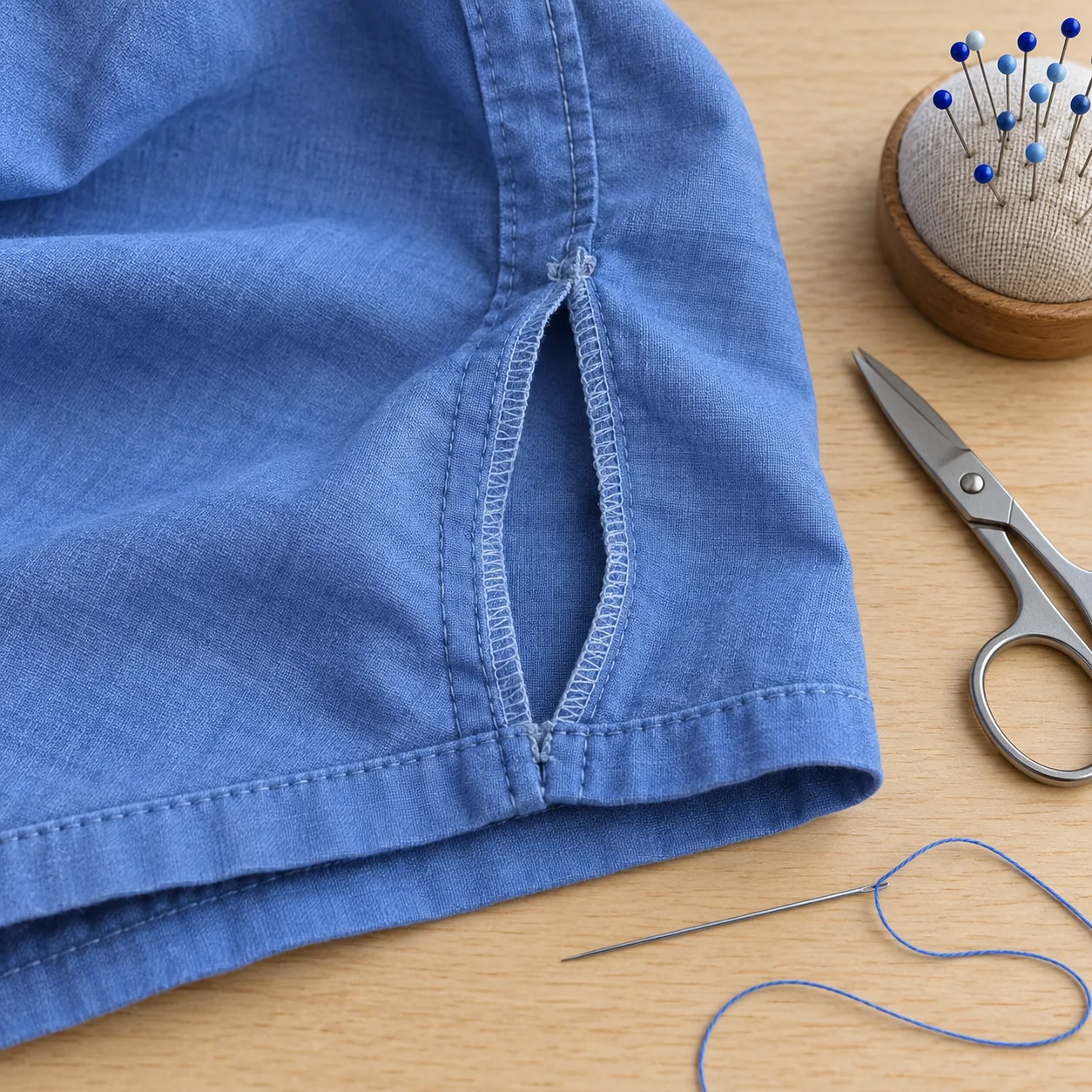
Secure each end of the opening with a small stitched rectangle, triangle or suitable bartack after positioning the pocket. Those upper corners take repeated pulling when a hand enters the pocket. Test the chosen stitching through the same number of layers first, then keep the reinforcement clear of the opening itself. Neat edge stitching along the sides does not automatically reinforce the places under the most strain.
Embroider or monogram the pocket before you stitch it onto the garment. You can work on the flat piece without accidentally sewing the pocket shut or catching another layer underneath. Plan the design inside the finished pocket boundaries, allowing for its hem and folded seam allowances. Check placement with the pocket prepared and positioned before final attachment so the decoration sits where you intended.
It usually establishes position; the opening must suit the actual button, including its thickness. A flat button and a domed button of equal diameter can need different openings. Make a test in matching fabric layers and try the real button through it before sewing the garment's buttonholes. Use that successful test to set the length rather than copying a printed line without checking the button.
Keep the intended top and bottom placements relative to their garment edges, then redistribute the intermediate buttonholes evenly between them. Mark the complete row before stitching and check how it sits on the wearer. Pattern alterations can make the original spacing unsuitable. Use the actual buttons for the size test as well, since correct spacing does not ensure that each finished opening will fit its button.
Sew one pair of pieces, then feed the next pair through without cutting the threads between them. The stitched units form a connected chain that you can separate afterward. Keep the pieces close but do not overlap their edges. Organize the pairs in the required order before starting; chain piecing saves handling, but it also makes it easy to repeat an orientation mistake across several units.
Press the joining seam allowances in opposite directions on the two units. When you place them right sides together, the raised seam edges can sit snugly against each other. Pin or otherwise hold that alignment and sew without letting one unit slide ahead. Nesting helps position the intersection, but accurate cutting and a consistent seam allowance still matter for the surrounding block to finish at the correct size.
Place equal-size squares right sides together and mark a diagonal on the lighter square's wrong side. Sew a quarter inch to each side of that line, then cut on the marked line. Open, press and trim the two units to the pattern's required unfinished size. Choose the starting square size from a tested pattern or allowance formula; cutting squares at the final block size leaves no room for the seams.
Align the ruler's forty-five-degree line with the sewn diagonal before trimming. Keep the required square measurement inside the fabric, trim two sides, then rotate and align the ruler again for the remaining sides. Check the pattern's unfinished size, which includes future seam allowances. Trimming only by the outer edges can leave an off-center seam that makes the triangles' points harder to match later.
Measure through the quilt's center and cut the matching border strips to that controlled length instead of sewing on an oversized strip and trimming it afterward. Match the centers and ends, then distribute any small difference evenly as you pin and sew. Repeat the measurement after adding the first pair of borders. This helps prevent a stretched outside edge from dictating the size of every new border.
The manufacturer does not recommend machine-washing it before quilting because agitation can pull the unsupported fibers apart. Prewashing is optional, and any preshrinking should follow the product's care directions. Once quilted, the surrounding fabric and stitches support the batting during washing. Do not assume instructions for a finished quilt apply to a loose sheet of batting removed from its package.
The shinier, smoother scrim side should face the backing, while the cotton side faces the quilt top. The maker recommends quilting in the direction the batting was needle-punched, which is generally easier. Identify the sides before layering and basting. This is product-specific guidance: check the package or manufacturer's instructions for another batting instead of assuming every batting has the same construction or a required direction.
Use the thin reverse edge of a LEGO brick separator, rather than its studded end. Slip that edge into the gap where the tile meets the supporting studs, hold the model steady, and press the opposite end down to lift the tile. Work with the tool aligned to the gap. The wedge provides the leverage that a smooth tile's missing studs cannot provide.
It can push a compatible Technic axle out of a cross-shaped hole. Hold the surrounding brick securely, align the separator's projection with the hole, and press straight through so the axle moves out the other side. Keep the exit side clear. This is a different use from levering plates apart; do not twist the projection sideways or assume it fits every connector in a model.
Yes, with a suitable frame that holds the puzzle firmly between its glazing and rigid backing. This works more readily with smaller puzzles; larger ones can flex or shift. Check the actual finished dimensions and the frame's internal fit before moving the puzzle. Permanent glue closes off the easy rebuilding option, so decide whether you want a lasting display or a puzzle you can enjoy again.
Yes. Glue holds pieces together, but it does not replace a firm support that prevents a large puzzle from sagging over time. Let the adhesive fully dry on a flat surface before mounting, following its label, and use a suitable rigid backing and frame. Hanging a flexible glued sheet by itself can put stress on the joins even when it initially lifts off the table in one piece.
The manufacturer directs you to apply this liquid conserver to the picture surface, using the bottle's sponge to distribute it evenly. Confirm that your puzzle type is among the product's supported uses and follow the bottle's drying directions. Do not transfer instructions from adhesive backing sheets to liquid conserver: they are different products. Make sure you want a permanently preserved puzzle before coating the finished image.
A purpose-made roll-up puzzle mat lets you build on its felt surface and store the work around the supplied tube, secured with its bands. Choose one that accommodates the puzzle's finished dimensions and follow the system's rolling instructions. Plan this before starting on a bare tabletop, because moving loose sections afterward adds work. A rigid puzzle board is another layout choice when you have suitable flat storage.
Optional supplies on Amazon
Affiliate disclosure: As an Amazon Associate I earn from qualifying purchases. How our links work.