The best starting kit is the one you can use comfortably for the project you actually have. A new cutting tool will not correct a misplaced pattern or a moving ruler. Compare the complete setup, then practice on a scrap before cutting the fabric you want to keep.
Scissors and rotary cutters can both cut fabric accurately. Consider a rotary cutter for repeated measured cuts with a mat and ruler; choose scissors when that setup does not suit the task or your control.
Compare your optionsBefore you begin
Both tools are sharp. Keep fingers out of the cutting path and children away from the setup. Close or cover blades before putting a tool down and follow its instructions.
What you’ll need
- Your pattern and fabric requirements
- A stable, uncluttered work surface
- A fabric scrap for practice
- A rotary-cutting mat and suitable ruler if choosing a cutter
Make an informed choice
Choose what fits your plans
- 01
Start with the pattern, not the tool
Read the cutting layout and check the required layers, grain direction and mirrored pieces. Arrange all pieces before cutting. With scissors, aim for smooth, even strokes; a rotary cutter needs even pressure on a suitable mat. Neither choice removes the need to hold the material in position.
- 02
Think about the cuts you repeat
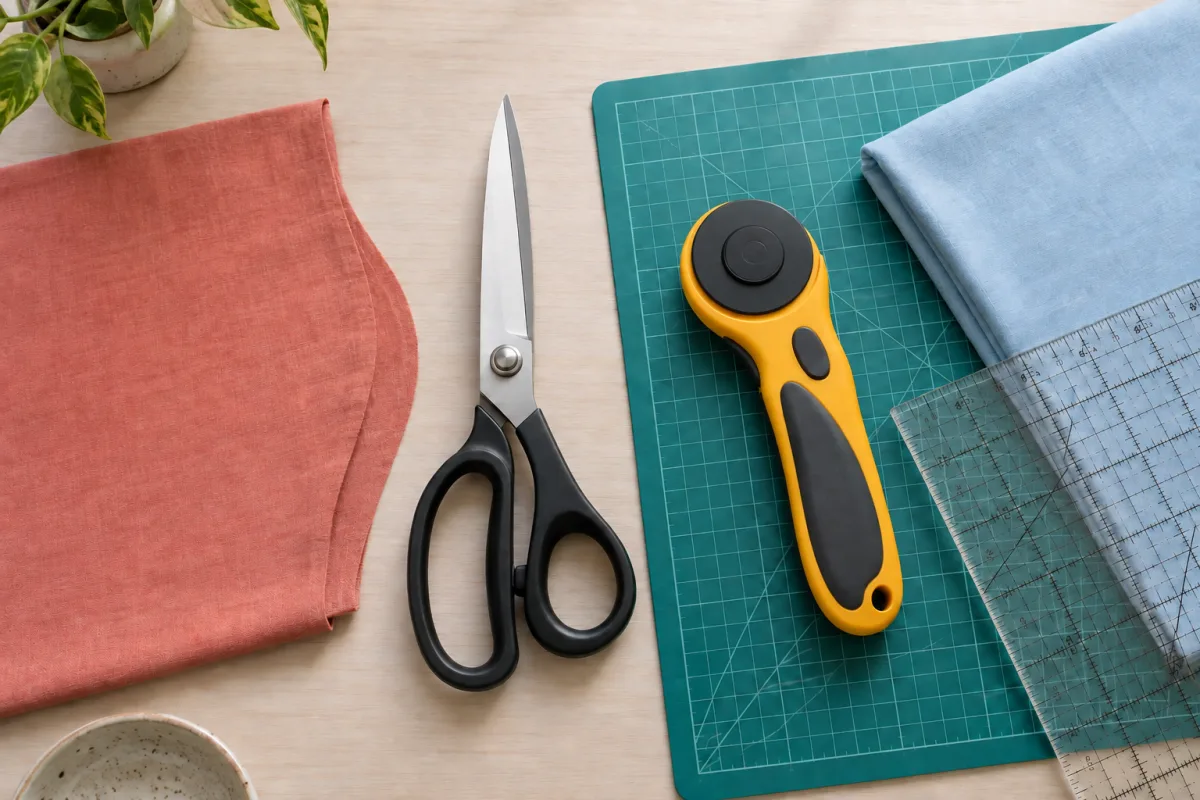
A mat and quilting ruler give a rotary cutter an alignment system for measured strips and straight edges. This is useful for repeated patchwork pieces. Scissors are an alternative when their cutting motion suits you better. Try the actual fabric and shape before choosing.
- 03
Count the whole setup
A cutter is only part of the purchase. Allow for an appropriate cutting mat, a suitable ruler and space to support the work. Check the cutter’s handedness and how its blade cover operates. Look at the mat’s usable dimensions; a small starter mat may fit small pieces but require a different plan for a long pattern section.
- 04
Practise a safe movement
Clear pins and offcuts from the mat. When using the cutter with its ruler, hold the ruler firmly with fingers away from its edge and cut away from your body. Close the guard as soon as the cut ends. Reposition the work if necessary instead of reaching awkwardly across the cutting path.
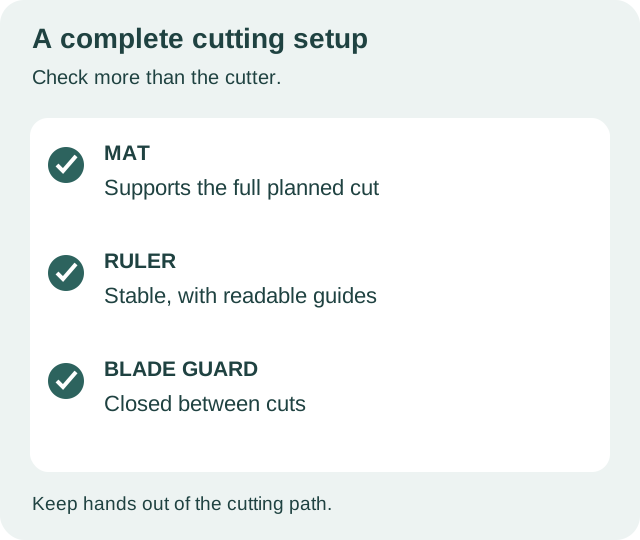
The cutter, mat and ruler work as a setup.Open full-size image
Optional supplies on Amazon
Affiliate disclosure: As an Amazon Associate I earn from qualifying purchases. How our links work.
Use what you already have. These links open Amazon search results so you can compare suitable supplies; they are not individual product reviews.
What cutter diameter tells you
BERNINA identifies 45 mm as a general cutting size and 28 mm as useful for tighter curves. That is a starting point, not a promise that a smaller blade makes every shape easy. Check the blade and handle compatibility before buying replacements.
Try this before investing in a larger kit
Use two scraps of the same fabric. Mark a straight line and a gentle curve on each, then use the tools you can safely try. Compare how easy it was to stay on the line, keep the fabric still and finish the cut comfortably. This is a suggested practice exercise, not a claim that we tested or ranked products.
Keep the mat and ruler in the decision
Check that you can read the markings you need. Mat and ruler guides assist alignment, but you still must position the fabric and secure the ruler. Include these accessories in the budget.
A quick final check
- Pattern layout checked first.
- Tool motion feels controlled.
- Rotary mat and ruler fit the planned cuts.
- Blade guard closes and storage is secure.
Common questions & sticking points
Can I use a rotary cutter directly on a wooden table?
Use a suitable rotary-cutting mat. The mat protects the supporting surface and provides the working surface intended for this cutting method. A bare table is not a substitute.
Do I have to choose one cutting tool forever?
No. Build around your current project, then add a tool when you can name the task it will improve. Having both is an option, not a requirement for beginning a first project.
Does every rotary cutter work the same way for left-handed users?
Check the individual model’s instructions. Some are designed for either hand, but that does not establish how every handle, guard or blade arrangement should be used.
Sources & further reading Optional
References used to check this guide. Follow your product’s own safety instructions where its design differs.
- BERNINA: cutting and pinning fabric
- OLFA: safe rotary-cutting setup
- Fiskars: rotary cutters, mats and rulers
- OLFA: cutter, guard and mat features