Switch off and unplug the purifier, then remove the fabric sleeve as its manual shows. Blueair permits a gentle cold wash for applicable fabric pre-filters, without bleach or harsh chemicals. Air dry it completely before reinstalling; do not tumble dry it. This applies to the removable fabric pre-filter, not the pleated main filter inside, which has its own replacement and care instructions.
Do not wash the main filter unless the exact model's manual explicitly permits it; Blueair's guidance says its HEPA-type main filters are not washable. Water can damage the filtering material. Replace the filter on the model's schedule or when instructed, using the correct part. A washable outer fabric cover does not make the internal filter washable, even if both look dusty.
For a suitable Blueair fabric pre-filter, light surface dust can be removed with a vacuum's soft brush attachment. Turn off and unplug the unit before removing or accessing the sleeve as instructed. Reserve washing for deeper cleaning and let it dry completely afterward. Cleaning frequency depends on dust, pets and use, so inspect the sleeve instead of relying only on a calendar reminder.
Begin with gentle dry dusting and avoid metal polish or solvent until you identify the finish. A clear or colored lacquer can be part of the object's original appearance, and polishing may remove it along with the tarnish. Check maker information or consult a conservator for an old or valuable piece. Photograph existing marks before any treatment so changes are easy to recognize.
Optional supplies on Amazon
Affiliate disclosure: As an Amazon Associate I earn from qualifying purchases. How our links work.
Do not assume the dark surface is unwanted dirt. Bronze objects may have an intentional patina that contributes to their appearance and value. Remove only loose dust gently while you establish what the finish is. Keep metal polish, acid cleaners and abrasives off the piece until a knowledgeable conservator advises on it. A shiny result can represent permanent loss of the original surface.
Cleaning removes dirt and residues, while polishing uses abrasion to remove tarnish and some surface metal. Repeated polishing can soften fine detail. For ordinary unlacquered brass, follow its maker's maintenance method and remove cleaner residue thoroughly. For an antique or a coated object, identify the intended finish first. Dust control and careful handling can reduce how often stronger treatment is needed.
The silver layer is thin, and tarnish removal can take away some underlying silver along with the discoloration. Repeated abrasive polishing may expose the base metal, especially on raised details. Confirm the construction and choose care intended for plated silver. For an old or valuable tray, seek conservation advice before aggressive treatment. Reduce future tarnishing through suitable storage rather than repeatedly chasing a mirror finish.
Avoid immersing hollow or weighted silver pieces without expert guidance. Candlestick bases can contain filling material, and cleaning liquid can enter cavities or joints where it is difficult to remove. Wood, felt or other attached materials may also be harmed. Identify the construction first and use the appropriate localized care method. A liquid dip suitable for one plain silver object is not universal.
A silver-specific polishing cloth can help with light tarnish on an appropriate, sound silver surface. Use gentle pressure and check raised details frequently. The cloth is still mildly abrasive, so it should not become a daily cleaning habit. Avoid general-purpose metal polish on silver, and keep polishing away from gilding or delicate inlays. For plated or historically important pieces, establish the safest treatment first.
Blot up the spill without wiping it outward, then use a neutral stone cleaner approved for the stone and its sealer. Turn the cloth frequently so collected oil is not spread back across the surface, and follow the cleaner's finishing directions. If a dark patch remains, note the source before choosing a treatment. Absorbed oil can require a suitable poultice rather than stronger surface scrubbing.
A compatible cleaning agent is held in an absorbent material so the stain can move out of the stone as the poultice dries. The recipe and timing depend on the stain and stone, so use a labeled stone product or a specialist's instructions. Test first and protect adjacent materials. It is a stain treatment, not a general solution for scratches, etching or unknown discoloration.
Moisture can carry metal corrosion into porous stone, leaving an orange-brown or greenish mark shaped like the object. Identify the metal and stone before treating it. The Natural Stone Institute notes that deep rust stains can be difficult or permanent and may need professional care. Move the source, dry the area and avoid experimenting with acidic household rust removers that may etch the surface.
Tin develops a natural patina during use, and it is softer than stainless steel. Use the pan maker's gentle washing method rather than aggressive scouring aimed at making it look new. Identify whether the lining is tin or stainless before selecting cleaners and tools. If copper shows through a worn tin lining, ask the manufacturer about retinning instead of treating it as ordinary dirt.
The exterior naturally develops a patina, and Mauviel treats polishing its copper exterior as a choice about appearance. Wash and dry the cookware as instructed; use an appropriate copper cleaner when you want to restore shine. Keep the exterior treatment separate from the lining's care requirements. Dark copper outside is different from damage or exposed copper on a worn cooking surface inside.
Do not immerse it without assessing the repair. Older adhesives may have weakened or may be sensitive to water, and the piece is less reliable than intact ceramic. Start with careful inspection and seek conservation advice for a valuable object. Handle it with support under the body instead of by its repaired handle. Keep an existing repair dry until an appropriate cleaning method is confirmed.
Glass can crack when parts expand or contract unevenly. Let the piece reach a stable room temperature and avoid moving it straight between hot and cold water. Inspect for old repairs, cracks and fragile decoration before deciding whether washing is suitable at all. Antique glass with cloudiness, flaking or weeping may need a conservator's assessment; those changes are not necessarily removable dirt.
Forbo describes temporary drying-room yellowing that can develop while linoleum matures. Exposure to normal light lets the true color emerge, with the pace depending on the product and lighting. Compare a sample after exposure before assuming the floor is dirty or the wrong color. Avoid bleaching or aggressive scrubbing to remove the tint, and ask the supplier to assess any unexplained persistent difference.
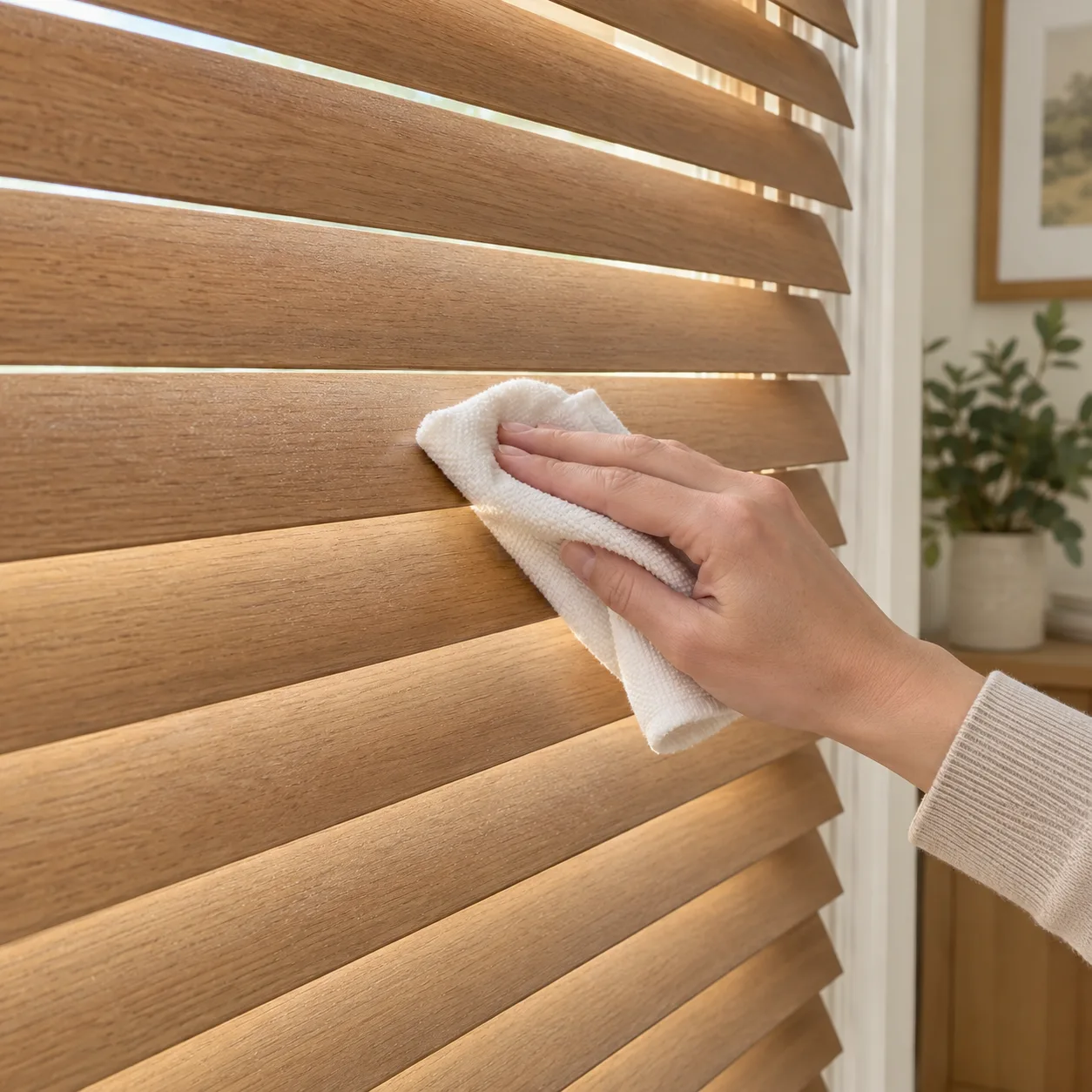
Lower the blind fully and tilt its slats almost closed, leaving enough space to reach their overlapping edges. Wipe with a soft clean cloth or dusting mitt, supporting each slat instead of pulling on it. Work across the blind systematically, then adjust the tilt to reach the other faces. A vacuum brush attachment is another option when the blind maker permits it.
Optional supplies on Amazon
Affiliate disclosure: As an Amazon Associate I earn from qualifying purchases. How our links work.
Spray the glass cleaner onto your cleaning cloth rather than directly at the window. Keep the damp cloth and any drips away from the wooden slats, cords and finish. Hunter Douglas advises protecting real wood from excessive moisture and steam. If the blinds need attention too, dust them separately with a soft dry cloth; window cleaner is not a substitute for wood-blind care.
Optional supplies on Amazon
Affiliate disclosure: As an Amazon Associate I earn from qualifying purchases. How our links work.
Check the exact blind's care instructions before attempting a bath. Hunter Douglas says not to immerse the operating headrail or a SimpleLift bottom rail, even on aluminum blinds that otherwise tolerate certain cleaning methods. Routine dusting, gentle vacuuming and permitted spot cleaning are simpler starting points. For a full wash, obtain model-specific instructions or professional cleaning rather than assuming the entire assembly is waterproof.
Comb out trapped hair first. For the Kent brush types covered by its aftercare guide, clean the bristle tips in lukewarm water with a little mild shampoo or detergent, keeping the wooden body dry. Work gently and do not submerge the whole brush. Shake off excess water afterward. Check your own brush's instructions, particularly for cushioned, mixed-material or decorated designs that may need different care.
Mason Pearson directs drying its pocket hairbrushes with the bristles facing down. After the permitted cleaning method, place the brush so it can drain and air dry without being crushed beneath other objects. Keep it out of a closed pouch until it is dry. Check your own brush's care instructions before washing; a wooden body or a different cushion construction can require different handling.
Remove loose hair first, then wipe the comb as its material permits. Kent suggests a soft toothbrush for getting between teeth that a cloth cannot reach. Work gently rather than bending narrow teeth or scraping with a sharp tool. Wipe away loosened residue and allow the comb to dry naturally. Check separate care instructions for wooden, painted or specialty combs before introducing water or detergent.
No. Identify the mat's material and construction before choosing a cleaner. Manduka warns that its absorbent GRP mats should not receive disinfectant because the liquid can soak inside and cannot be thoroughly removed. Use the care method specified for that mat instead. A spray suitable for a closed-cell mat is not automatically suitable for a moisture-absorbing mat, even when both look similar.