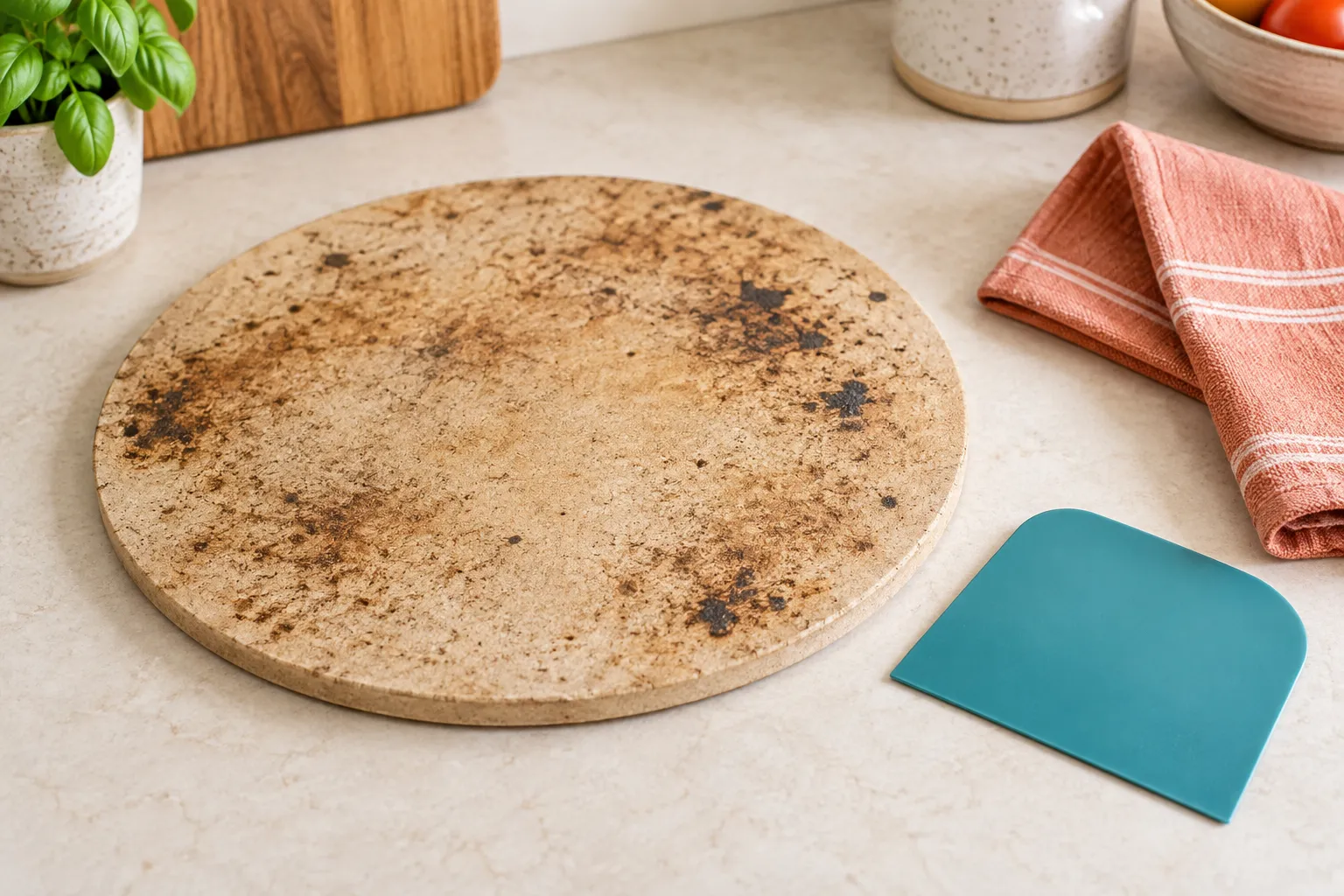
A used pizza stone is rarely spotless. Dark patches alone are not a reason to scrub aggressively. The useful goal is a dry, stable cooking surface without loose burnt flour or thick lumps of cheese.
Let the stone cool completely, lift loose food with a suitable scraper and brush off debris. Keep porous stones dry and follow their manufacturer’s care instructions. Do not use soap, soak them or attempt a household-oven self-clean cycle.
Go straight to the stepsYour project helper
Follow the steps and check them off as you go →Before you begin
Identify whether you have a porous stone, glazed stoneware or a baking steel; they have different care methods. Handle only when fully cool. Avoid moving a hot stone onto a cold or wet surface.
What you’ll need
- Cooled pizza stone
- Maker-approved scraper or brush
- Dry cloth
- Stable work surface
Let’s do this
Step by step
- 01
Cool and inspect
Leave the stone until it is cool throughout, not merely cool at an edge. Look for cracks, flaking or loose fragments. Set aside an unstable damaged stone instead of continuing to cook on it.
- 02
Lift raised deposits
Use a suitable scraper at a shallow angle to lift stuck food. Apply gentle pressure without gouging. Do not use a knife point or hammer at a hard lump.
- 03
Brush the surface
Sweep loose flour, crumbs and scraped residue away with a compatible brush. Inspect the surface for any loose tool bristles or fragments before returning it to cooking use.
- 04
Wipe dry
Use a dry cloth to collect fine dust. For a porous stone whose maker forbids liquid, do not add water, soap or a cleaning paste. A retained smell or unusual residue deserves maker-specific advice.
- 05
Store and reheat correctly
Return the dry stone to a supported position or store where it cannot fall. On the next use, heat according to the stone and oven instructions. Do not improvise an extreme burn-off in an indoor oven.
Checks stay on this page while you work and reset when you leave.
Stains are not the same as stuck food
A smooth dark mark can remain after the raised residue is gone. Removing every color change may damage the cooking surface without improving how the stone works.
Outdoor-oven advice is equipment-specific
Some pizza-oven makers describe a high-temperature burn-off or flipping a stone. That does not authorize the same temperature or cleaning cycle in another oven. Follow both appliances’ limitations.
A quick final check
- Cool and inspect
- Lift raised deposits
- Brush the surface
- Wipe dry
- Store and reheat correctly
Common questions & sticking points
Can I wash it with dish soap?
Do not use soap on a porous stone when its maker forbids it. Absorbed cleaner can affect future cooking.
Can I use it while damp?
No. Let it dry completely and follow the manufacturer’s advice; trapped moisture and rapid heating can cause damage.
Sources & further reading Optional
References used to check this guide. Follow your product’s own safety instructions where its design differs.
Last source check: September 24, 2026