“Hydrangea” covers plants with different flowering habits. The wrong timing can remove the buds you were hoping to see next season. A good first decision may be to do very little: remove confirmed dead or damaged material and identify the plant before shaping it.
Identify the species and cultivar first. Preserve old-wood flower buds, and time any new-wood pruning to the plant’s guidance.
Go straight to the stepsBefore you begin
If you do not know which hydrangea you have, postpone major pruning. Do not cut the entire shrub down simply because a neighbor’s hydrangea tolerates it.
What you’ll need
- Plant label or reliable identification
- Sharp clean bypass pruners
- Gloves
- Loppers only for branches within their capacity
Let’s do this
Step by step
- 01
Identify the plant, not just the flower color
Look for the nursery tag, cultivar name and leaf and flower form. Panicle and smooth hydrangeas bloom on new growth. Bigleaf and oakleaf types generally rely on old wood, and some bigleaf cultivars rebloom. Use the exact variety’s care guidance.
- 02
Decide whether pruning is needed
Ask what the cut is meant to achieve: remove damage, reduce crowding or shape a plant. Do not prune merely because the calendar says spring. If the shrub is healthy and fits its space, significant annual cutting may be unnecessary.
- 03
Protect old-wood buds
Avoid routine hard pruning of old-wood types. Where selective pruning is needed, follow the cultivar’s timing; cutting late in the season can remove developing flower buds. Reblooming does not mean every stem can be removed without affecting the display.
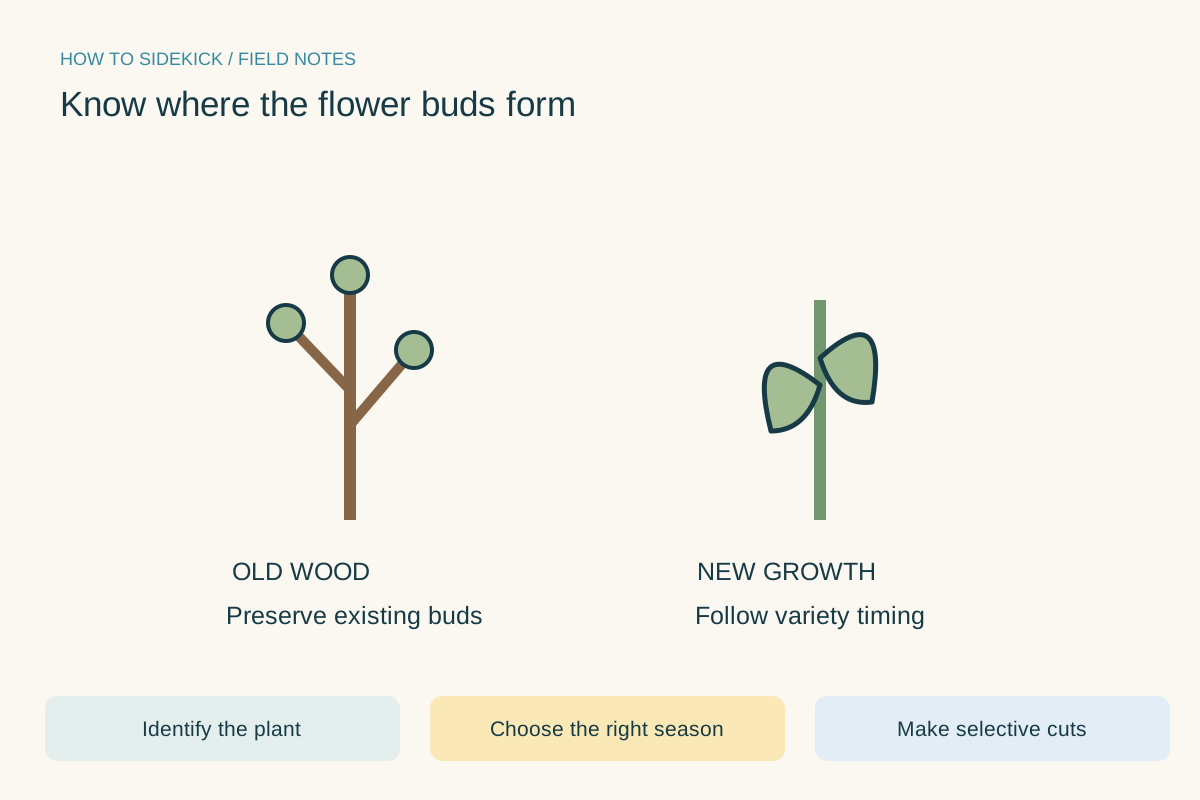
Know where the flower buds form. Use the instructions below for the full procedure.Open full-size image - 04
Make selective cuts on the appropriate stems
For new-wood types, follow the recommended late-winter or spring pruning method for that plant and climate. Cut cleanly just above suitable buds when shortening a stem. Remove confirmed dead material carefully; do not guess that every bare winter stem is dead.
- 05
Step back and stop early
Check the overall shape after a few cuts. Keep the plant’s natural structure and avoid shearing it into a flat hedge. Clear trimmings and record the variety and date so next season’s flowering gives you useful feedback.
When identification is uncertain
Photograph the leaves, stems and flowers through the season and ask a local extension service or nursery to identify the plant. Leaving an uncertain healthy stem is reversible; removing its flower buds is not.
Start with the flowering habit
| Hydrangea group | Flowering wood | Beginner approach |
|---|---|---|
| Panicle / smooth | New growth | Follow variety guidance for late winter or spring |
| Bigleaf / oakleaf | Usually old wood | Avoid routine hard pruning; preserve buds |
| Reblooming bigleaf | Old and new growth | Check the cultivar; do not treat as unlimited cutback |
| Unknown type | Unknown | Identify before major cuts |
A quick final check
- Species or cultivar identified
- Pruning has a purpose
- Flowering wood protected
- Clean cuts and records made
Common questions & sticking points
Can I prune every hydrangea in fall?
No. Timing depends on whether it flowers on old or new wood and on the cultivar. A single fall rule can remove next year’s blooms.
Why did mine stop flowering after pruning?
Removed flower buds are one possibility, alongside weather damage, light and other growing conditions. Match the pruning history to the identified plant before changing fertilizer.
Sources & further reading Optional
References used to check this guide. Follow your product’s own safety instructions where its design differs.
Last source check: September 24, 2026