This is a first lean sourdough loaf for someone who already has an active starter. The dough, not the clock, tells you when to move on. Use a scale and keep the first loaf simple before adding seeds or changing flours.
Mix flour, water, active starter and salt. Fold during the first part of fermentation, let the dough become airy, shape, proof and bake in a covered oven-safe pot. Cool completely before slicing.
Go straight to the stepsYour project helper
Follow the steps and check them off as you go →Before you begin
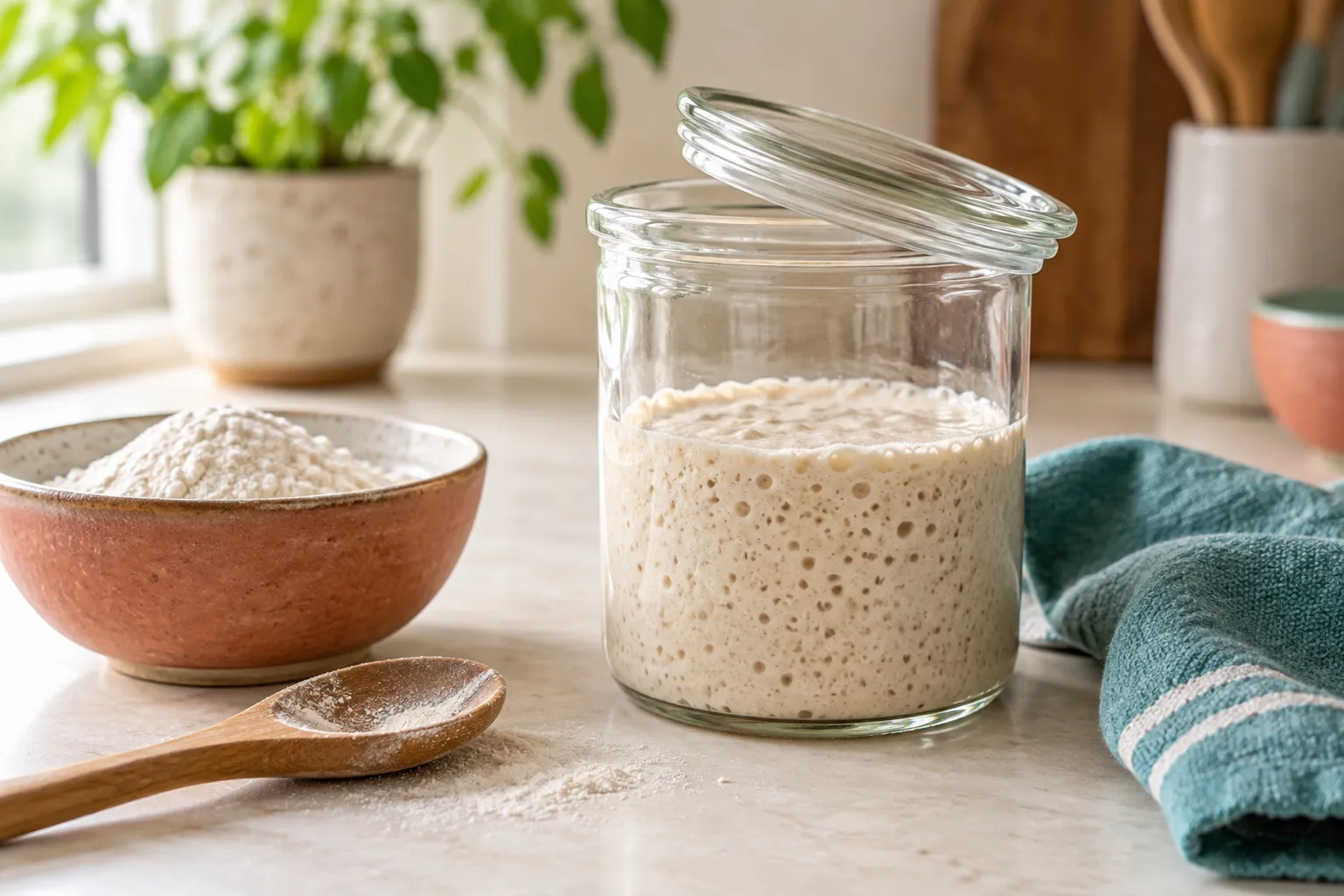
Use a starter that reliably rises after feeding. Confirm the pot, lid, handles and any liner are rated for 450°F. Never handle a hot lid barehanded or preheat an empty pot if its maker forbids it.
What you’ll need
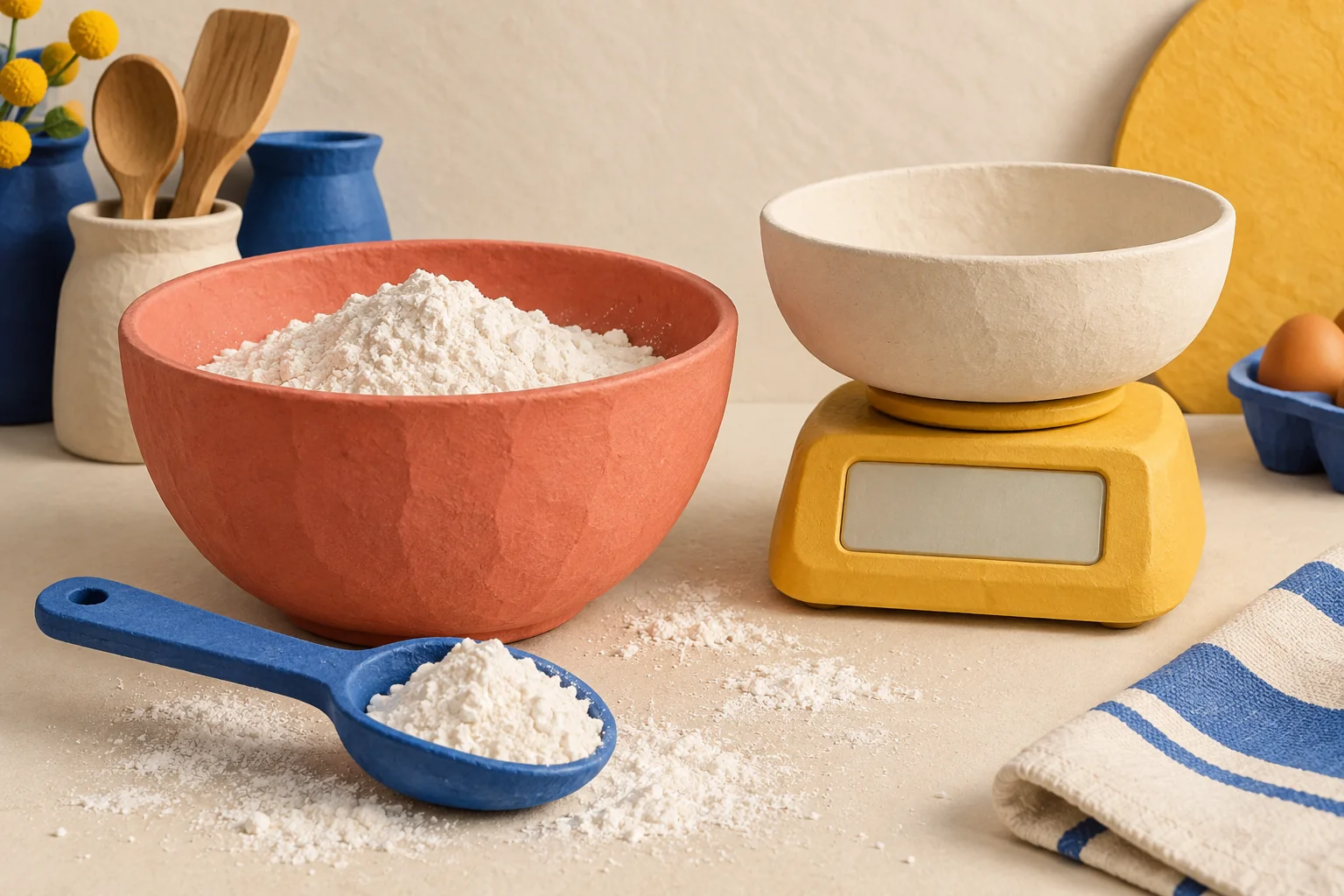
- Digital scale
- Mixing bowl
- Dough scraper
- Floured towel-lined bowl or proofing basket
- Covered oven-safe baking pot
- Dry oven mitts
Measure before you start
Ingredients
Base batch: 1 medium loaf
Ingredient amounts scale; oven temperatures and cooking times do not. Split a larger batch between pans when needed.
For a double batch, make two loaves in suitable vessels; do not assume a double-sized loaf uses the same bake time.
Let’s do this
Step by step
- 01
Mix and rest
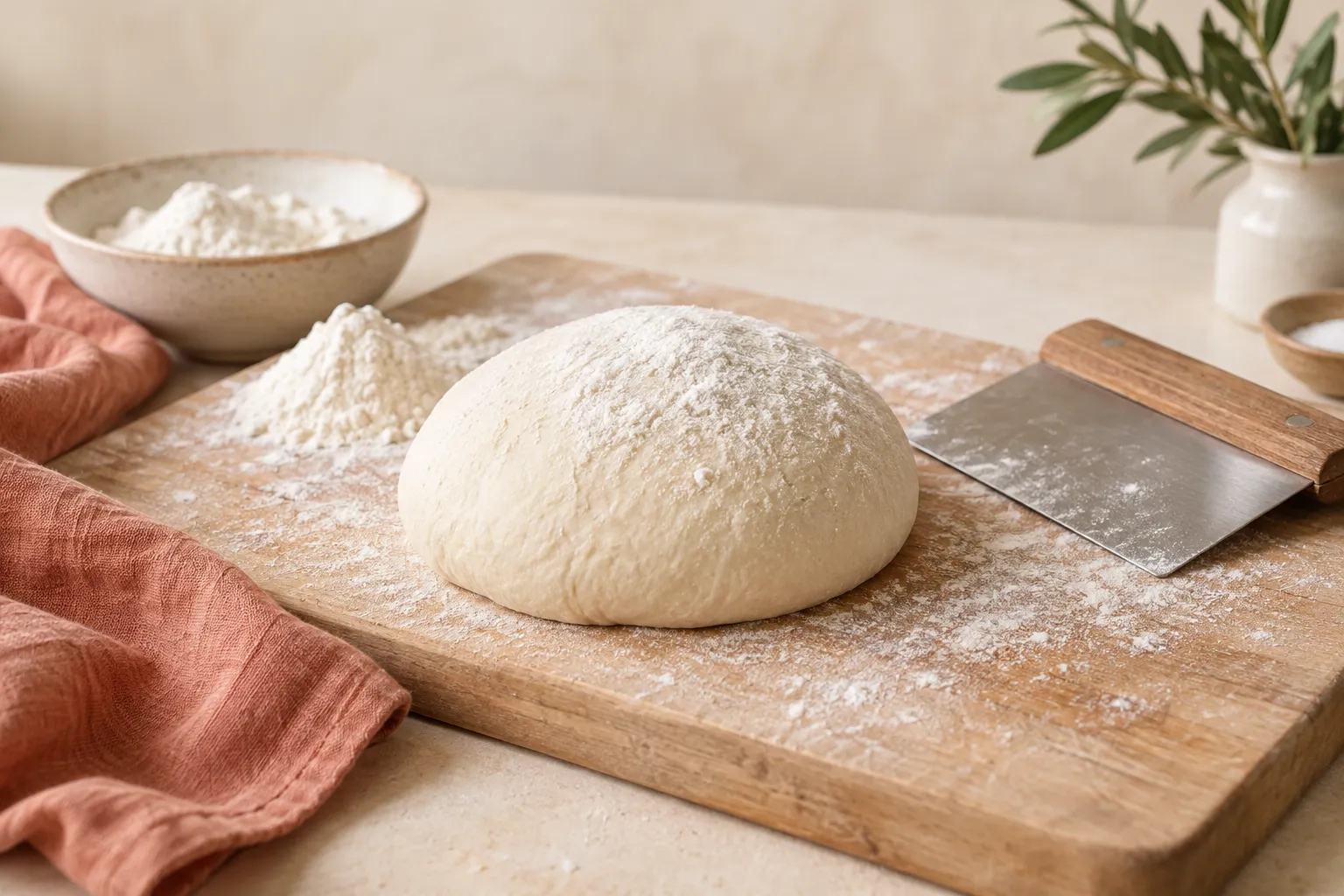
Combine the measured flour, water and starter until no dry flour remains. Cover and rest 30 minutes. Add the salt and work it through with damp hands until evenly distributed. The dough should be tacky but manageable.
- 02
Build strength with folds
Over the next 90 minutes, perform three sets of gentle folds about 30 minutes apart. Lift one edge without tearing, fold over the center, rotate the bowl and repeat around the dough. Cover between sets.
- 03
Let the dough become airy
Continue fermenting at room temperature until noticeably expanded, smoother and aerated with bubbles at the edges. In a moderate kitchen this may take several more hours. A cold room or weak starter can take longer; do not insist on a fixed doubling time.
- 04
Shape and chill
Turn onto a lightly floured surface, form a loose round and rest 20 minutes. Shape into a taut round without tearing, place seam-up in a floured lined bowl, cover and refrigerate roughly 8–14 hours.
- 05
Score and bake
Heat the oven to 450°F and prepare the pot according to its maker’s preheating rules. Transfer the dough safely, score the top and cover. Bake about 25 minutes covered, then 20–25 minutes uncovered, adjusting until the crust is deeply colored and the center is baked through.
- 06
Cool before cutting
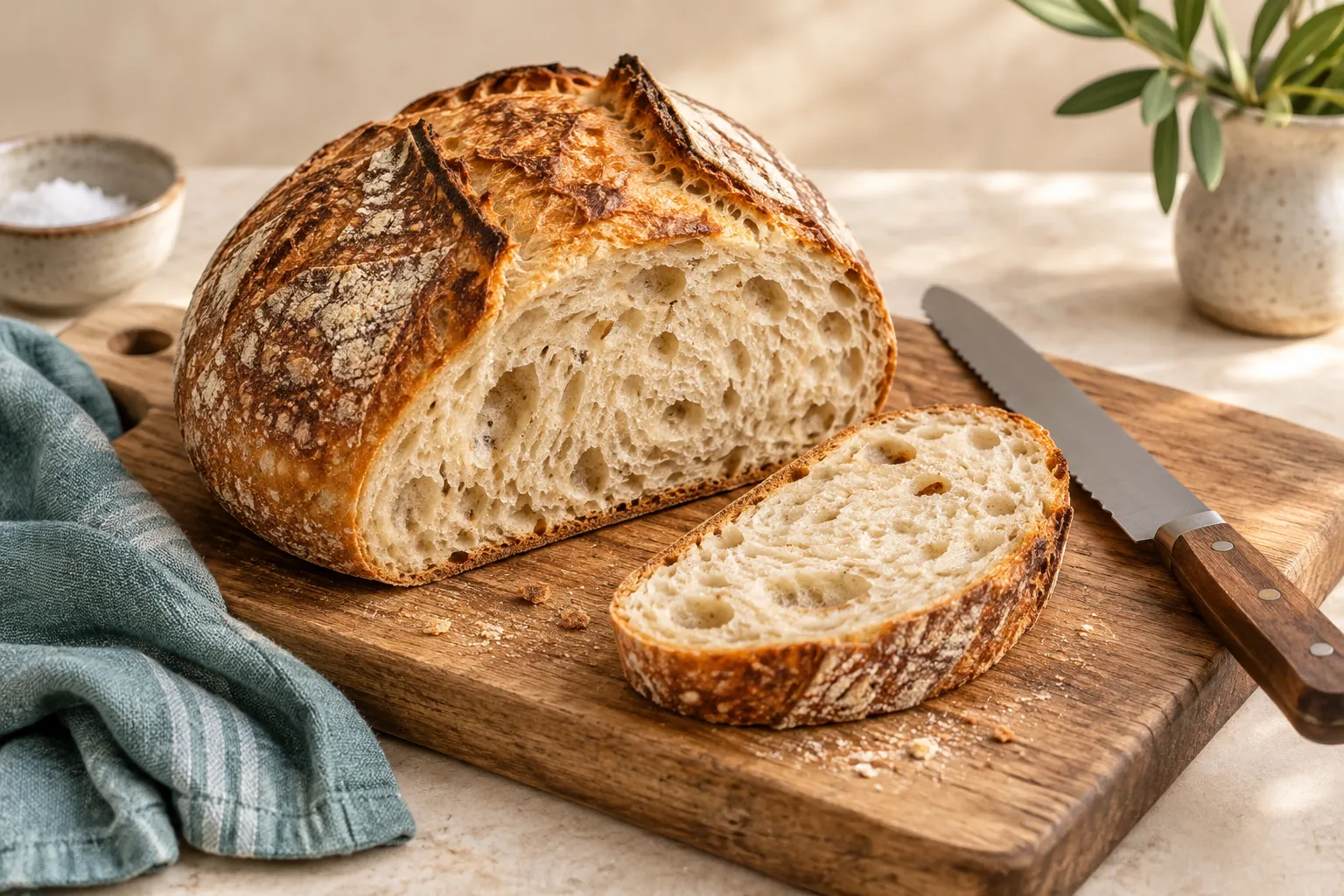
Move the loaf to a rack and leave at least 2 hours before slicing. Cutting a steaming loaf can compress the crumb and make the interior seem gummy. Note the fermentation and bake conditions for next time.
Checks stay on this page while you work and reset when you leave.
Read the dough before buying more tools
A proofing basket is convenient, but a towel-lined bowl can support the first loaf. A scale and a safe way to handle the hot pot matter more than a large starter kit. Change one variable between bakes.
A quick final check
- Mix and rest
- Build strength with folds
- Let the dough become airy
- Shape and chill
- Score and bake
- Cool before cutting
Common questions & sticking points
Why is my loaf dense?
Check starter strength and whether the dough became aerated before shaping. Cutting too soon and underbaking can also make the crumb seem heavy.
Can I replace all the flour with whole wheat?
Not without changing how the dough handles and absorbs water. Start with the listed flour, then use a recipe designed for a larger whole-grain proportion.
Sources & further reading Optional
References used to check this guide. Follow your product’s own safety instructions where its design differs.
Last source check: September 24, 2026