A cup of flour can contain very different amounts depending on how you fill it. That makes flour measurement a useful place to start when a bake repeatedly turns out too dry or heavy. Follow the recipe’s weight when one is provided; use a careful volume method when it is not.
Use the recipe’s gram weight and tare the bowl on a scale. Without a scale, fluff the flour, spoon it into a dry measuring cup, and level the top.
Go straight to the stepsBefore you begin
Do not assume all flours or recipe authors use the same weight per cup. King Arthur uses 120 g for a cup of its all-purpose flour; use the measurement supplied by your recipe.
What you’ll need
- Flour specified by the recipe
- A kitchen scale, or dry measuring cup
- A spoon and straight edge
Let’s do this
Step by step
- 01
Read the quantity and flour type
Check whether the recipe gives grams, cups, or both. Note whether it calls for all-purpose, bread, whole-wheat, or another flour rather than substituting silently.
- 02
Weigh when possible
Place the empty bowl on the scale and press tare so it reads zero. Add flour until you reach the recipe’s specified weight. If you are weighing your flour, skip the cup-measuring alternatives in steps 3 and 4.
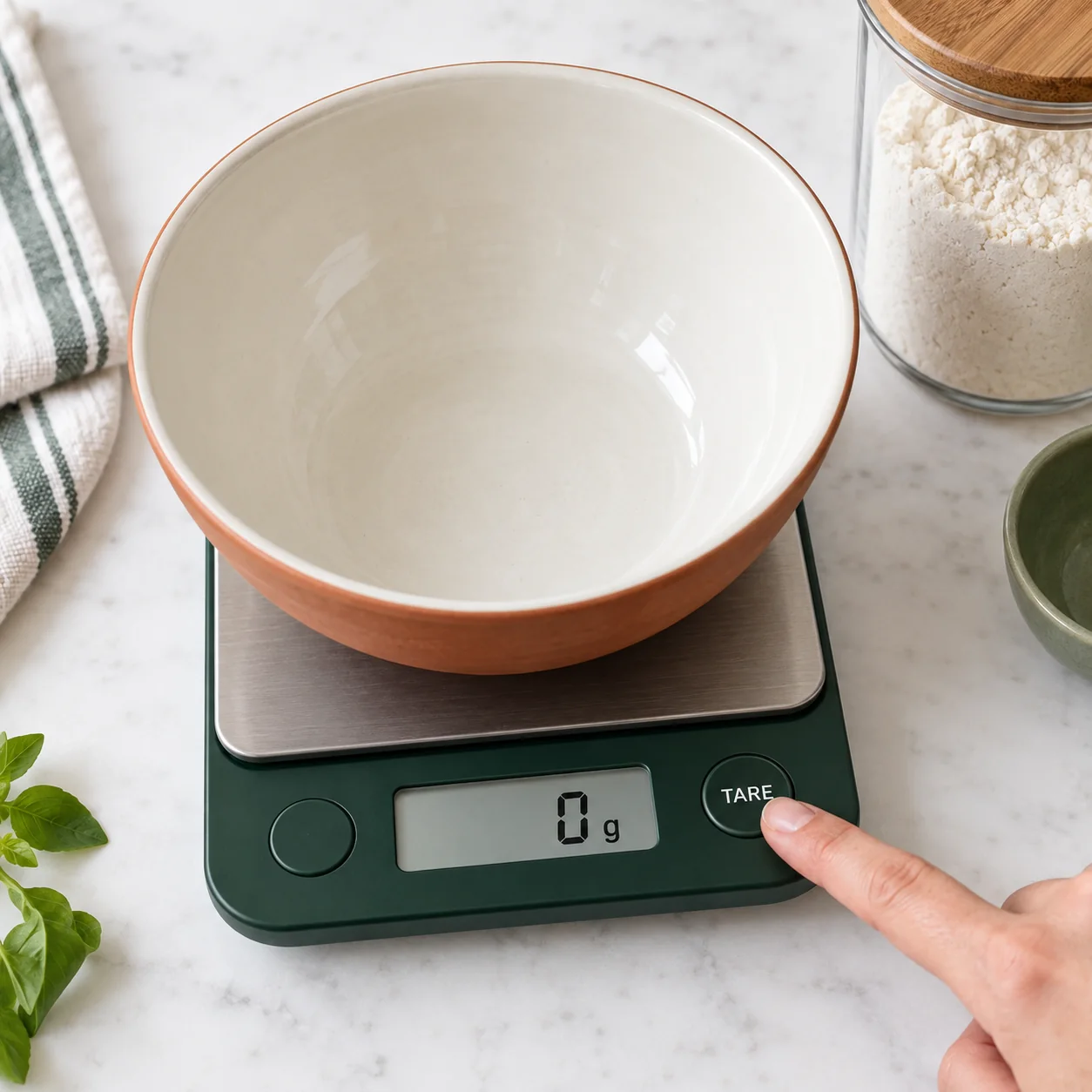
Zero the scale with the empty bowl already on it, then add the recipe’s required weight of flour.Open full-size image - 03
If using a cup, loosen the flour
Stir the flour lightly in its container. Spoon it into a dry measuring cup without tapping or pressing it down.
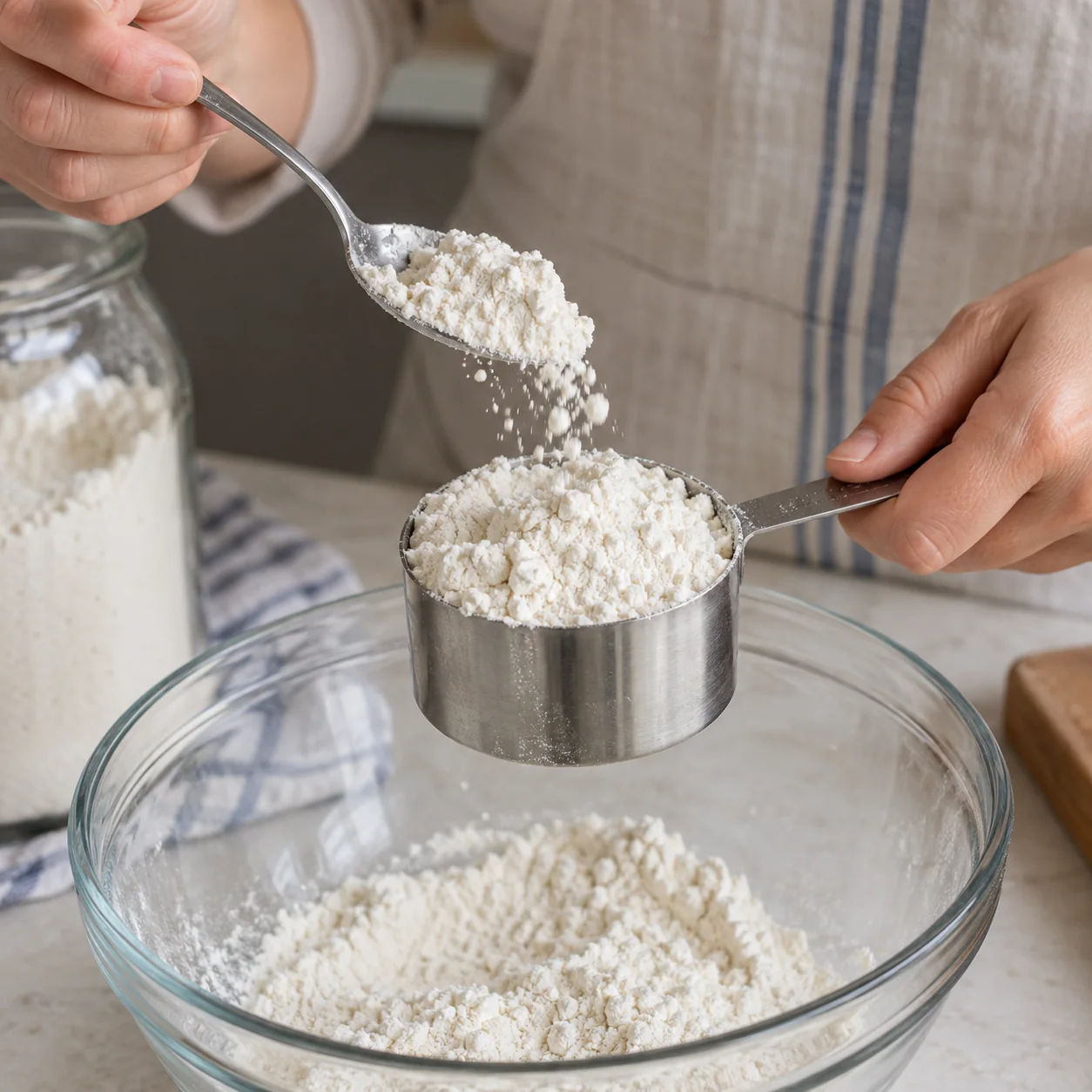
For cup measurements, spoon in loosened flour without tapping or pressing. Level the cup in the next step.Open full-size image - 04
Level the cup
Fill slightly above the rim, then sweep a straight edge across the top. Empty the measured flour into the mixing bowl.
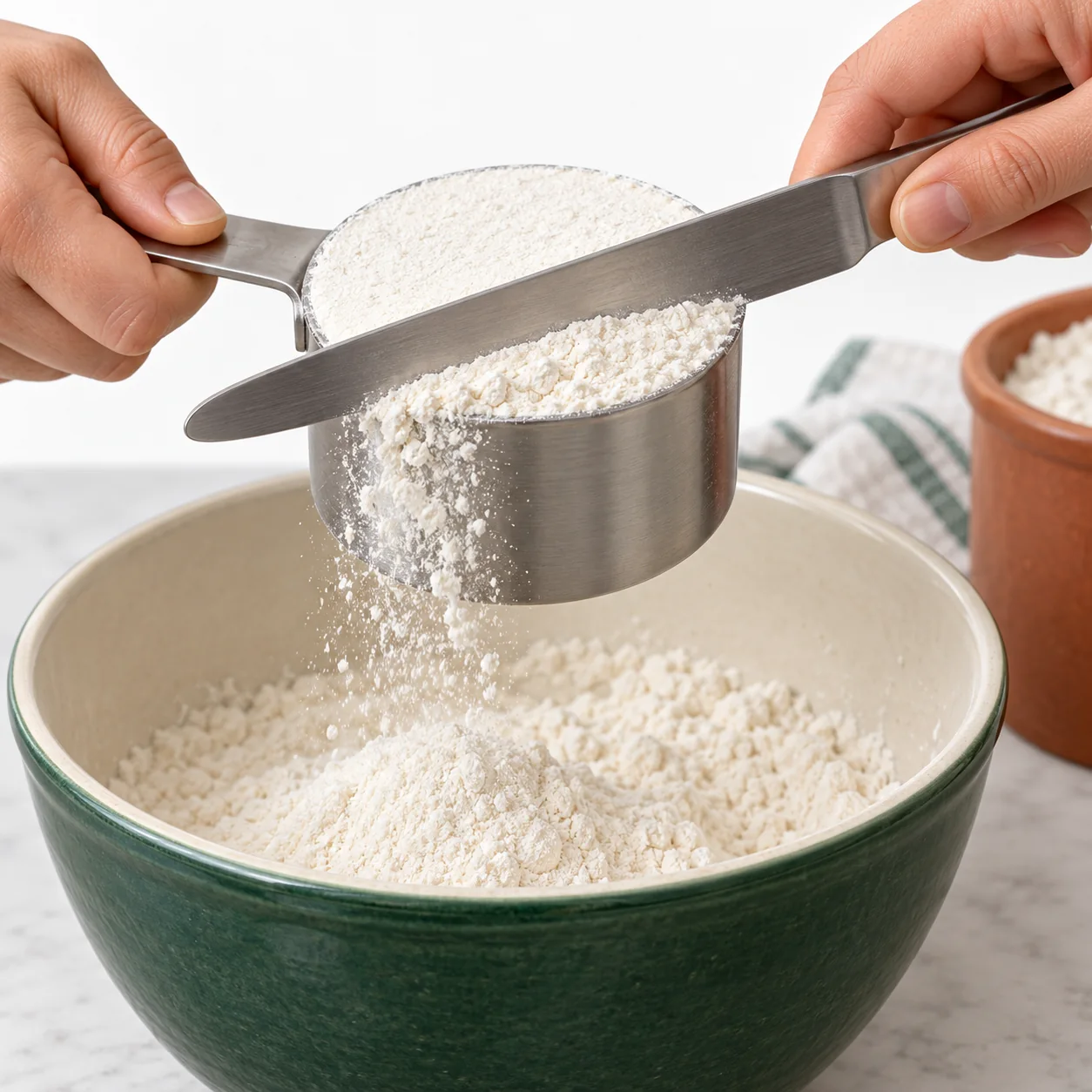
For the cup method, spoon in loose flour and level across the rim without pressing it down.Open full-size image - 05
Keep your method consistent
Use the same method for every cup. If a recipe works well, note the flour and measurement method so you can repeat the result.
Optional supplies on Amazon
Affiliate disclosure: As an Amazon Associate I earn from qualifying purchases. How our links work.
Use what you already have. These links open Amazon search results so you can compare suitable supplies; they are not individual product reviews.
A simple comparison worth trying
If you own a scale, weigh one cup filled by scooping directly from the bag and another filled by spooning and leveling. You are comparing your own technique, not trying to match an internet photograph. The difference helps explain why volume measures can produce inconsistent results.
When doubling a recipe with gram measurements, calculate the full target first and write it beside the ingredient. For example, 180 g doubled is 360 g. That is easier to check than remembering whether you have added three or four partial cups.
One change at a time
If you are troubleshooting a recipe, change the measuring method before changing several ingredients at once. Keep the oven setting, pan, and recipe the same for that comparison. A brief note about the result gives you something more useful than a vague memory that the previous batch was different.
A quick final check
- The flour type matches the recipe.
- The bowl was tared if using a scale.
- A volume measure was filled without packing.
Common questions & sticking points
Is one cup always 120 grams?
No. That is King Arthur’s standard for its all-purpose flour. Different ingredients and recipes use different weights.
Can I use a liquid measuring jug?
A dry cup is easier to fill and level for this method. A scale avoids that distinction when the recipe supplies weights.
Sources & further reading Optional
References used to check this guide. Follow your product’s own safety instructions where its design differs.
Last source check: September 21, 2026