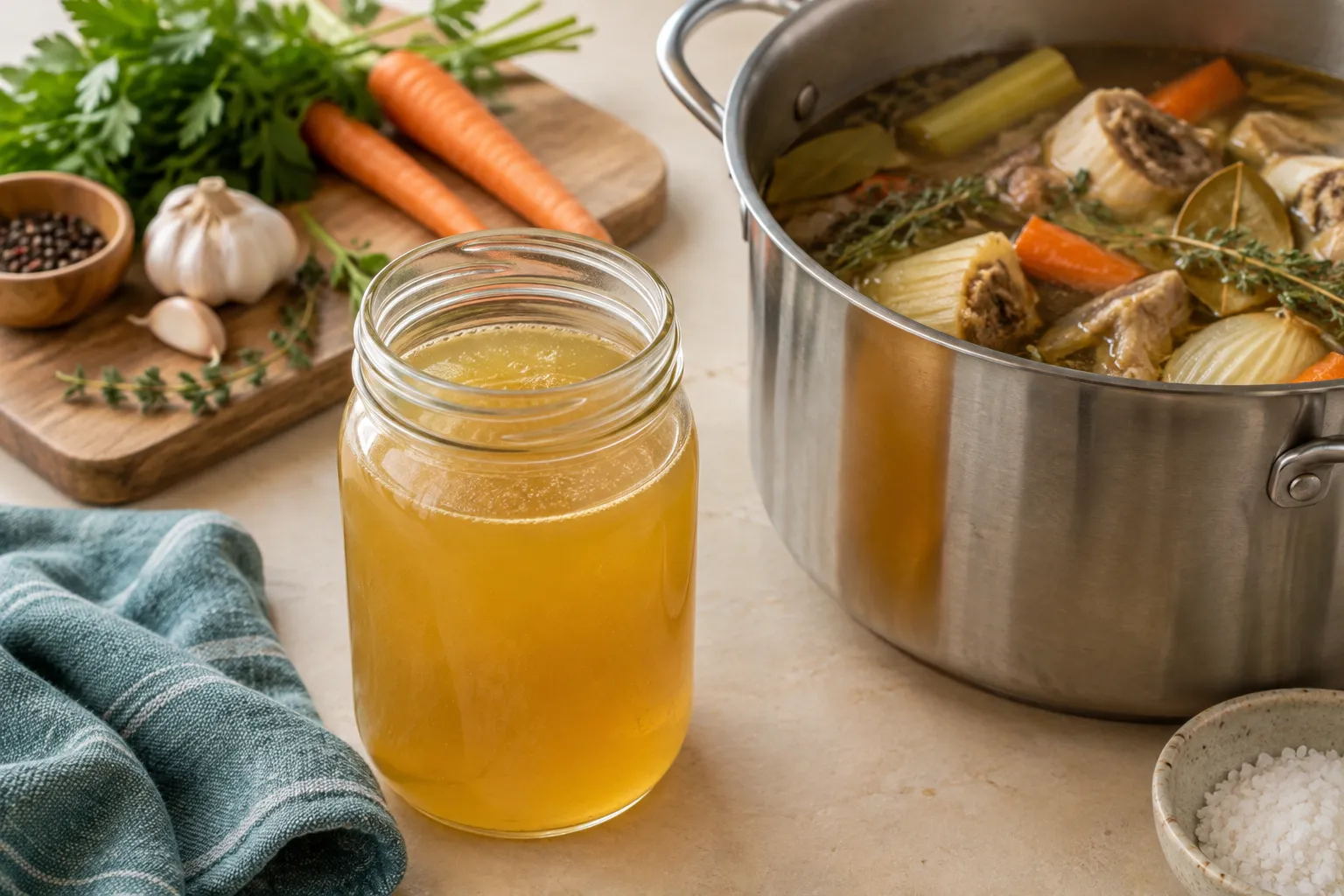
Bone broth is a long-simmered stock. You can make a useful cooking broth without special health claims or an all-night unattended stove. This version uses chicken bones and a manageable pot.
Cover chicken bones and aromatics with water, bring to a boil and reduce to a gentle simmer. Cook for several hours, strain, then cool quickly and refrigerate or freeze in small portions.
Go straight to the stepsYour project helper
Follow the steps and check them off as you go →Before you begin
Keep bones cold before cooking. Do not leave the stove unattended or let the pot boil dry. Avoid filling beyond the pot’s safe capacity, and do not taste raw stock at the start.
What you’ll need
- Stockpot
- Fine-mesh strainer
- Large heatproof bowl
- Shallow storage containers
- Food thermometer
Measure before you start
Ingredients
Base batch: About 6–8 cups, depending on evaporation
Ingredient amounts scale; oven temperatures and cooking times do not. Split a larger batch between pans when needed.
Use the base batch for your first attempt. Adjust seasoning to taste and check texture as you cook.
Let’s do this
Step by step
- 01
Load the pot
Place bones and washed aromatics in the pot. Add enough cold water to cover while leaving generous headroom. Keep seasoning light so the stock remains versatile.
- 02
Boil then reduce
Bring to a boil, then reduce to a gentle simmer. Skim surface foam if desired. A violent boil emulsifies fat and debris into the liquid.
- 03
Simmer with checks
Cook gently for roughly 4–6 hours, checking liquid level and heat regularly. Add hot water if needed to keep the contents covered. Longer cooking is not useful if the pot is unattended or drying out.
- 04
Strain carefully
Turn off heat and let vigorous bubbling stop. Ladle through a fine strainer into a heatproof bowl. Avoid pouring a very heavy full pot at once, and do not press hard on bones or solids.
- 05
Cool quickly
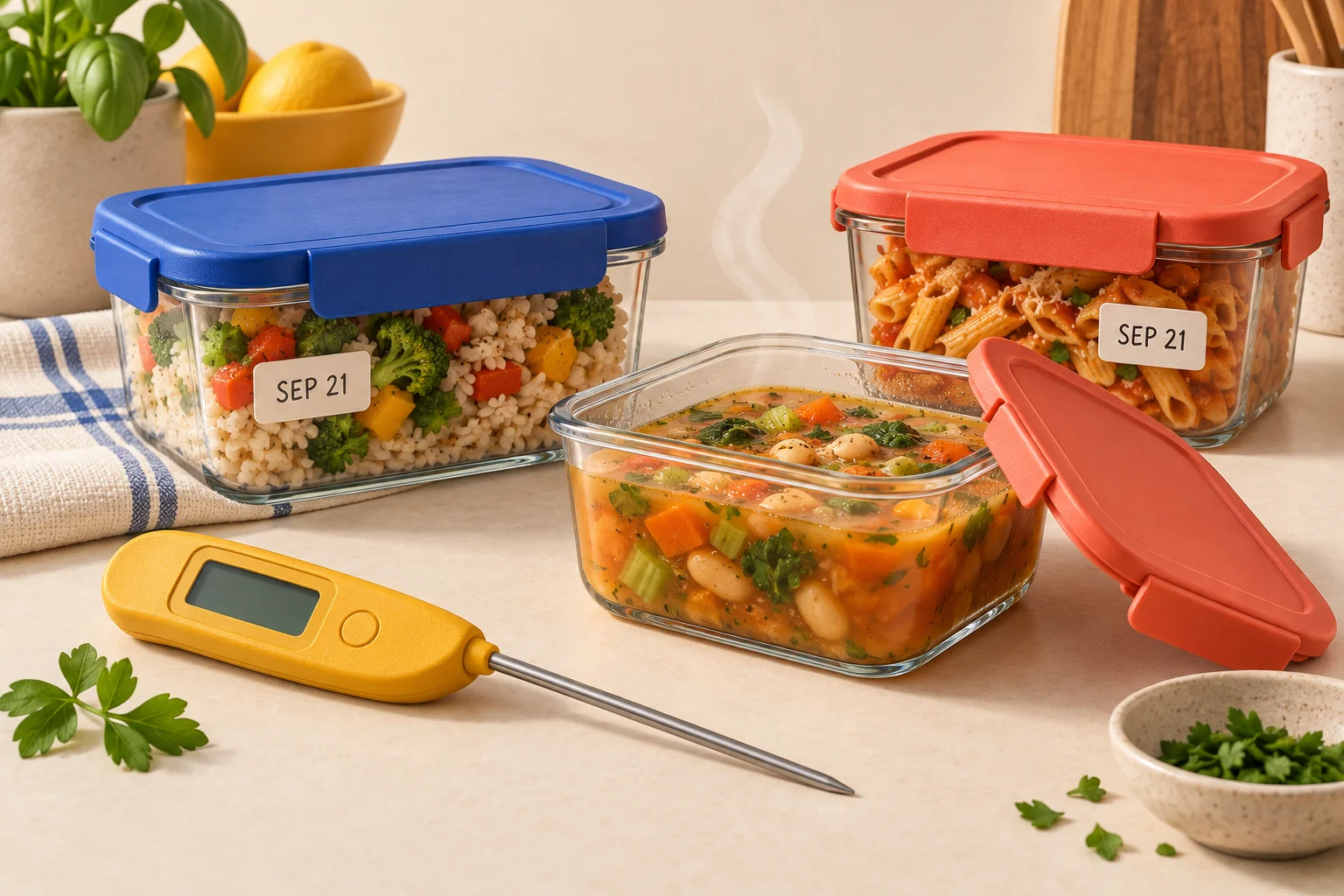
Divide into shallow containers. An ice-water bath with stirring can speed cooling before refrigeration. Refrigerate within 2 hours rather than leaving the stockpot on the counter overnight.
- 06
Portion for later
Once cold, remove surface fat if desired. Use refrigerated broth within 3–4 days or freeze. Reheat safely when using in soups or sauces.
Checks stay on this page while you work and reset when you leave.
Measure after simmering
Evaporation changes concentration. Note the finished volume before freezing so later recipes receive a consistent amount. Salt the final dish rather than making the stock very salty now.
Serve now or store safely
Refrigerate perishable cooked food in shallow containers within 2 hours, or within 1 hour when the room or outdoor temperature is above 90°F. Keep the refrigerator at 40°F or below. Use most cooked leftovers within 3–4 days and reheat to 165°F. Do not wait for a large pot to cool completely on the counter.
A quick final check
- Load the pot
- Boil then reduce
- Simmer with checks
- Strain carefully
- Cool quickly
- Portion for later
Common questions & sticking points
Does it have to gel?
No. Gel depends on the bones, water ratio and cooking conditions. Liquid stock can still be useful.
Can I use a pressure cooker?
Use the appliance’s dedicated stock method and fill limits. Do not transfer stovetop times or maximum fill levels directly.
Sources & further reading Optional
References used to check this guide. Follow your product’s own safety instructions where its design differs.
Last source check: September 24, 2026