The black surface blocks or absorbs stray light instead of adding a bright bounce. Positioning it on the shadow side can reduce nearby reflected fill and make that side darker. Check the effect from the camera position, then move the panel until the contrast suits the subject. It serves a different purpose from the translucent panel, which softens light passing through it.
Optional supplies on Amazon
Affiliate disclosure: As an Amazon Associate I earn from qualifying purchases. How our links work.
Do not assume the feet make it safe to leave a camera unsupported. Benro’s MC/MP monopod instructions explicitly say the retractable feet are for handheld support and prohibit using them as freestanding camera or light stands. Follow your exact model’s instructions and keep control of the equipment. Use a suitable tripod when the shot requires you to step away; small feet alone do not establish stability.
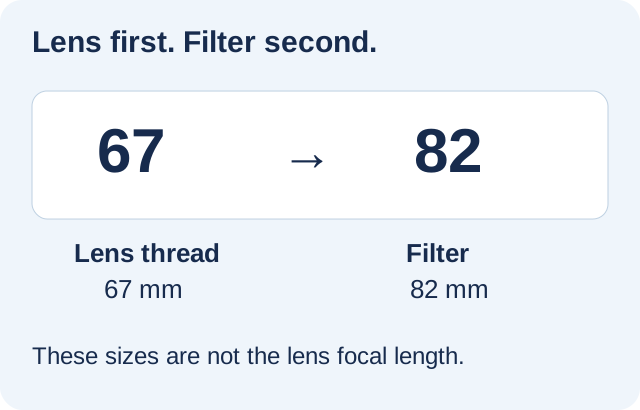
The first size is the lens’s filter-thread diameter; the second is the filter you want to attach. For example, a 67–82 mm step-up ring connects a 67 mm lens thread to an 82 mm filter. Check the thread specification on the lens, not its focal length. Hoya describes this lens-first, filter-second ordering in its adapter guidance. Confirm the exact ring before tightening it gently.
Read the lens’s filter-thread specification before choosing the adapter. Open full-size image ↗
Optional supplies on Amazon
Affiliate disclosure: As an Amazon Associate I earn from qualifying purchases. How our links work.
An 18 percent gray target gives a known reference for reflective exposure metering. Place and light it as the target instructions require, then meter the reference rather than guessing from a very dark or bright subject. Calibrite describes its Gray Balance target for this purpose. A neutral reference is a measurement aid, not an instruction to turn every naturally pale or dark subject into the same tone.
Optional supplies on Amazon
Affiliate disclosure: As an Amazon Associate I earn from qualifying purchases. How our links work.
Matrix evaluates a broad area of the frame. Center-weighted gives greatest emphasis to the middle. Spot reads a small area tied to the selected focus point, except that Auto-area AF uses the center point. Choose deliberately when subject and background brightness differ. A metering choice changes how exposure is assessed; it is not the same control as selecting which object should be in focus.
Highlight-weighted metering gives the greatest emphasis to highlights and is intended to reduce lost bright detail, including on spotlit stage subjects. Check the resulting image as the lighting changes: protecting highlights can leave darker surroundings quite dark. The Z9 offers this under Metering in the photo shooting menu. Treat it as an exposure starting point and review the important bright areas rather than assuming any mode guarantees a perfect frame.