Feel the swollen base and harvest while it is firm and still relatively small, generally under four inches across. Cut the base rather than waiting for a flower stalk to emerge. Check plants individually because they may mature at different times. Heat and moisture stress reduce quality, so size alone should not determine how long you wait.
Florence fennel can bolt after stress, including root disturbance. Direct sowing avoids that disturbance. Thin seedlings carefully to let the bases swell and keep the bed moist. Transplants can work, but move them young with intact rootballs. Choose a suitable cool-season planting window so heat and timing do not undermine establishment.
One tomatillo may not set fruit reliably. Grow multiple plants, ideally compatible varieties flowering together, to improve cross-pollination. Leave flowers accessible to insects. If several plants still fail, check temperature extremes and excessive nitrogen. A tomato plant cannot supply the tomatillo pollen needed; the two plants are not interchangeable for this purpose.
Check inside the papery husk rather than waiting for tomato-like softness. For ordinary green tomatillos, pick when the fruit has filled its husk while remaining green and firm. Harvest regularly as individual fruits reach this stage. Different colored varieties need their own color cues, so retain the variety name and compare it with the seed supplier's description.
A small cage may be overwhelmed by a vigorous tomatillo. Plan a substantial cage, trellis, or other support and allow room for its broad branches; plants can spread more than tomatoes. Install the support early and guide branches as they grow. Keep enough access around the plant to inspect husks and pick fruit without breaking crowded stems.
Place a counted seed sample between moist paper towels in a covered container. Label it and use a suitable germination temperature. Check regularly without letting it dry. Count normal sprouts after allowing that crop enough time. Fifteen sprouts from twenty seeds suggests roughly 75 percent germination under those test conditions.
Keep seeds cool and dry, with packets labeled by variety and purchase year. Avoid a hot shed or a damp place where humidity repeatedly changes. Storage life differs among vegetables, so identical-looking packets can have very different viability after a few years. Test older seed before relying on it for a whole row or an important transplant batch.
Optional supplies on Amazon
Affiliate disclosure: As an Amazon Associate I earn from qualifying purchases. How our links work.
Divide the desired plant count by the germination fraction as a starting estimate. For twelve plants from seed testing at 75 percent, twelve divided by 0.75 gives sixteen seeds. Sow a little extra for losses after germination. A paper-towel test is an estimate under controlled conditions, so cold soil or weak seedlings can still lower establishment outdoors.
Crowding changes how shallots develop. Closely spaced plants tend to make smaller single bulbs, while more room encourages clusters. Choose spacing for the intended harvest rather than treating a green-onion row like a storage-bulb crop. Thin or plant sets according to a local guide, and control weeds shallowly so nearby roots are not repeatedly damaged by cultivation.
Avoid pushing late leafy growth when shallots should be maturing their bulbs. Utah State advises stopping nitrogen applications after mid-July in its growing conditions because late growth can reduce storage potential. Use your local crop calendar and soil-test recommendations rather than copying that date everywhere. Keep fertility decisions separate from watering needs as the crop approaches maturity.
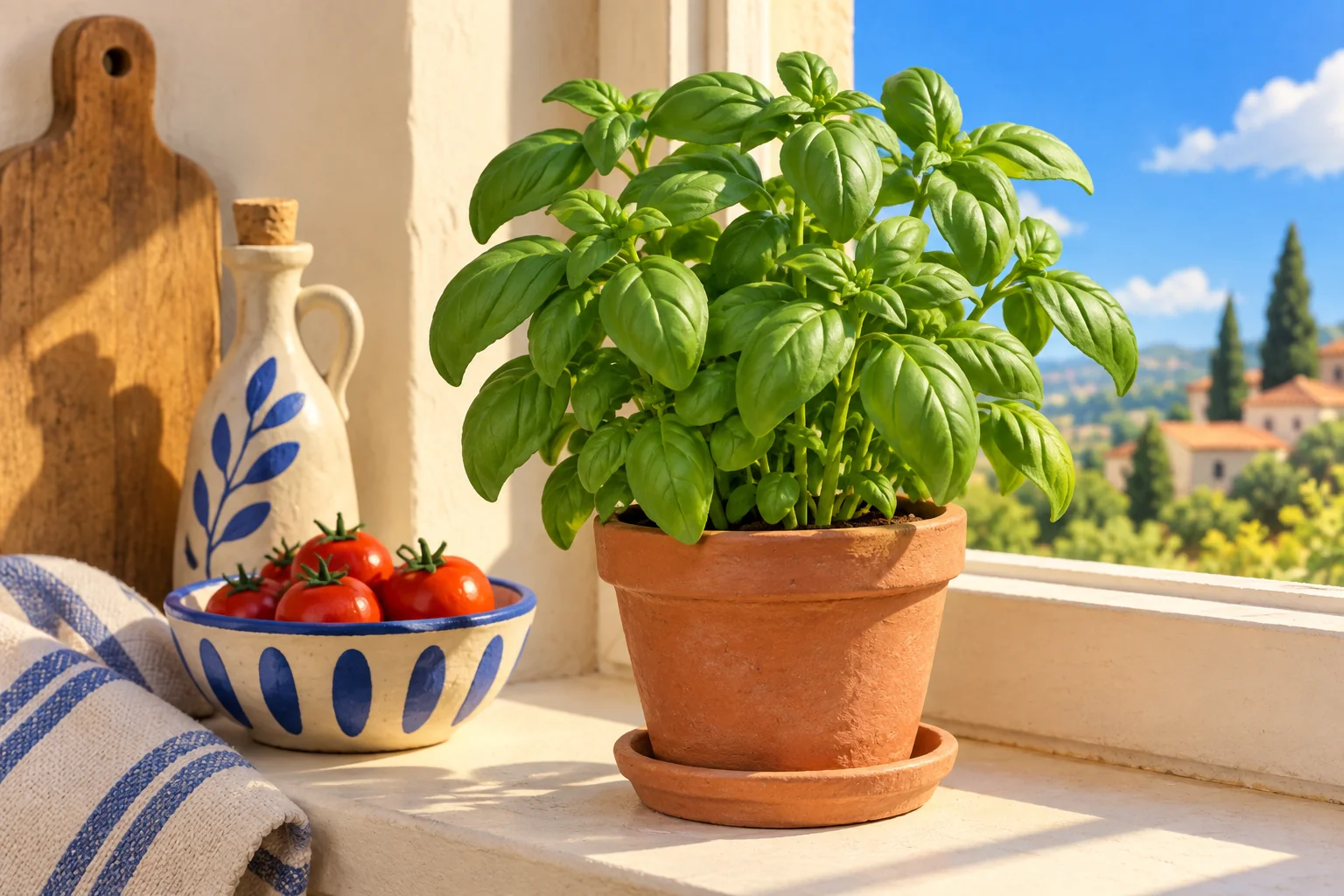
Put a young basil plant in a draining pot with suitable potting mix, give it a warm bright position, keep the mix evenly moist, and harvest shoot tips as it grows.