Mix it thoroughly but gently according to its directions. Vigorous shaking can introduce foam and bubbles that spoil the clear film. If bubbles form, let the mixture stand until they escape, then stir carefully before use. Matte and satin ingredients need even distribution, so simply ignoring settled material is not the answer either. Prepare a sample and use the correct mixing method for that specific varnish.
GOLDEN's varnish guidelines advise thinning only the satin or matte varnish needed that day. During storage, the matting ingredients in a diluted mixture can settle into a compact layer that is difficult to redisperse evenly. Prepare a smaller fresh batch and stir carefully as directed. Keep the original product properly sealed, and check the instructions for your particular varnish rather than applying one storage rule to every clear coating.
A filbert has a flattened body with a rounded, oval tip, so it can lay down a broad mark with softer edges. Try pressing the full face for a wider stroke, then turning it for a narrower one. Test the actual brush with your paint because stiffness and size affect the result. Choose it when a rounded stroke suits the form you are painting.
Optional supplies on Amazon
Affiliate disclosure: As an Amazon Associate I earn from qualifying purchases. How our links work.
Build enough thickness for a self-supporting sheet and allow it to dry completely before lifting a corner. Liquitex recommends a clean, smooth, nonflexible release surface and, for brushed skins, multiple dry layers with alternating brush directions. Start with a small sample so you can judge thickness and release behavior. Pulling a thin or partly dried film early can turn a usable sheet into torn fragments.
Mix the compatible paint and medium carefully, then let the mixture settle until visible air bubbles have escaped before pouring. Pour onto the prepared smooth surface slowly and leave the film to dry undisturbed. Bubbles trapped inside the sheet may remain as defects after drying. A small test skin helps you assess the mixture and pouring method before making a larger piece for collage.
Mix the paint colors to the desired shade first, then blend that mixture with the appropriate pouring medium. This makes it easier to achieve a consistent color without chasing unmixed streaks through a large volume of medium. Prepare each intended color before you begin the pour. Stir gently, let bubbles settle, and follow the product's recommended proportions instead of substituting a large amount of water.
Use a secure, level surface where the wet painting can remain undisturbed. Keep it away from dust, fans, and air-conditioning outlets that can blow particles onto the coating. Check the level before pouring, because a tilted support can send paint toward one edge while it dries. Arrange your containers and colors beforehand so you do not need to move the wet artwork just to clear workspace.
Heavy objects generally need a rigid support suited to their weight, rather than a flexible stretched canvas. Plan the arrangement and select a compatible adhesive medium for both the objects and support. Liquitex distinguishes lightweight paper, flexible elements, and heavy rigid objects because their requirements differ. Make a small attachment test before building the full piece, and consider the completed work's weight when planning how it will be displayed.
Thin papers and newspaper can work with a suitable fluid medium, while heavier photographs or magazine paper may benefit from gel. Test the actual materials because paper thickness, coatings, and the desired surface all affect the result. Coat the receiving surface and collage piece as the medium maker recommends. Use expendable copies for experiments rather than permanently bonding irreplaceable family photographs into an artwork.
For a compatible GOLDEN system, a thin coating of Acrylic Glazing Liquid over the paint piles and mixing area can slow surface skinning. Add only what suits the painting technique and test its effect on working time. Protect the palette between sessions as well. This is a way to manage paint still in use, not a method for turning a fully hardened acrylic film back into fresh paint.
With the compatible GOLDEN product, a little Glazing Liquid on the brush can extend work in a small passage that is beginning to tack up. Work gently and stop if the paint lifts or breaks rather than blends. Do not expect one addition to reopen a large, already dried area evenly. Try the behavior on a practice panel so you know when to continue and when to let the layer dry.
Choose regular colored pencils when you want dry shading and blending that stays a drawing. Choose pencils specifically labeled water-soluble when you want to turn the marks into washes with a damp brush. Watercolor pencils also work dry, so they suit mixed drawing-and-painting practice. Check the individual range rather than assuming every soft or wax-based pencil dissolves in water. Start with a small set that fits the technique you want.
Optional supplies on Amazon
Affiliate disclosure: As an Amazon Associate I earn from qualifying purchases. How our links work.
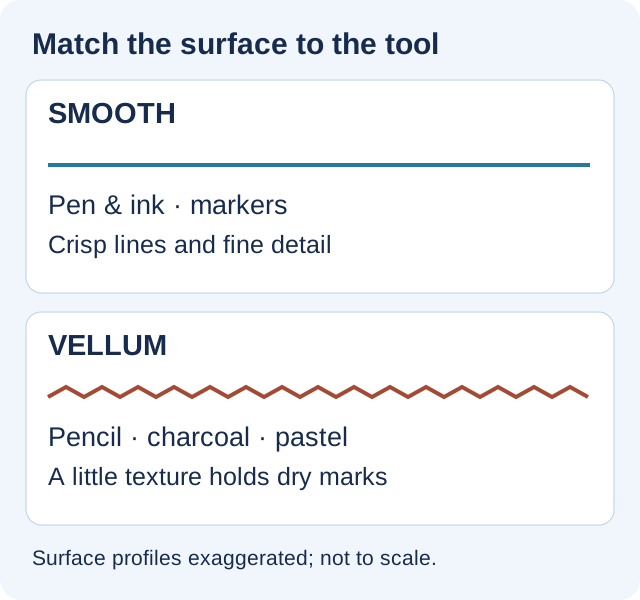
Choose smooth Bristol for crisp pen-and-ink work, markers, or mechanical-pencil detail. Choose vellum Bristol when you want a lightly textured surface for graphite shading, colored pencils, charcoal, or pastel. The difference is the surface, not simply which pad looks thicker. If you combine tools, try your main marks on a sample before buying a large pad; both surfaces can be useful, but they feel different under the same tool.
Choose by your main drawing tool. The surface cross sections are exaggerated to show the difference. Open full-size image ↗
Optional supplies on Amazon
Affiliate disclosure: As an Amazon Associate I earn from qualifying purchases. How our links work.
Copic Sketch, Ciao, and Classic markers are refillable with Copic Ink. Identify the marker family and its exact color code before shopping for a refill. A worn, stained, or poorly performing tip can also be replaced separately, so a rough nib does not automatically mean the whole marker is finished. Inspect the barrel and caps too: plastic can deteriorate over time, and refillability does not make a damaged marker last indefinitely.
Optional supplies on Amazon
Affiliate disclosure: As an Amazon Associate I earn from qualifying purchases. How our links work.
Use Copic Ink in the marker’s exact color. Copic recommends adding roughly 1 mL at a time, while adjusting for the ink already inside; this is an addition amount, not a universal empty-marker capacity. Follow the maker’s refill sequence and test the marker afterward rather than pouring an entire bottle into the barrel.
Use tweezers to remove the broad, angled nib carefully.
Insert the refill nozzle straight into the marker core.
Add a measured amount, then refit the nib for use.
Optional supplies on Amazon
Affiliate disclosure: As an Amazon Associate I earn from qualifying purchases. How our links work.
No. Read the marker family on the barrel before choosing a replacement. Sketch and Ciao use Super Brush and Medium Broad nibs, while Classic uses its own Standard Fine and Standard Broad types. Sketch Fine is an optional replacement for the broad end of Sketch. Do not force a nib into a different family’s socket; matching the brand name alone is not enough to establish compatibility.
Optional supplies on Amazon
Affiliate disclosure: As an Amazon Associate I earn from qualifying purchases. How our links work.
Sakura does not recommend Pigma Micron for fabrics intended to be washed. Its waterproof, dried ink claim on paper does not make it a washable clothing marker. For a shirt, label, or tote that needs laundering, choose a textile product explicitly rated for that fabric and follow its curing and washing instructions. Save the Micron for suitable drawing or decorative applications instead of testing it on a finished garment you value.
Graphite can reflect light, so a dark area may look silvery when the drawing, lamp, and camera line up at an unfavorable angle. Try changing the light and viewing angle before adding more pencil to an already dark passage. For future drawings, matte graphite formulations such as Pitt Graphite Matt are designed to reduce reflection. Treat that as a material choice to test, not a promise that every lighting setup will be glare-free.
Optional supplies on Amazon
Affiliate disclosure: As an Amazon Associate I earn from qualifying purchases. How our links work.
They are different exercises. Tracing can explore an existing contour, while this exercise asks you to decide where that contour belongs on a blank page.