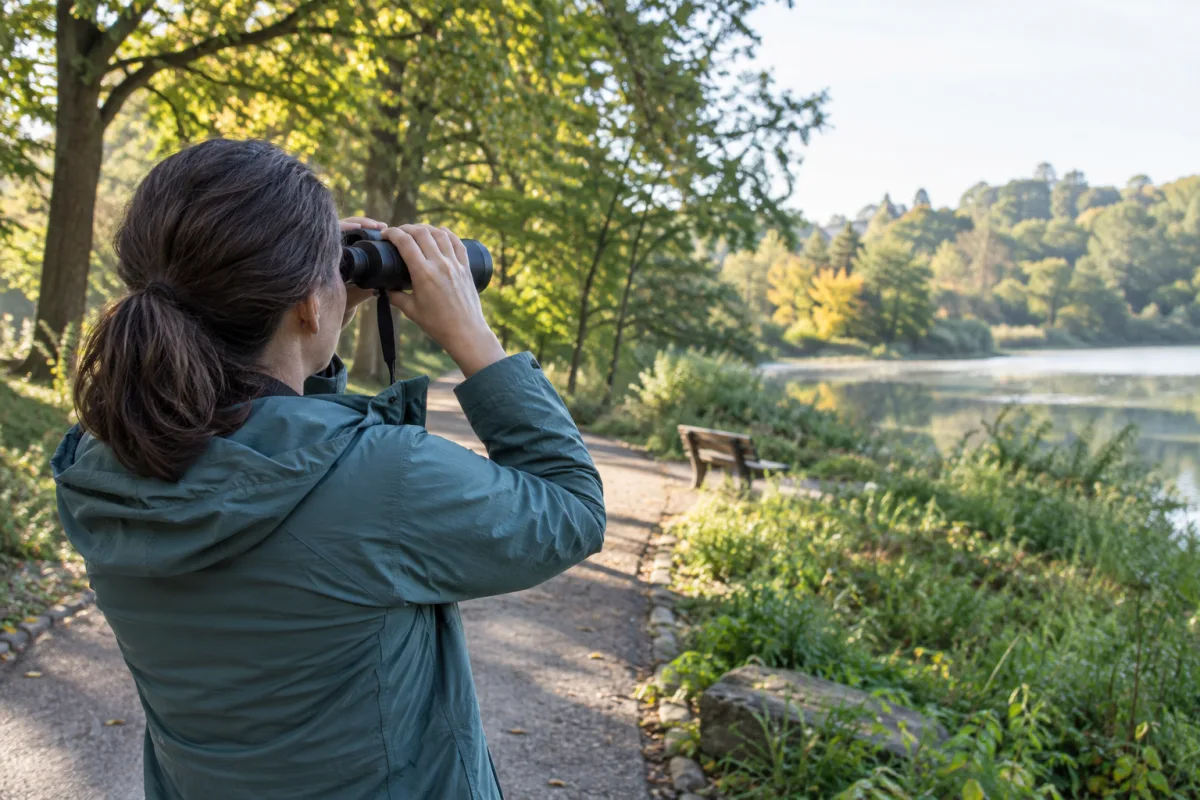
Your first outing can be a short pause in a neighborhood park, a garden or a view from a window. This 20-minute exercise gives the visit a manageable shape. The aim is to notice more than you did yesterday, rather than fill a checklist with names you are unsure about.
Choose a familiar nearby place, watch one bird carefully, note what you actually observe and compare those clues with a guide. Start with the equipment you have; a confident identification is a bonus, not a requirement.
Go straight to the stepsBefore you begin
Check access, weather, paths and facilities before leaving. Follow site signs, keep noise down and avoid disturbing wildlife or stepping into nesting areas. Choose a location and route that suit your mobility and the conditions.
What you’ll need
- A suitable local viewing place
- A notebook and pencil, or a way to take notes
- A regional field guide or identification resource
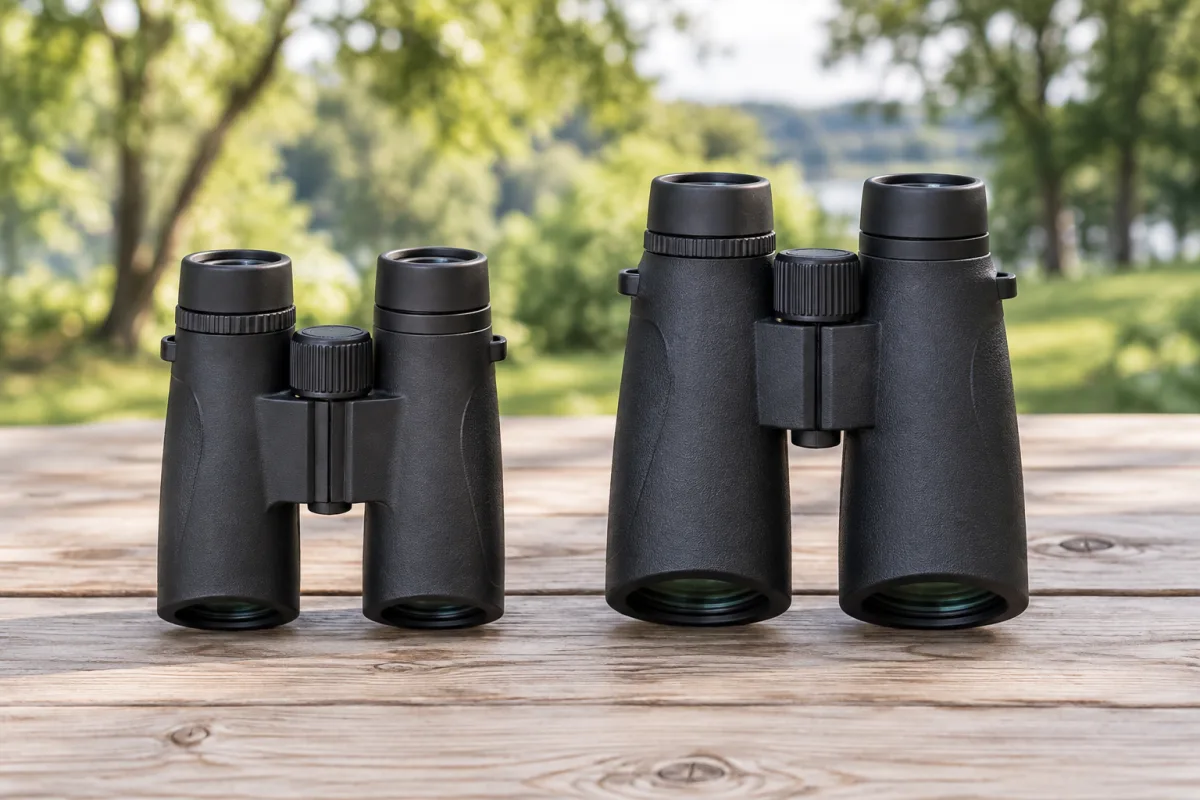
- Binoculars if available; they are optional to begin
Let’s do this
Step by step
- 01
Choose a place you can revisit
Pick somewhere nearby with comfortable access: a park path, a garden bench or a window with a useful view. Plan a short visit rather than a demanding trip. Read the site’s rules and facilities information first. If a place requires more preparation or equipment than you have, choose an easier one for this first outing.
- 02
Set one small observation goal
Before leaving, look up a bird that plausibly occurs locally at this time of year. Notice its overall appearance and likely habitat. Treat it as something to watch for, not a target you must find. You can still make a useful record of a different bird encountered along the way.
- 03
Watch the whole bird before naming it
Notice overall size and proportions, including the bill and tail. Then look for clear markings and watch what the bird does. Is it walking, hopping, feeding or perched? A single color impression is a weak starting point when light or distance hides detail. Keep looking long enough to gather several independent clues.
- 04
Write observations while they are fresh
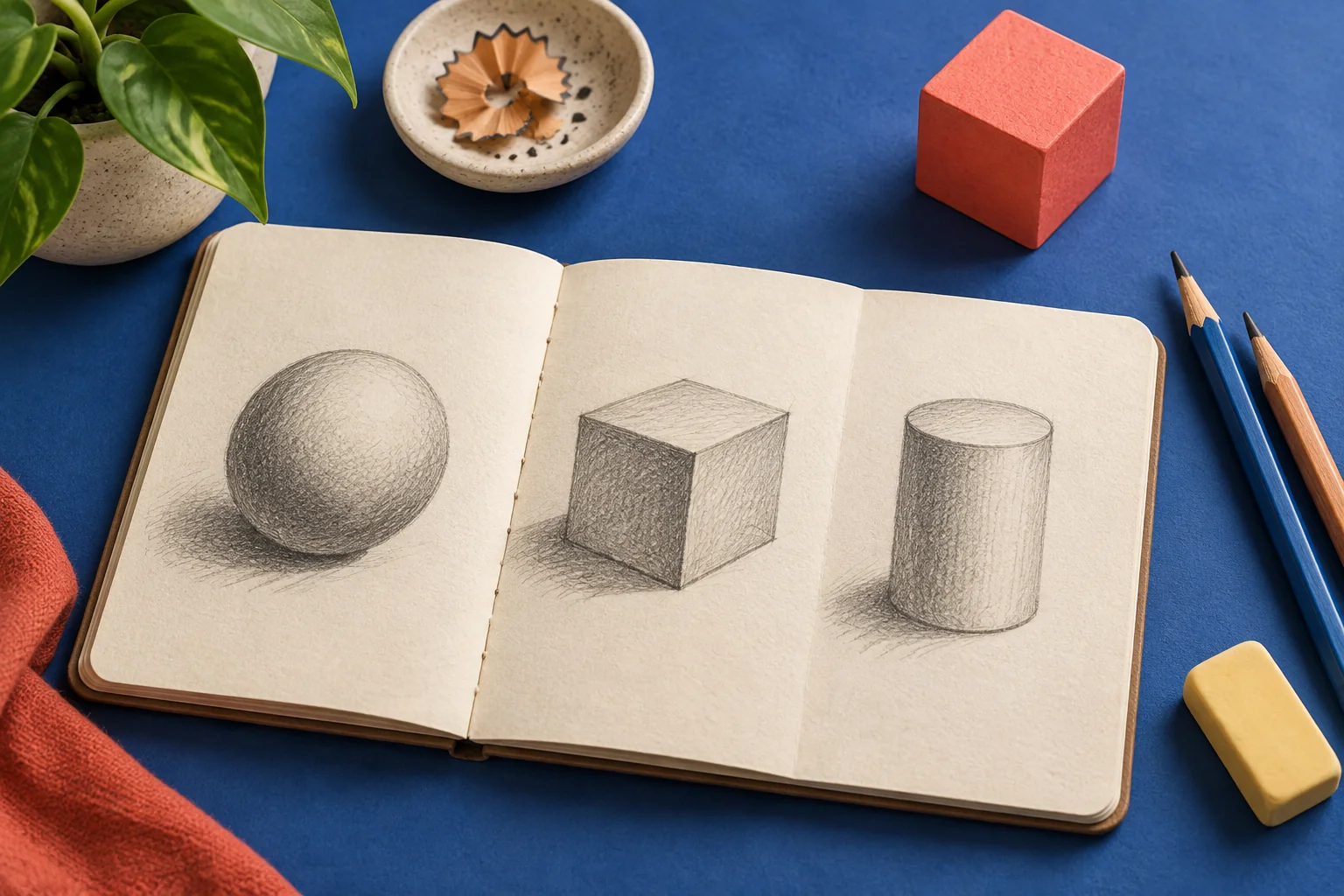
Put the date and place at the top of a page. Add a rough sketch, a few descriptive words and anything you can count or time. A sketch can be a simple outline with labels. Separate what you observed from what you suspect, and leave unanswered questions visible instead of smoothing them into a confident story.
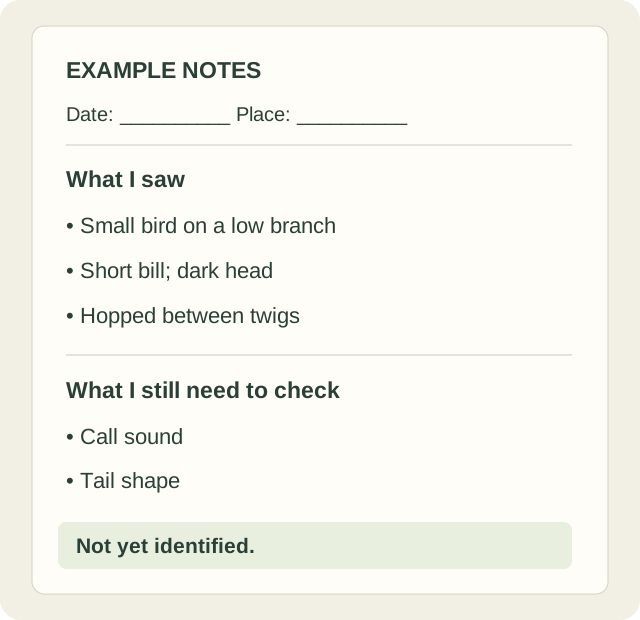
Example notes, not an identification record.Open full-size image - 05
Compare a few possible matches
Use your field guide or Merlin’s identification tools to narrow the choices. Merlin can suggest matches from a photo or a description; Sound ID suggests birds from recorded sounds. Compare those suggestions with the features you observed. For a sound suggestion, listen to your recording and the reference calls before deciding it matches.
- 06
Choose what to look for next time
Review your notes after the outing. If two possibilities remain, identify the feature that would help separate them, such as bill shape or a particular call. Keep that question for your next visit. Practice on familiar birds when they are still, then watch them move or fly so you learn how their appearance changes.
Optional supplies on Amazon
Affiliate disclosure: As an Amazon Associate I earn from qualifying purchases. How our links work.
Use what you already have. These links open Amazon search results so you can compare suitable supplies; they are not individual product reviews.
A repeatable 20-minute exercise
Try five minutes settling in and scanning, ten minutes following one or two subjects, then five minutes finishing notes. These are suggested time blocks, not rules. If a useful observation takes longer, stay with it. If nothing appears, record the conditions and try another visit rather than forcing an identification.
Prepare for the place, not an imaginary expedition
Check the forecast and dress for the conditions. Learn how to find entries in your guide before you need it outdoors. Look up which birds may be present during that season rather than expecting a species simply because it appears in a national book. Comfortable, practical clothing helps you keep your attention on the outing.
A quick final check
- Date and location recorded.
- Observed features separated from guesses.
- Wildlife and access rules respected.
- One question saved for the next visit.
Common questions & sticking points
Can I start birdwatching without buying binoculars?
Yes. Begin by watching birds you can see comfortably. Use available equipment before deciding what a purchase would improve. A camera or spotting scope is not required for this first exercise.
Does a Merlin Sound ID suggestion prove which bird was there?
Treat it as a suggestion to check. Compare your recording with the reference sounds and the circumstances of your observation before adding a confident identification to your notes.
What if my bird sketch looks terrible?
An observation sketch only needs to preserve useful details. Labels, arrows, counts and rough shapes can be more informative than a polished picture. Keep drawing what you notice.
Sources & further reading Optional
References used to check this guide. Follow your product’s own safety instructions where its design differs.
- RSPB: beginning birdwatching
- Audubon: planning a first birding outing
- Audubon: bird identification clues
- John Muir Laws for Audubon: nature journaling
- Cornell Lab: Merlin identification tools
- Audubon: preparing for a birding trip