Packing a carry-on works best when you plan around the actual trip, not every possible situation. Start with the airline’s allowance and your itinerary, then choose clothes that work together. The airport guidance here focuses on departures through US security; check every country and airline on your route.
Check your bag allowance, lay out complete outfits, separate liquids and batteries correctly, and keep documents, medication, and other essentials easy to reach.
Go straight to the stepsBefore you begin
Bag dimensions, weight limits, and included baggage vary by airline and fare. Do not buy a suitcase based only on a “cabin approved” label. Check current security and airline rules before travel, including any connecting flights.
What you’ll need
- Your airline’s baggage allowance
- A carry-on bag and permitted personal item
- A short packing list
- A quart-sized clear liquids bag for US screening
- Small pouches or packing cubes if useful
Tools & supplies for this project
Affiliate disclosure: We may earn a commission when you buy through these Lowe’s links. How our links work.
Use what you already own. If you need supplies, compare these options with the requirements above and choose only the items your project needs.
Check Lowe’s for current price, availability and specifications.
Let’s do this
Step by step
- 01
Start with the trip, not the suitcase
Write down the number of nights, weather, planned activities, and any laundry access. Choose complete outfits for that plan. Put optional extras in a separate pile so they do not quietly become part of the essential list.
- 02
Check the bag and remove old contents
Compare your bag with your airline’s measurement and weight instructions. Empty every pocket before packing. This catches forgotten tools, old liquids, and items from an earlier trip that do not belong in this one.
- 03
Group clothes and small items
Lay clothes flat or roll them neatly, depending on their shape. Use a pouch for small accessories so they do not fall into corners. Keep shoes separate from clean clothing. Leave enough space to close the bag without sitting on it.
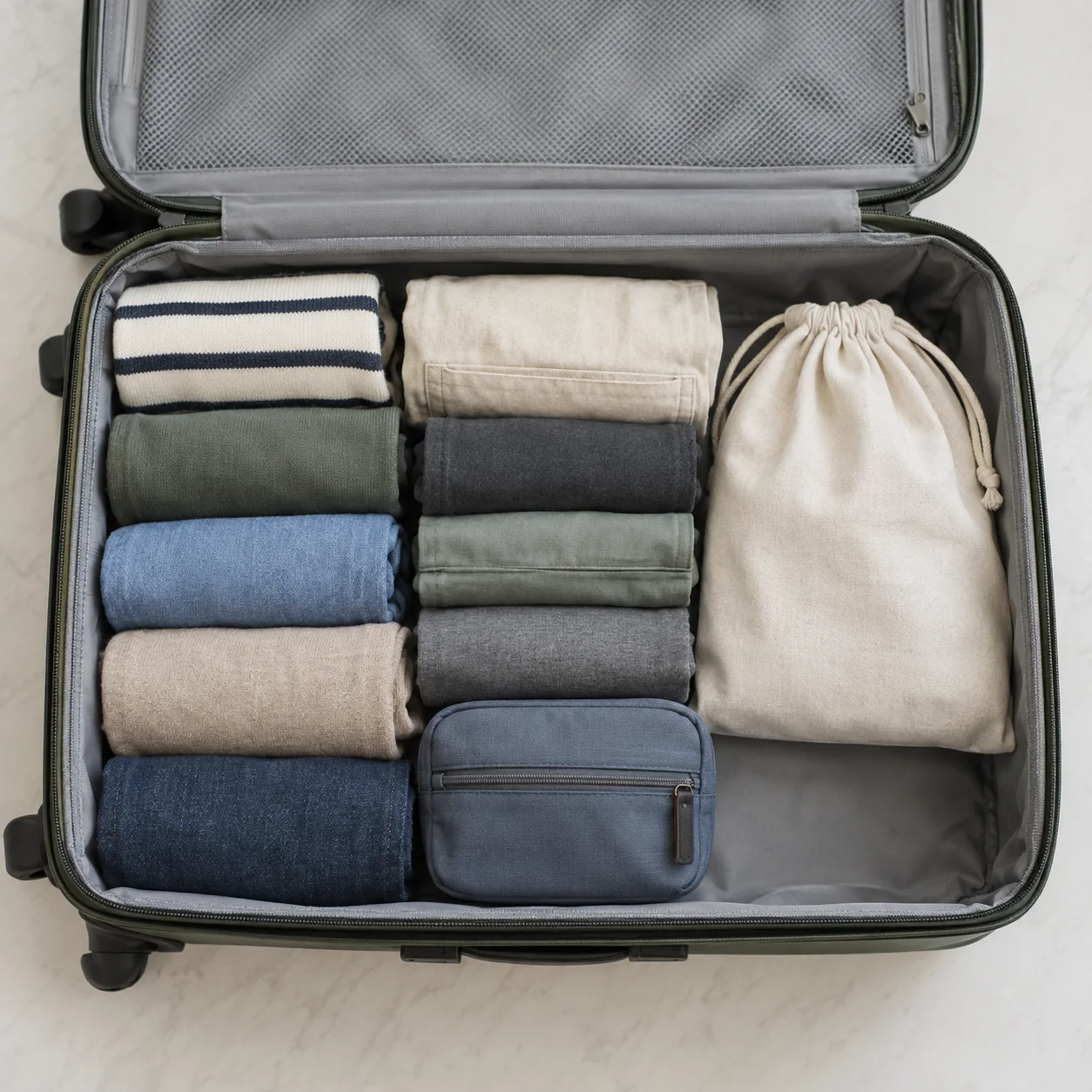
Keep shoes separate from clean clothes and small items together. Leave enough room to close the bag normally.Open full-size image - 04
Prepare liquids for US screening
For ordinary toiletries, use containers of 3.4 ounces (100 ml) or less, all fitting in one quart-sized clear bag per passenger. The container size matters, not just how much remains. Medically necessary liquids and certain infant supplies have exceptions; check TSA’s specific directions.
- 05
Keep batteries and essentials accessible
Spare lithium batteries and power banks belong in carry-on baggage, with terminals protected against short circuits. Keep documents, medication, and valuables within reach. If your cabin bag is checked at the gate, remove spare lithium batteries and power banks and keep them in the cabin.
- 06
Do a final carry and contents check
Close the bag and try carrying it. Weigh it if your airline sets a weight limit. Check the liquids bag, travel documents, charging cables, and trip-specific essentials against your list, then put the list away with your travel details.
Optional supplies on Amazon
Affiliate disclosure: As an Amazon Associate I earn from qualifying purchases. How our links work.
Use what you already have. These links open Amazon search results so you can compare suitable supplies; they are not individual product reviews.
A practical three-night packing starting point
Try three tops, one spare bottom, underwear and socks for each day, sleepwear, and one weather-appropriate layer, adjusted for your actual activities. Wear the bulkier suitable shoes. This is a planning example, not a universal list; work clothes, swimming, or a cold forecast may change it.
If the bag is full, examine duplicate uses before buying compression equipment. Two extra shoes and several “just in case” outfits can take more space than the clothes you expect to wear. Keep essential medical supplies out of that reduction exercise.
Check a power bank before departure
Read its watt-hour rating. FAA’s normal lithium-ion limit is 100 Wh per battery; larger batteries have additional approval and quantity conditions. Airlines may be stricter, including limits on the number of power banks. Do not pack damaged or recalled batteries that may overheat; consult the airline and current FAA guidance.
A quick final check
- Bag size, weight, and fare allowance are checked.
- Liquids follow the rules for your route.
- Spare batteries stay protected and in the cabin.
- Essential documents and medication remain accessible.
Common questions & sticking points
Does a carry-on always include a personal item?
No. Read your specific fare’s allowance rather than assuming two bags are included.
Can I use this list outside the United States?
Use the packing process, but verify the security rules of each departure airport and airline. US screening rules are not a universal international allowance.
Sources & further reading Optional
References used to check this guide. Follow your product’s own safety instructions where its design differs.
- TSA: Travel tips and the 3-1-1 liquids rule
- TSA: Check individual items and exceptions
- FAA: Lithium batteries and power banks