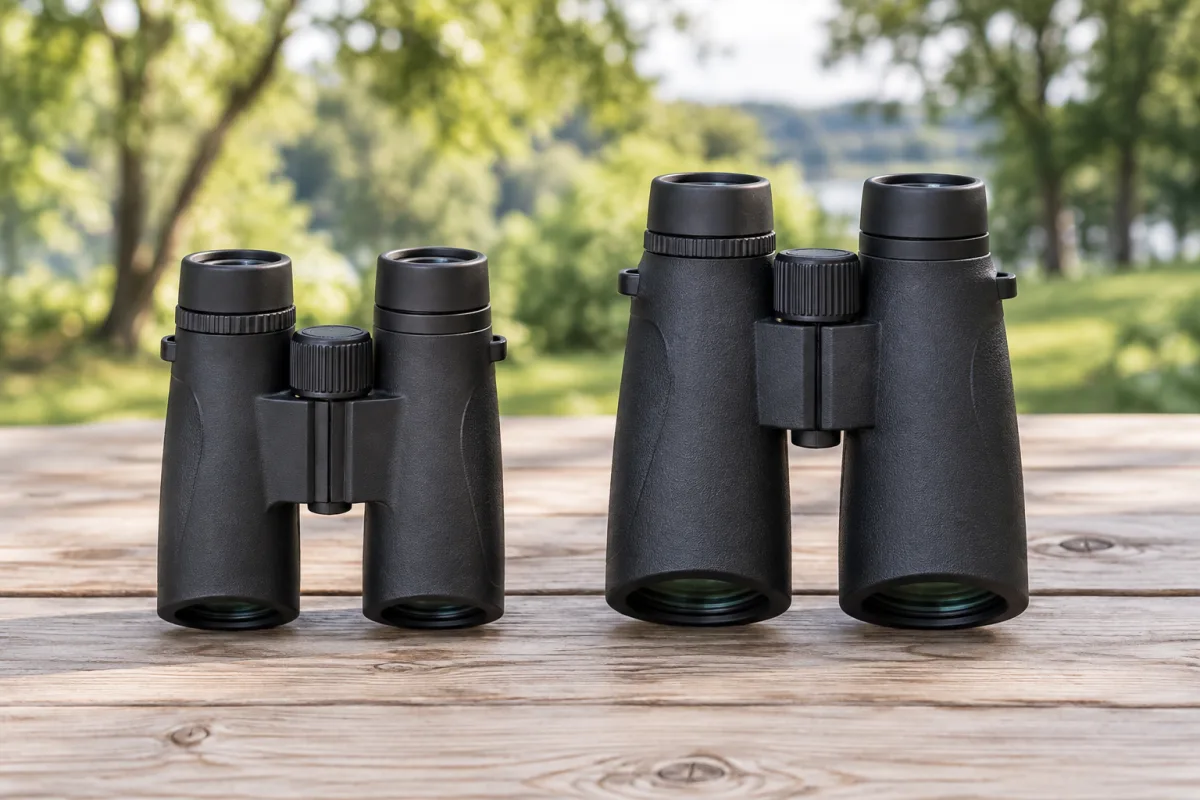
The second number describes the objective lens diameter, not extra zoom. A larger number brings a different size and light-handling tradeoff. Neither format guarantees better optics: compare products of similar quality and decide which you will comfortably carry.
Both magnify eight times. Start with 8×32 for easier carrying or 8×42 when viewing in dim conditions matters more. Compare the actual models in your hands before choosing.
Compare your optionsBefore you begin
Set a budget before comparing accessories. Test with the glasses you normally wear and never aim binoculars at the sun.
What you’ll need
- Specifications for two shortlisted models
- Your usual eyeglasses, if worn
- A chance to handle both pairs, if possible
Make an informed choice
Choose what fits your plans
- 01
Separate magnification from size
The 8 in both specifications gives the same magnification. The 32 or 42 measures the front objective lens in millimeters. Choose between these two formats for handling and light conditions, not because you expect the 42 to bring a distant bird closer.
- 02
Consider when you actually watch birds
Divide objective diameter by magnification to calculate exit pupil: 32 ÷ 8 is 4 mm; 42 ÷ 8 is 5.25 mm. The larger exit pupil can help when your eyes’ pupils expand in dim conditions. In bright daylight, when your pupils are smaller, the difference may be much less useful. This calculation is not a quality score for the glass or coatings.
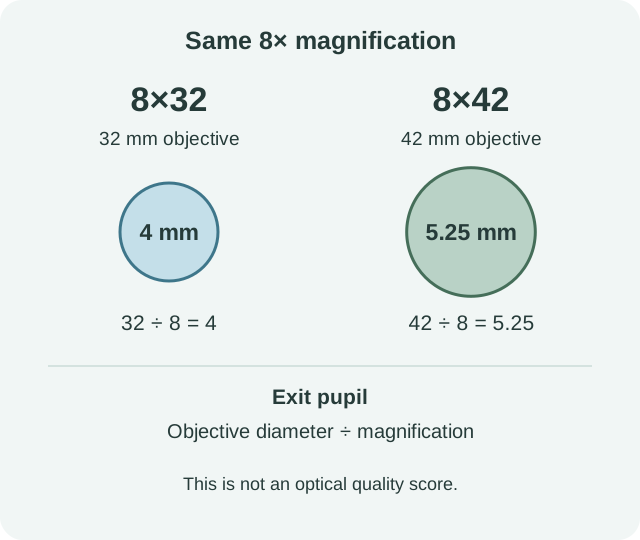
Exit pupil equals objective diameter divided by magnification.Open full-size image - 03
Read the field-of-view specification
Two models with the same 8× label can show different amounts of the scene. A wider field makes finding a bird and following its movement easier. Compare the stated angle or width at the same distance, then check what you can actually see with your glasses on. Do not infer field of view from lens diameter alone.
- 04
Try the controls and balance
Hold each pair as you would on a walk. Can you reach the focus wheel comfortably, turn it smoothly and stop where you intend? Look through both at the same subject, then scan slowly. Notice uncomfortable edge distortion, clipped views or awkward hand position. These practical differences may matter more than a small specification advantage.
Optional supplies on Amazon
Affiliate disclosure: As an Amazon Associate I earn from qualifying purchases. How our links work.
Use what you already have. These links open Amazon search results so you can compare suitable supplies; they are not individual product reviews.
What about 10× binoculars?
More magnification also enlarges hand movement and generally narrows the view. It can make finding and tracking a moving bird harder. Try both powers before assuming the higher number will reveal more usable detail. Holding a steadier, wider image can be more useful than enlarging a shaky one.
A short comparison you can repeat
Use the same three subjects for both pairs: a still object nearby, detail in a shaded area and something farther away. Write down which pair is easier to focus and hold. Keep the notes in two columns so an attractive finish or a single impressive specification does not dominate the decision.
Buy for the outing you actually take
If the larger pair stays home because it feels cumbersome, a comfortable compact may be the more useful choice. If dim viewing is central to your outings and the larger body feels good, compare full-size models. These are format tradeoffs, not a claim that one particular product has been tested here.
The key tradeoffs
| Feature | 8×32 | 8×42 |
|---|---|---|
| Magnification | 8× | 8× |
| Objective diameter | 32 mm | 42 mm |
| Exit pupil | 4 mm | 5.25 mm |
| Carrying | Usually smaller and lighter | Usually larger and heavier |
| Decision | Prioritize portability | Consider for dimmer viewing |
A quick final check
- Same magnification compared first.
- Field of view checked for each model.
- Focus and balance comfortable in use.
- Size matches the outings you plan.
Common questions & sticking points
Does an 8×42 binocular zoom in more than an 8×32?
No. Both magnify eight times; the second number is objective lens diameter. It changes the format, not the magnification.
Is exit pupil the same thing as eye relief?
No. Exit pupil is the diameter of the light beam leaving the eyepiece. Eye relief describes where your eye sits to see the full view. Check both when comparing models.
Can I compare field of view in degrees with feet at 1,000 yards?
They are different ways to express the view. Compare like units from the manufacturers’ specifications before deciding which is wider. Your usable view also depends on eye position.
Sources & further reading Optional
References used to check this guide. Follow your product’s own safety instructions where its design differs.
- Cornell Lab: full-size, compact and pocket binoculars
- Nikon: exit pupil and light conditions
- Cornell Lab: comparing binoculars in person
- Cornell Lab: binocular field of view
- Audubon: magnification and binocular handling
- Nikon: eye relief