Fresh pumpkin seeds carry water and stringy pulp. Cleaning and drying them first makes the oven stage more predictable. Different pumpkins produce different sizes and shell textures.
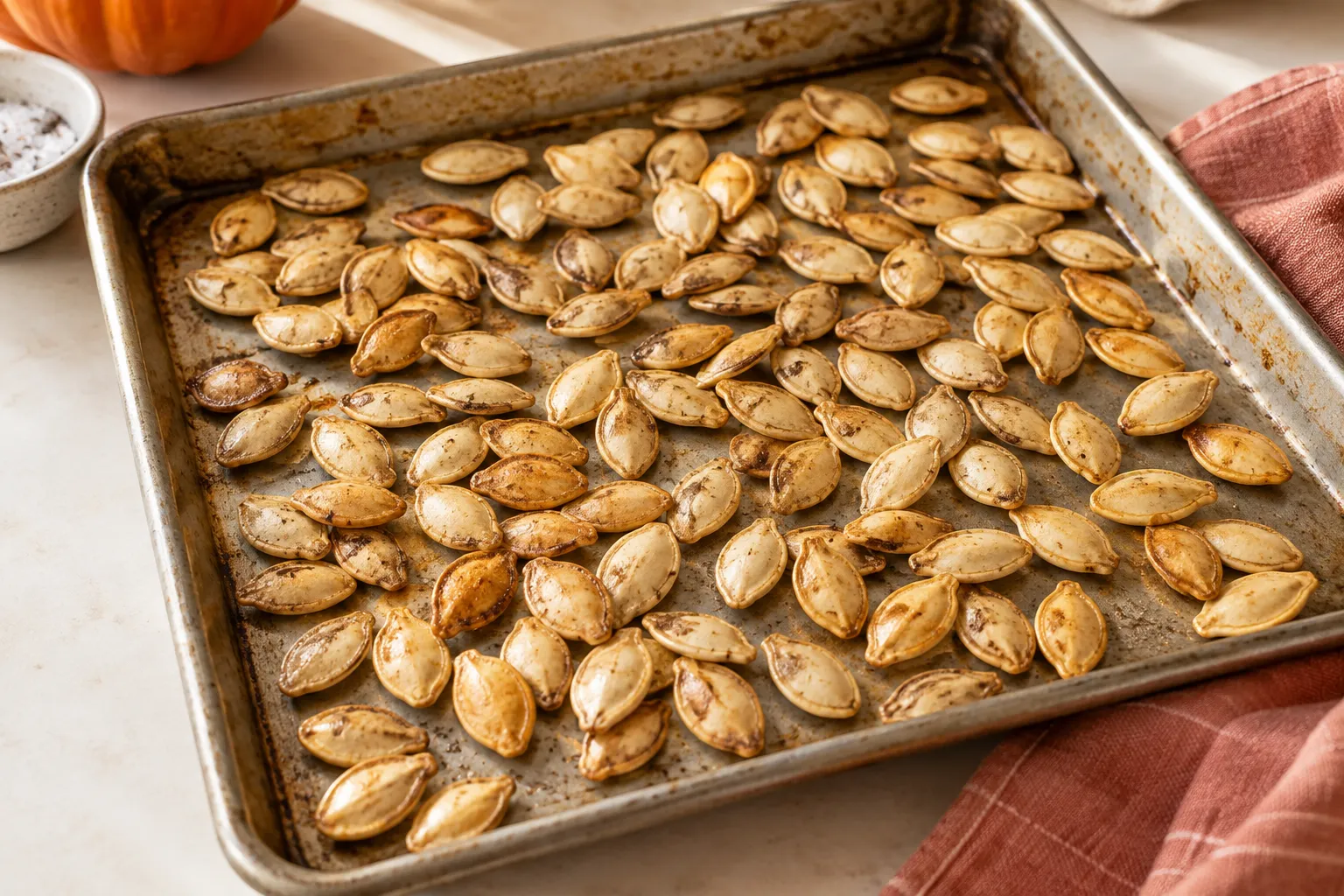
Rinse pumpkin seeds free of pulp, dry well and coat lightly with oil and seasoning. Roast in a single layer at 300°F, stirring occasionally, until dry and crisp, often 25–40 minutes.
Go straight to the stepsYour project helper
Follow the steps and check them off as you go →Before you begin
Use seeds from a fresh, sound pumpkin rather than a carved pumpkin that has been sitting out. Whole seed shells can be tough; choose a texture you can chew comfortably and consider choking risk for young children.
What you’ll need
- Colander
- Clean towel
- Rimmed baking sheet
- Spoon
- Oven mitts
Measure before you start
Ingredients
Base batch: About 1 cup
Ingredient amounts scale; oven temperatures and cooking times do not. Split a larger batch between pans when needed.
Use the base batch for your first attempt. Adjust seasoning to taste and check texture as you cook.
Let’s do this
Step by step
- 01
Separate pulp and seeds
Place the scooped seeds in water and remove stringy pumpkin flesh by hand. Rinse in a colander and pick away remaining pulp.
- 02
Dry thoroughly
Spread on a clean towel and pat dry, removing towel fibers if any cling. Give surface moisture time to evaporate. Wetter seeds will need longer in the oven.
- 03
Coat and spread
Heat the oven to 300°F. Toss with a small amount of oil and salt, then spread in a single layer on a rimmed tray.
- 04
Roast and stir
Roast about 25–40 minutes, stirring every 10 minutes and checking more often near the end. Taste a cooled seed: the inside should not remain damp even if the shell has colored.
- 05
Cool before storing
Cool completely on the tray before moving to a clean airtight container. Make a small batch, store in a cool dry place and discard seeds with mold or an off smell. Refrigeration can help maintain quality for longer storage.
Checks stay on this page while you work and reset when you leave.
Use a cooled sample to judge crunch
A seed straight from the oven is hot and may seem softer than it will after cooling. Cool a few samples before deciding to add time. Lower heat and longer checking are safer for the flavor than a sudden high-heat finish.
A quick final check
- Separate pulp and seeds
- Dry thoroughly
- Coat and spread
- Roast and stir
- Cool before storing
Common questions & sticking points
Are these the same as green pepitas?
Many green pepitas are hulled seeds or come from hull-less varieties. They roast faster than the whole shell-on seeds described here.
Can I use squash seeds?
Many edible winter-squash seeds can be roasted, but size and shell toughness vary. Check frequently and start with a small batch.
Sources & further reading Optional
References used to check this guide. Follow your product’s own safety instructions where its design differs.
Last source check: September 24, 2026