A trap beside a fruit bowl can catch flies while a forgotten potato keeps producing more. The most useful first job is a room-by-room source check. This guide concerns the small fruit flies attracted to fermenting food; tiny dark flies rising from houseplant soil need the fungus-gnat routine instead.
Remove fermenting food and hidden residue first, then use a fruit-fly trap to catch the adults that remain.
Go straight to the stepsBefore you begin
Keep traps away from children, pets and food preparation. Never mix cleaners or pour pesticides into a drain unless the label expressly permits that use.
What you’ll need
- Trash bags
- Cloth and surface-compatible cleaner
- A ready-to-use fruit-fly trap, or a jar, apple cider vinegar, dish soap and plastic wrap
Let’s do this
Step by step
- 01
Check where the flies gather
Look near produce, bottles, the trash and sink. Fruit flies are usually compact tan or brown flies, often with red eyes. A small fly beside a window is not enough to identify it. Check the food area and houseplants before choosing a trap.
- 02
Remove the obvious food sources
Discard spoiled produce in a closed bag and take it out. Refrigerate ripe fruit when appropriate for the food. Empty countertop compost and check stored onions and potatoes, including the bottom of bags. Clean the place where a leaking piece of fruit was sitting.
- 03
Find the residue you cannot see at first
Rinse and drain recycling containers. Wash bin rims, lids and sticky spill areas with a cleaner suitable for each surface. Clean accessible residues around the sink; do not reach into a disposal. Rinse and thoroughly dry used cloths and mops so they do not become another damp food source.
- 04
Set an adult trap beside the activity
Use a commercial fruit-fly trap according to its directions. For a simple alternative, put a shallow amount of apple cider vinegar and one drop of dish soap in a jar. Cover it tightly with plastic wrap and make a few tiny entry holes. Set it where it will not tip or be mistaken for a drink.
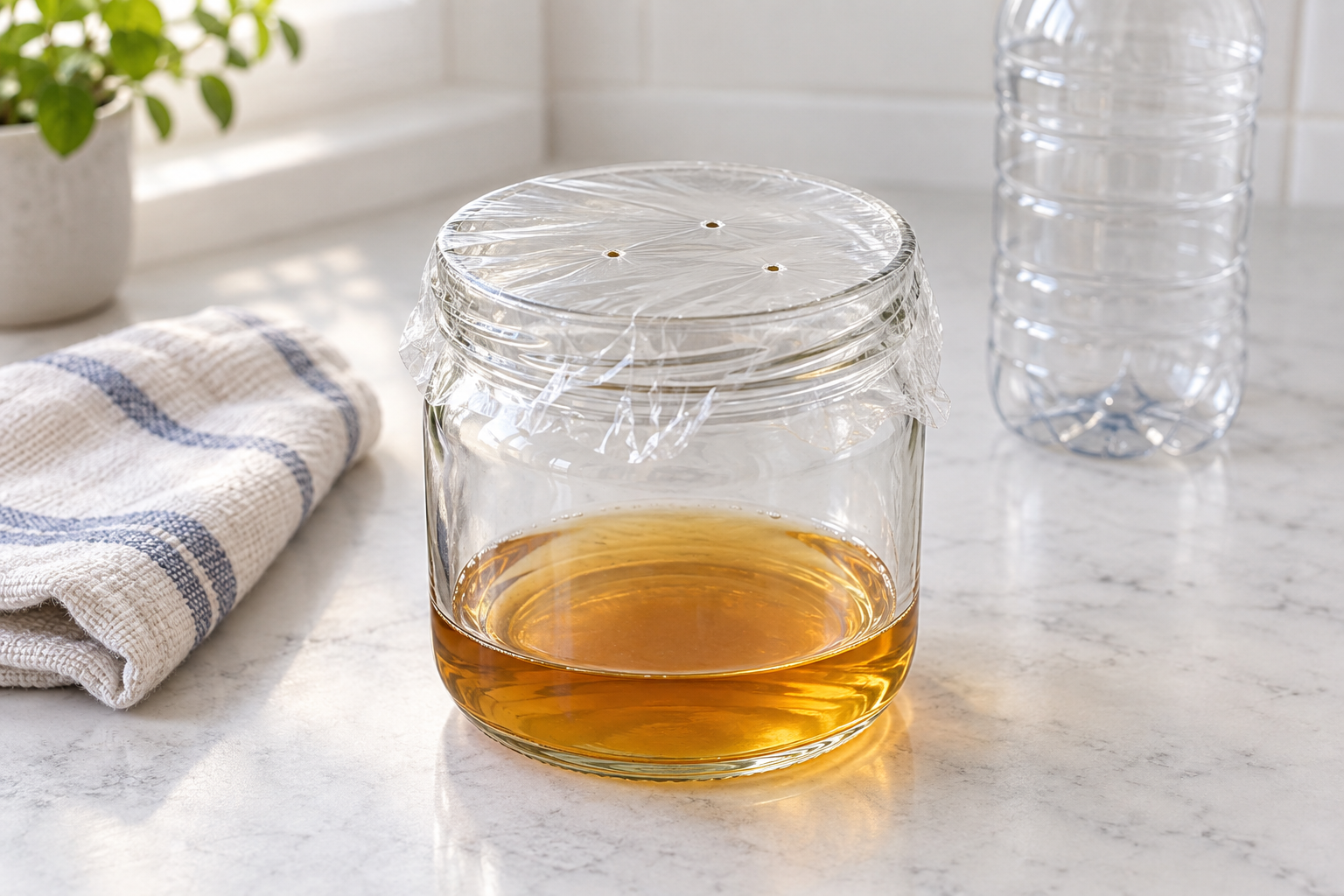
Catch adults while removing the breeding source.Open full-size image - 05
Check progress and inspect again
Note where you still see flies rather than merely counting the trap catch. If activity continues, inspect one overlooked area at a time: a returnable-bottle bag, damp cleaning supplies or food spills under accessible furniture. Do not move heavy appliances or disconnect utilities just to follow this checklist.
- 06
Keep the source from returning
Empty food scraps regularly, rinse recycling and wipe spills promptly. Continue checking the area while remaining adults emerge. A recurring swarm after cleaning is a reason to reassess the insect identification or ask an extension service or pest professional to find the breeding source.
What a trap can and cannot do
An adult trap is an optional aid, not a substitute for sanitation. Put your effort into the source before buying several different devices. A plug-in light trap may catch assorted flying insects, but it does not identify what is breeding nearby.
How long does removal take?
There is no reliable overnight promise. University of Maryland describes a fruit-fly life cycle of about 8–10 days under suitable conditions, so removing a source does not mean every adult disappears immediately. Use the trend over the following days to decide whether your cleanup found the source.
A quick final check
- Spoiled produce and scraps removed
- Recycling and bins cleaned
- Damp cleaning supplies dried
- Adult trap secure and monitored
Common questions & sticking points
Does apple cider vinegar get rid of fruit flies?
It attracts adults into a trap. It does not remove eggs and larvae in spoiled food, sticky waste or other breeding material. Use it alongside cleaning.
Why do I have fruit flies with no fruit out?
Fermenting liquid in a bottle, an old onion or potato, a dirty bin or a damp food-soiled cloth can provide a source. Check hidden residue rather than only the fruit bowl.
Are fruit flies the same as plant gnats?
No. Fungus gnats usually have slender dark bodies and are associated with moist potting mix. A fruit-fly lure is not the main treatment for that soil problem.
Sources & further reading Optional
References used to check this guide. Follow your product’s own safety instructions where its design differs.
- University of Maryland: fruit-fly biology and management
- University of Kentucky: fruit flies and hidden breeding sources
- University of Minnesota: identifying fruit flies