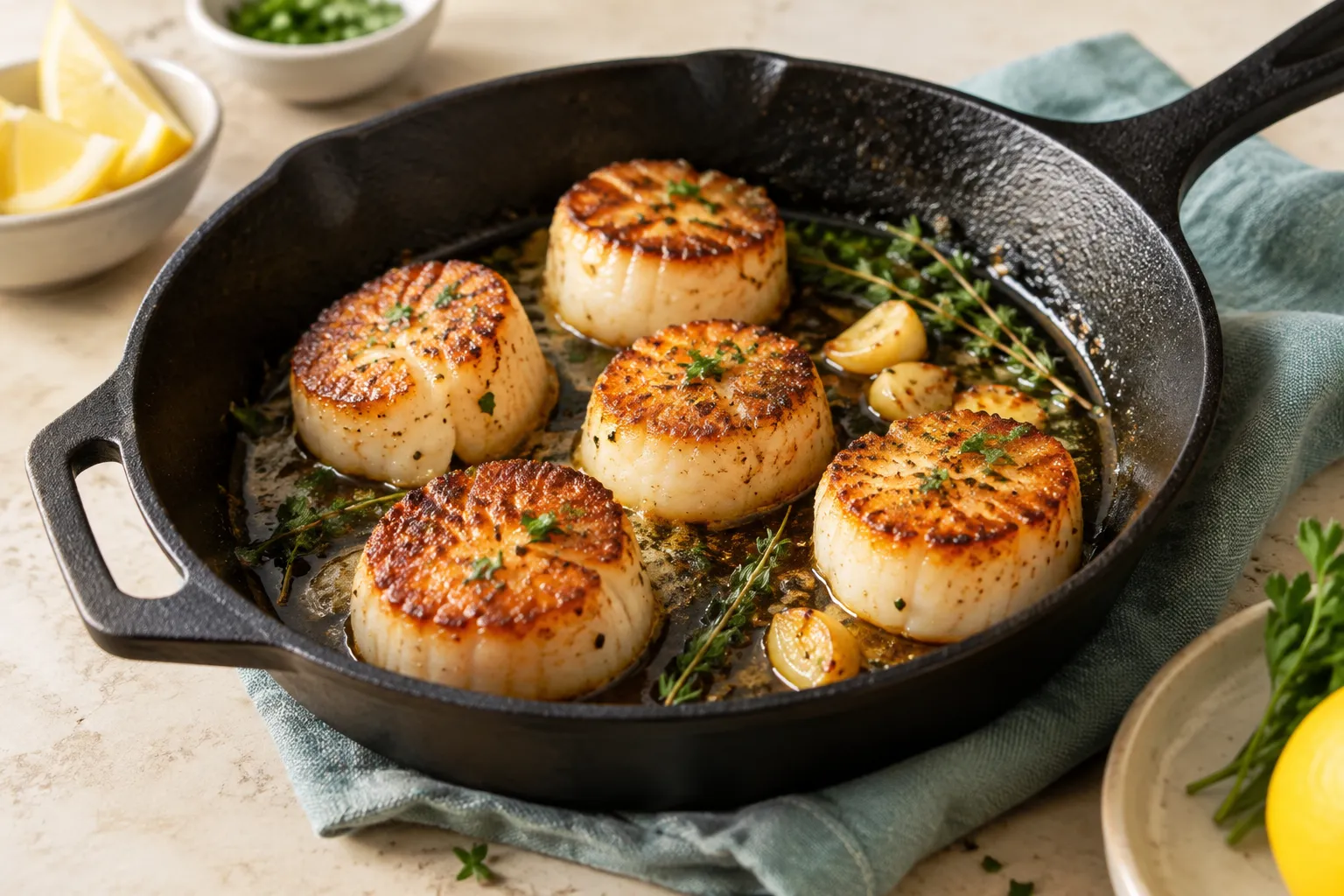
Large sea scallops are easier to sear than tiny bay scallops. Surface moisture and crowding are the main obstacles to browning. If the package contains added liquid, expect more moisture in the pan.
Pat sea scallops thoroughly dry, season lightly and sear in a thin layer of hot oil. Turn when browned and finish until the center reaches 145°F and the flesh is opaque.
Go straight to the stepsYour project helper
Follow the steps and check them off as you go →Before you begin
Thaw seafood in the refrigerator following packaging instructions. Remove any tough side muscle. Keep raw seafood and juices away from finished food.
What you’ll need
- Heavy skillet
- Tongs or thin spatula
- Paper towels
- Thin-tip thermometer
Measure before you start
Ingredients
Base batch: 2 portions
Ingredient amounts scale; oven temperatures and cooking times do not. Split a larger batch between pans when needed.
Use the base batch for your first attempt. Adjust seasoning to taste and check texture as you cook.
Let’s do this
Step by step
- 01
Dry the scallops
Pat every side with paper towels. Remove a firm side muscle if present. Keep pieces in a single layer while preparing the pan.
- 02
Heat a roomy skillet
Warm a thin film of oil over medium-high heat without excessive smoking. Choose enough surface area to leave space between scallops.
- 03
Sear the first side
Place scallops in the pan away from you and leave them undisturbed until a golden crust forms, often around 2 minutes for large pieces. Do not force them loose immediately.
- 04
Turn and finish
Turn gently and cook the second side, adding optional butter late. Check the thickest center for 145°F with a suitable probe; the flesh should be opaque. Size changes the time.
- 05
Serve immediately
Move to a clean plate as soon as done and finish with lemon. Prolonged holding in the hot pan can make the texture rubbery.
Checks stay on this page while you work and reset when you leave.
Cook in batches when needed
A crowded pan collects released liquid. Let the pan recover between batches and pour off excess liquid safely if necessary rather than boiling all the scallops in it.
Serve now or store safely
Refrigerate perishable cooked food in shallow containers within 2 hours, or within 1 hour when the room or outdoor temperature is above 90°F. Keep the refrigerator at 40°F or below. Use most cooked leftovers within 3–4 days and reheat to 165°F. Do not wait for a large pot to cool completely on the counter.
A quick final check
- Dry the scallops
- Heat a roomy skillet
- Sear the first side
- Turn and finish
- Serve immediately
Common questions & sticking points
Can I use bay scallops?
They are much smaller and need a different, shorter cooking approach. Do not use large-sea-scallop timing.
Why are they rubbery?
They may have cooked too long. Dry well, brown efficiently and check doneness early.
Sources & further reading Optional
References used to check this guide. Follow your product’s own safety instructions where its design differs.
Last source check: September 24, 2026