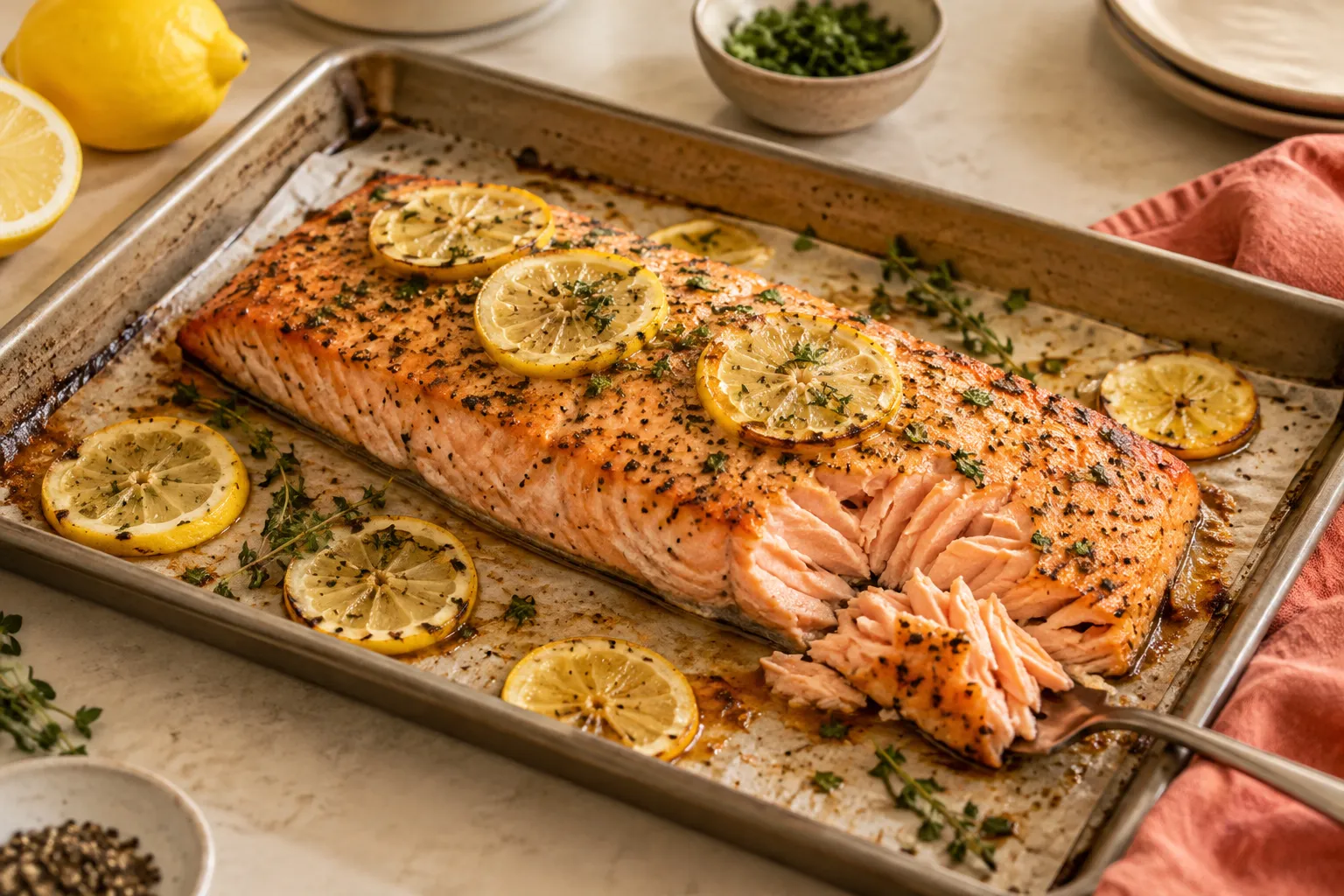
Salmon portions can look alike while differing greatly in thickness. Use the clock to remind you to check, then use the fish itself and a thermometer to decide when it is ready.
Pat salmon dry, season and bake at 400°F on a suitable rimmed tray until the thickest center reaches 145°F. Lift with a wide spatula and serve promptly.
Go straight to the stepsYour project helper
Follow the steps and check them off as you go →Before you begin
Thaw frozen fish in the refrigerator following package directions; vacuum-packed fish may need removal from its packaging before thawing. Keep raw fish separate from ready-to-eat food and check for pin bones.
What you’ll need
- Rimmed baking sheet
- Fish spatula
- Instant-read thermometer
- Paper towels
Measure before you start
Ingredients
Base batch: 2 portions
Ingredient amounts scale; oven temperatures and cooking times do not. Split a larger batch between pans when needed.
Use the base batch for your first attempt. Adjust seasoning to taste and check texture as you cook.
Let’s do this
Step by step
- 01
Prepare the tray
Heat the oven to 400°F. Lightly oil a suitable rimmed tray. Use a liner only if it is rated for that temperature.
- 02
Dry and season
Pat the salmon dry, check for pin bones and place skin-side down if skin is present. Brush lightly with oil and season. Keep portions separated rather than overlapping.
- 03
Bake and check early
Bake roughly 10–15 minutes for typical portions, beginning checks sooner for thin pieces. Very thick fillets need longer. Avoid opening the oven constantly.
- 04
Measure the center
Insert a thermometer from the side into the thickest flesh without touching the tray. Cook to 145°F. The flesh should also turn opaque and separate readily, but appearance does not replace a temperature check.
- 05
Lift and serve
Use a wide spatula to support the fillet. Serve with lemon and promptly refrigerate leftovers. Clean tools that contacted the raw fish before using them on cooked portions.
Checks stay on this page while you work and reset when you leave.
Protect a thin tail section
Fold a very thin end under if practical so the thickness is more even, or cook it separately and remove when ready. Do not keep a thin piece baking just because a thicker one needs more time.
Serve now or store safely
Refrigerate perishable cooked food in shallow containers within 2 hours, or within 1 hour when the room or outdoor temperature is above 90°F. Keep the refrigerator at 40°F or below. Use most cooked leftovers within 3–4 days and reheat to 165°F. Do not wait for a large pot to cool completely on the counter.
A quick final check
- Prepare the tray
- Dry and season
- Bake and check early
- Measure the center
- Lift and serve
Common questions & sticking points
Can I bake directly from frozen?
Use a frozen-fish-specific method or package directions. The timing here assumes thawed portions.
What is the white material on top?
Coagulated protein can appear during cooking. It does not by itself mean the fish is spoiled, but doneness still needs checking.
Sources & further reading Optional
References used to check this guide. Follow your product’s own safety instructions where its design differs.
Last source check: September 24, 2026