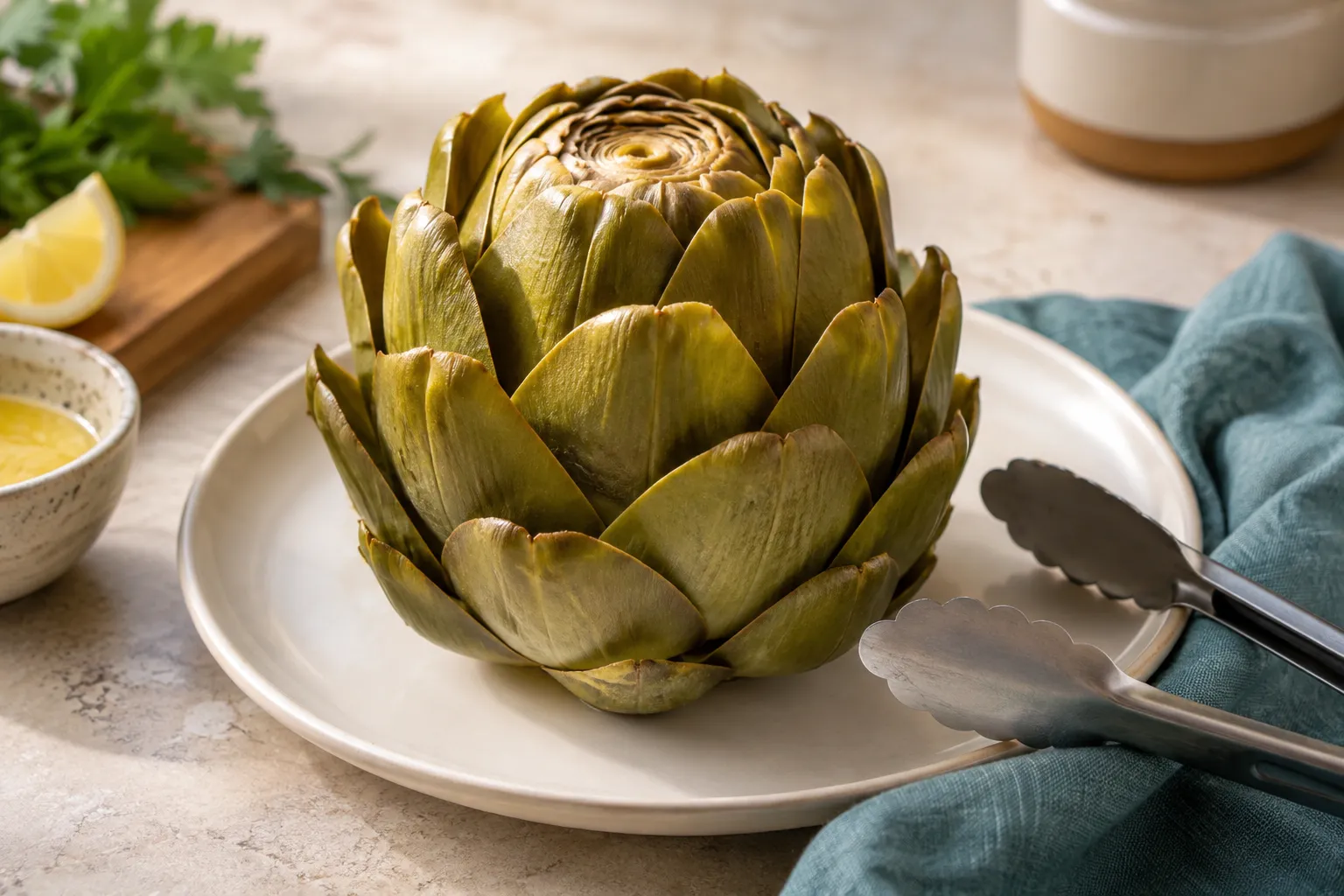
A whole globe artichoke is eaten in stages. You scrape the tender flesh from the base of the outer leaves, then remove the fuzzy choke to reach the heart. Jerusalem artichokes are a different vegetable.
Trim globe artichokes and steam over simmering water until a leaf pulls out easily and the base is tender. Eat the soft leaf bases, remove the fuzzy choke and enjoy the heart.
Go straight to the stepsYour project helper
Follow the steps and check them off as you go →Before you begin
The leaf tips may be sharp. Handle carefully and keep steam away from your face. Check the pot during cooking so it does not boil dry.
What you’ll need
- Large pot with lid
- Steamer basket
- Knife
- Kitchen scissors
- Tongs
- Spoon
Measure before you start
Ingredients
Base batch: 2 artichokes
Ingredient amounts scale; oven temperatures and cooking times do not. Split a larger batch between pans when needed.
Use the base batch for your first attempt. Adjust seasoning to taste and check texture as you cook.
Let’s do this
Step by step
- 01
Wash and trim
Rinse between the leaves. Trim the dry stem end and remove small tough leaves around the base. Cut a little off the top and snip sharp leaf tips if needed; rub cut surfaces with optional lemon.
- 02
Set up the steamer
Add water below the basket without submerging the artichokes. Bring to a simmer, arrange artichokes in the basket and cover securely.
- 03
Steam until tender
Steam roughly 30–45 minutes, sometimes longer for a large artichoke. Add hot water carefully if the level gets low. A leaf should pull away readily and a knife should enter the base easily.
- 04
Eat the leaf bases
Let cool enough to handle. Pull off a leaf, dip if desired and draw the soft flesh at its base between your teeth. Discard the tough remainder; do not swallow whole fibrous leaves.
- 05
Expose and clean the heart
Once you reach the inner leaves, remove them and scoop out all of the fuzzy choke with a spoon. Discard the choke. Cut and eat the tender heart and any tender peeled stem flesh.
Checks stay on this page while you work and reset when you leave.
Use two tenderness checks
An outer leaf may loosen before the thick base is tender. Check both the leaf release and the base, allowing more steam time if the knife still meets a hard center.
Serve now or store safely
Refrigerate perishable cooked food in shallow containers within 2 hours, or within 1 hour when the room or outdoor temperature is above 90°F. Keep the refrigerator at 40°F or below. Use most cooked leftovers within 3–4 days and reheat to 165°F. Do not wait for a large pot to cool completely on the counter.
A quick final check
- Wash and trim
- Set up the steamer
- Steam until tender
- Eat the leaf bases
- Expose and clean the heart
Common questions & sticking points
Is the fuzzy center edible?
Remove and discard the fibrous choke from a mature globe artichoke before eating the heart.
Why did it turn brown after cutting?
Cut surfaces can oxidize. Lemon can reduce discoloration; browning alone is not a doneness test.
Sources & further reading Optional
References used to check this guide. Follow your product’s own safety instructions where its design differs.
- FDA: preparing fresh produce safely
- Ocean Mist: preparing and cooking artichokes
- USDA: leftovers and food safety