The leafy top of a pineapple can become an interesting houseplant. Most of the work is preparation; the roots need time to catch up.
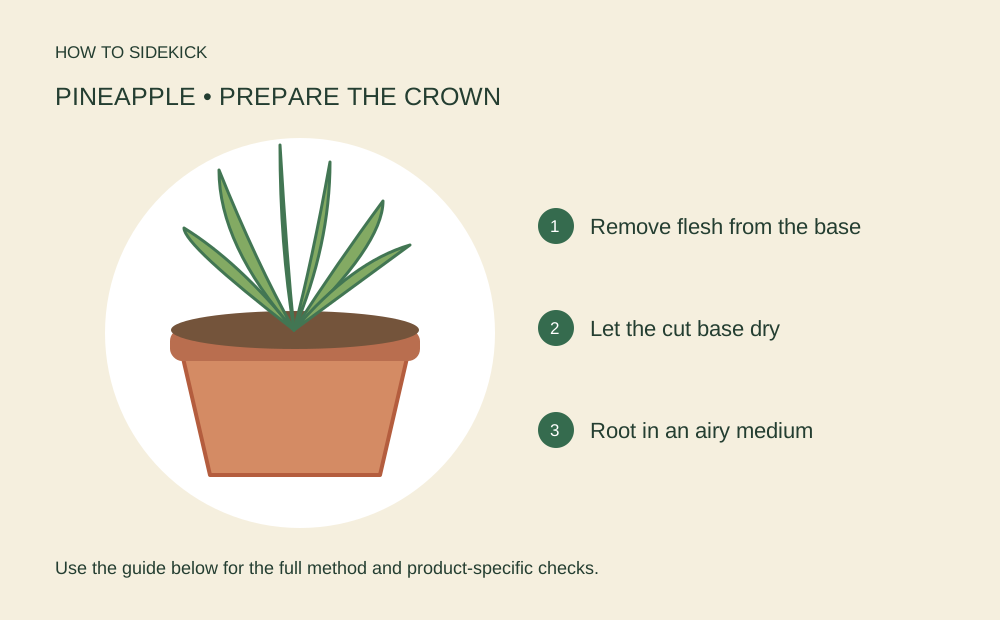
Remove fruit flesh from the crown, expose a short base and let it dry for several days. Root it in a moist, airy medium in bright indirect light, then move it into a draining pot once roots develop.
Go straight to the stepsYour project helper
Keep track as you go 0/4
Check off what you have verified. This list resets when you leave the page.
Before you begin
Treat this as a houseplant project. Fruit is not a quick or guaranteed outcome, especially indoors. Keep sharp pineapple leaves away from small children.
What you’ll need
- Healthy pineapple crown
- Clean knife
- Rooting medium such as perlite
- Small draining pot
- Potting mix for the rooted plant
Optional tools & supplies
Affiliate disclosure: We may earn a commission when you buy through these links. How our links work.
Use what you already have. Choose supplies that fit your task, and check instructions and current prices.
 Back to the Roots organic potting mix, 1 cu ftLowe’s · Product
For suitable plants in draining containers. Not orchid bark, and not an amendment to automatically add to every garden bed.
 Corona Precision floral scissorsLowe’s · Product
For light stems and herbs within the tool’s capacity; clean before and after use.
Let’s do this
Step by step
- 01
Prepare the crown
Cut the top off below the leaves and carefully remove remaining fruit flesh. Peel away a few lower leaves to expose the base without damaging it.
- 02
Let the base dry
Leave it in a clean, airy spot for several days. Planting a wet, fleshy base encourages rot; do not skip this stage just to finish in one sitting.
- 03
Set the base into rooting medium
Use perlite, coarse sand or another suitable airy rooting medium in a pot with drainage. Insert the exposed base up to the leaves and water gently. Keep it moist rather than saturated.
- 04
Give it time to root
Keep bright indirect light and warmth. Rooting may take about six to eight weeks. Look for stable new growth and gentle resistance; do not repeatedly pull the crown out to inspect it.
- 05
Pot up and increase light gradually
Once well rooted, move it into a light, well-drained potting mix. Let it settle in indirect light before gradually giving it more sun. Protect it from frost.
Make a rooting record
Label the pot with the start date and take a weekly photo from the same angle. New central growth is easier to notice that way than by checking several times a day. The optional potting mix is for the rooted plant, not a reason to bury a wet crown in dense soil.
A quick final check
- Fruit flesh removed
- Base dried
- Drainage provided
- Rooted plant protected from frost
Common questions & sticking points
Will it produce a pineapple this summer?
Do not expect that. A crown-grown pineapple can take years to reach fruiting conditions.
What if the base smells bad and collapses?
That suggests decay. Discard the failed crown and start again with healthier material and better drainage.
Sources & further reading Optional
References used to check this guide. Follow your product’s own safety instructions where its design differs.
Last source check: September 24, 2026