Act quickly on a fresh accident, but resist pouring on more liquid. Removing moisture is just as important as treating the visible mark.
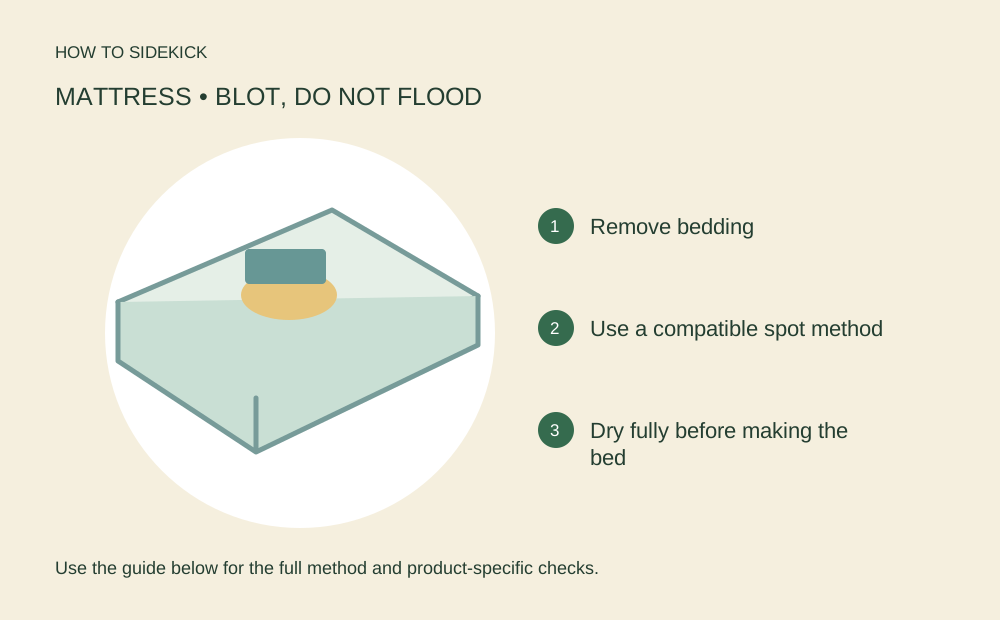
Strip the bed and blot up liquid immediately. Follow the mattress maker’s spot-cleaning instructions, use as little moisture as practical and dry fully. For pet urine, consider an enzyme cleaner only if both its label and the mattress maker allow it.
Go straight to the stepsYour project helper
Keep track as you go 0/5
Check off what you have verified. This list resets when you leave the page.
Before you begin
Do not unzip or remove a mattress cover unless the manufacturer says it is removable for washing. Avoid saturating foam, bleach mixtures and sleeping on a damp mattress.
What you’ll need
- Clean absorbent cloths or towels
- Laundry detergent for bedding
- Manufacturer-approved spot cleaner
- Airflow and time
Optional tools & supplies
Affiliate disclosure: We may earn a commission when you buy through these links. How our links work.
Use what you already have. Choose supplies that fit your task, and check instructions and current prices.
 Rubbermaid Commercial microfiber cloths, 16-packLowe’s · Product
Use a clean cloth approved for the surface; keep dirty or gritty cloths away from delicate finishes.
 Arm & Hammer HE liquid laundry detergentLowe’s · Product
Follow the garment label, washer instructions and product dosing. More detergent is not always better.
Let’s do this
Step by step
- 01
Remove bedding and blot
Launder sheets according to their labels. Press dry towels against the wet area to absorb liquid, changing to a dry section often. Do not scrub the accident deeper into the mattress.
- 02
Check the mattress care restrictions
Find the make and model. A general upholstery cleaner or homemade mixture is not automatically safe for foam, adhesives or the cover’s fire barrier. Keep covers in place unless removal is explicitly allowed.
- 03
Patch-test the approved cleaner
Test a hidden area first. Apply the product only as directed, using minimal moisture and the specified contact time. Do not combine enzyme cleaners with other chemicals or apply a carpet-machine method to an unapproved mattress.
- 04
Remove residue as directed
Blot again, or use a barely damp cloth if the product instructions require it. Work from the edge toward the center. Avoid repeated soaking simply because a stain remains visible.
- 05
Dry and assess before making the bed
Keep the room ventilated and allow full drying, which may take much longer than the cleaning. If deep dampness, odor or contamination persists, contact the mattress maker or a qualified cleaner about whether recovery is practical.
Fresh, dried and pet accidents need different expectations
Fresh liquid is easier to remove by blotting. A dried patch may extend below what you can see. An enzyme product may help a compatible surface, but it cannot guarantee that deep foam contamination has been removed.
Protect the next clean surface
Once everything is fully dry, a fitted waterproof mattress protector can reduce the impact of future accidents. It should be removable and washable, with the correct mattress size and depth.
A quick final check
- Bedding removed
- Liquid blotted
- Mattress care checked
- Cleaner compatibility confirmed
- Mattress fully dry
Common questions & sticking points
Can I use the mattress tonight?
Only if it is fully dry and suitable for use. A dry-looking cover does not establish that the layers below are dry.
Should I remove a zipped cover to wash it?
Only when the manufacturer explicitly permits removal and gives washing instructions. A zipper alone is not proof that the cover is washable.
Sources & further reading Optional
References used to check this guide. Follow your product’s own safety instructions where its design differs.
Last source check: September 24, 2026