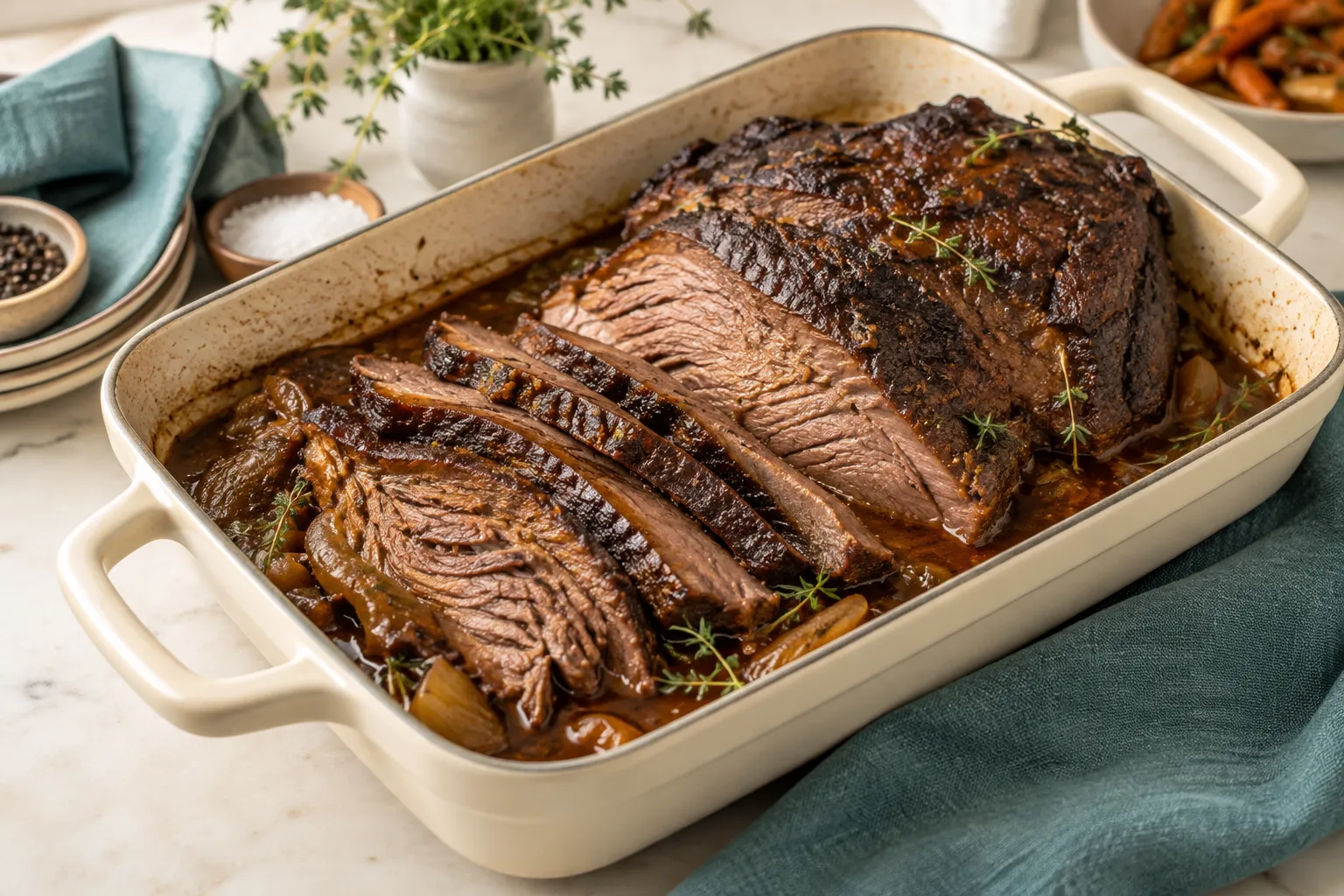
Brisket is a tough working muscle, so a quick roast will not give the same tenderness as a gentle braise. This method is for a small flat, not a whole large packer brisket.
Sear if desired, place brisket with aromatics and liquid in a covered pan and cook at 300°F until probe-tender. Rest, identify the grain and slice across it.
Go straight to the stepsYour project helper
Follow the steps and check them off as you go →Before you begin
Confirm pan and lid are oven-safe. Use a vessel that fits the meat without excessive empty space. A heavy braising pan is awkward when full; plan a stable heatproof landing spot.
What you’ll need
- Covered roasting pan or Dutch oven
- Tongs
- Probe thermometer
- Carving knife and board
Measure before you start
Ingredients
Base batch: 6 portions
Ingredient amounts scale; oven temperatures and cooking times do not. Split a larger batch between pans when needed.
Use the base batch for your first attempt. Adjust seasoning to taste and check texture as you cook.
Let’s do this
Step by step
- 01
Prepare and season
Pat brisket dry and trim only excessive hard fat if needed. Note the direction of the grain before cooking. Season and optionally sear in suitable cookware for color.
- 02
Build the braise
Place sliced onion beneath the brisket and add broth around it. Liquid should come partway up the meat, not fill the pan to the rim. Cover tightly.
- 03
Cook gently
Bake at 300°F for roughly 3–4 hours for a small flat, checking liquid and tenderness as it progresses. Keep the pan covered and add hot liquid if it is drying out.
- 04
Check beyond the minimum
Beef needs at least 145°F and a 3-minute rest for safety, but brisket usually needs much more cooking for tenderness. A probe should enter with little resistance; the clock or minimum temperature alone does not establish that texture.
- 05
Rest and slice
Rest covered briefly, then move to a clean board. Slice across the grain and serve with defatted braising juices. If the meat is still tough, continue gentle cooking rather than forcing thick slices.
Checks stay on this page while you work and reset when you leave.
Buy the size your pan and schedule can handle
A whole brisket can be much larger than this recipe. Scaling ingredients does not make a larger cut cook in the same time or fit a small pot safely. For more servings, plan separate suitable vessels or a method for the larger cut.
Serve now or store safely
Refrigerate perishable cooked food in shallow containers within 2 hours, or within 1 hour when the room or outdoor temperature is above 90°F. Keep the refrigerator at 40°F or below. Use most cooked leftovers within 3–4 days and reheat to 165°F. Do not wait for a large pot to cool completely on the counter.
A quick final check
- Prepare and season
- Build the braise
- Cook gently
- Check beyond the minimum
- Rest and slice
Common questions & sticking points
Why is it tough after reaching a safe temperature?
Connective tissue needs additional time in a gentle moist cook. Safety and tenderness are separate checks.
Which way should I slice?
Look for the long muscle fibers and cut across them, not parallel to them.
Sources & further reading Optional
References used to check this guide. Follow your product’s own safety instructions where its design differs.
- USDA: safe cooking temperatures
- Le Creuset: braising meat and vegetables
- USDA: leftovers and food safety