A non-contact tester senses an electric field within a specified range. It can be useful for screening, but it is not a meter that tells you the exact voltage, and a negative indication is not clearance to touch wiring. Different pens also handle tamper-resistant receptacles differently.
Use a correctly rated tester, verify it on a known energized source, perform the permitted screening check, then verify the tester again.
Go straight to the stepsBefore you begin
Do not expose or touch conductors for this exercise. A non-contact pen cannot prove absence of voltage. Electrical work requires proper isolation and suitable verification by a competent person.
What you’ll need
- Non-contact AC voltage tester and its manual
- Correct batteries
- A safe, known energized source appropriate for testing
Let’s do this
Step by step
- 01
Check the tester and application
Inspect the case and tip for damage and confirm the voltage range and measurement-category rating suit the intended use. Read the model’s limitations. An AC pen is not a way to measure a small DC battery or every low-voltage circuit.
- 02
Power on and verify operation
Fit the specified batteries and check the power-on indication. Test at a known energized source using the manufacturer’s method. If it does not respond correctly, stop and resolve that before interpreting any other reading.
- 03
Screen only an accessible insulated surface
Keep fingers behind the guard and use the tip as directed near an appropriate insulated cord or other permitted location. Do not insert metal objects, remove insulation or open a box to improve the result. Follow the product’s restrictions for receptacle types.
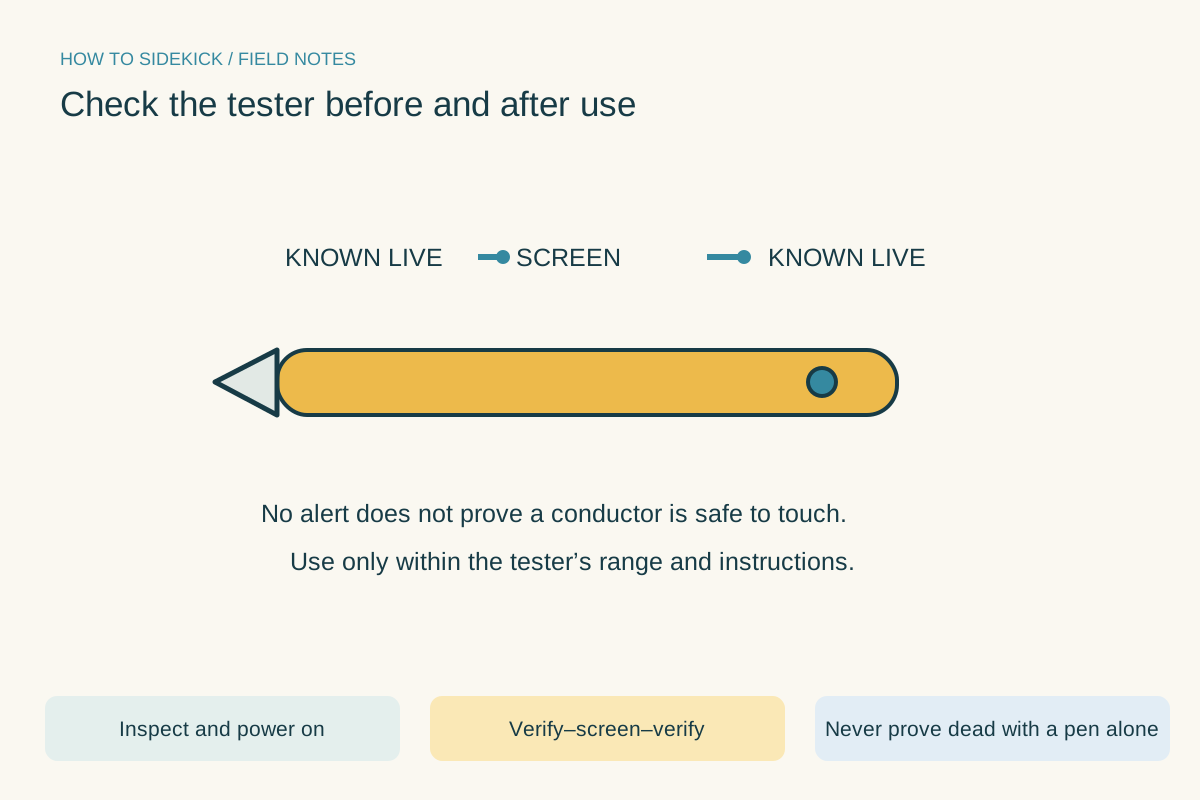
Check the tester before and after use. Use the instructions below for the full procedure.Open full-size image - 04
Interpret the indication conservatively
An alert means treat the location as energized. No alert can result from shielding, position, insulation, grounding conditions or a voltage outside the device’s range. It does not establish that conductors are safe to handle.
- 05
Verify again on the known source
Recheck the tester at the known energized source immediately afterward. If that check fails, the earlier negative result is unreliable. For actual wiring work, stop and use a qualified person with the appropriate isolation and test procedure.
Choose the tool for the question
For a low-voltage battery measurement, a properly configured multimeter is the relevant tool. For professional absence-of-voltage verification, a non-contact pen alone is insufficient. Do not buy a pen expecting it to replace every electrical test.
A quick final check
- Correct rating and application
- Known-source check passed before use
- No conductors exposed
- Known-source check passed afterward
Common questions & sticking points
Why does it beep near several wires?
It may be sensing nearby fields rather than identifying one conductor conclusively. The result is a warning, not a complete wiring diagnosis.
Is a green light proof that the power is off?
No. On some models it simply indicates the tester is on. Read the exact signal definitions and never use that light as proof of a de-energized circuit.
Sources & further reading Optional
References used to check this guide. Follow your product’s own safety instructions where its design differs.
- Klein Tools: NCVT1P specifications and warnings
- Klein Tools: non-contact tester operating instructions